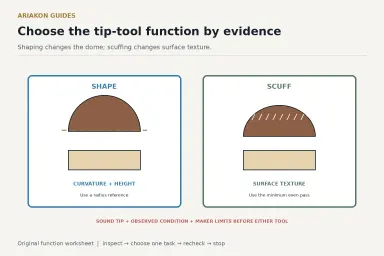
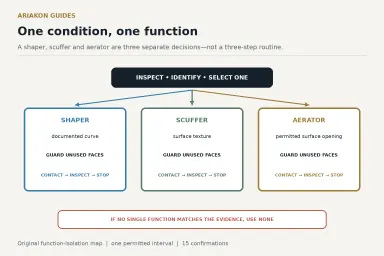
Compare shaping and scuffing as separate cue-tip functions, choose from visible evidence and use a twelve-point preflight that prevents one maintenance task from becoming the other.
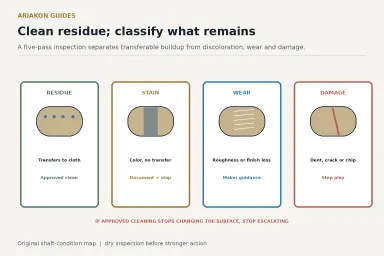
Use a dry-first five-pass inspection to separate transferable residue from stable discoloration, finish wear, raised fibers, dents and structural damage before choosing any cleaner.
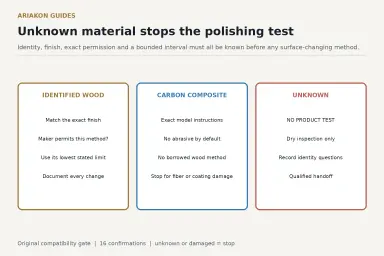
Identify shaft material, finish and current instructions before any polishing pad or abrasive, then use a sixteen-confirmation compatibility card and one bounded least-change test.
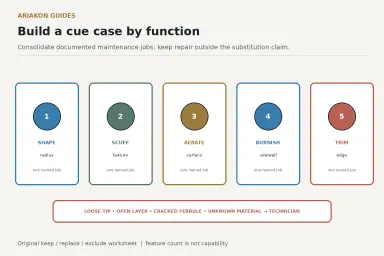
Audit a cue multi tool by function, keep only documented maintenance jobs, exclude repair and build the smallest complete case without mistaking feature count for capability.
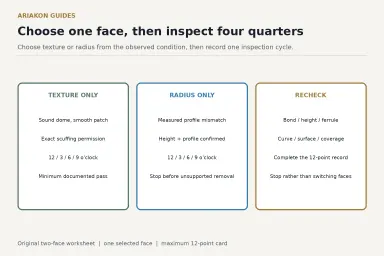
Choose either the texture face or the radius face from visible evidence, work through four recorded quarters and stop before a compact abrasive tool flattens the dome.
Choose one permitted function on a compact tip tool, isolate unused faces, document one inspection interval and stop before maintenance becomes structural repair.
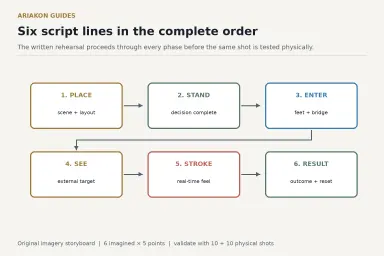
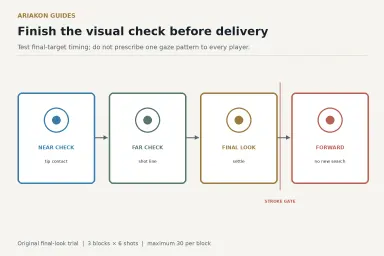
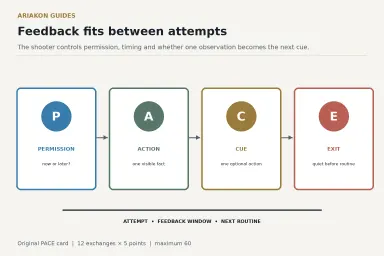
Turn one familiar shot into a real-time sensory rehearsal, score the quality of six imagined repetitions and validate the script against later physical attempts.
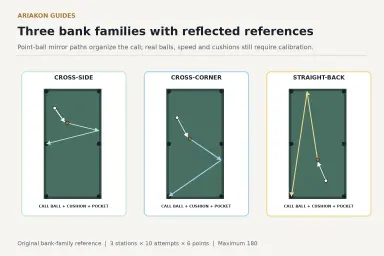
Set a rules card before play, learn cross-side, cross-corner and straight-back routes, then score a thirty-shot practice rack without confusing a made bank with a legal point.
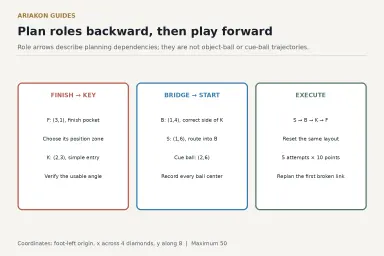
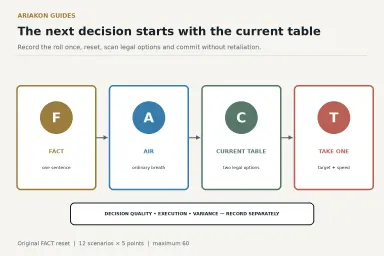
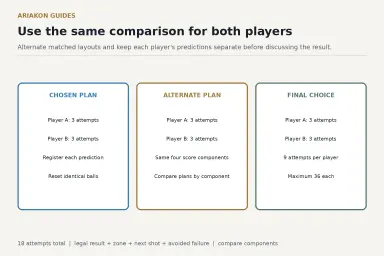
Use one registered three-ball layout, player-specific baselines and an eighteen-attempt crossover worksheet to compare plans rather than personalities.
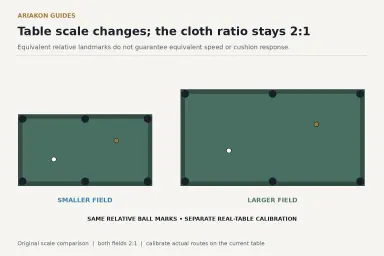
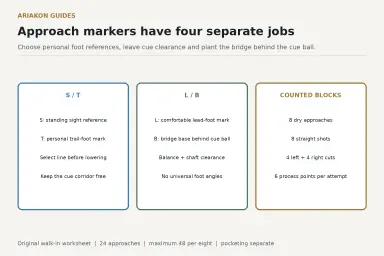
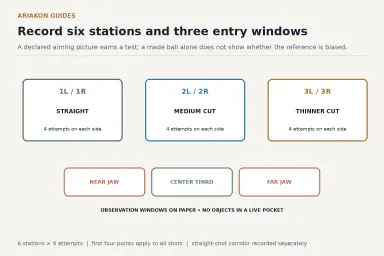
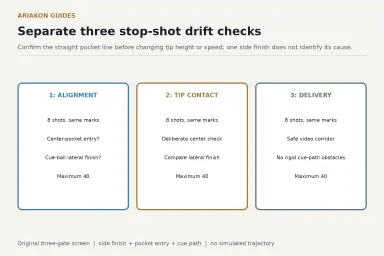
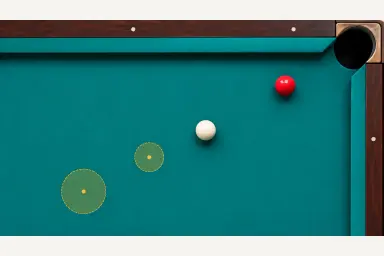
Register straight, medium and thin cuts in both directions, score pocket entry separately from makes and turn one aiming picture into a reusable table card.
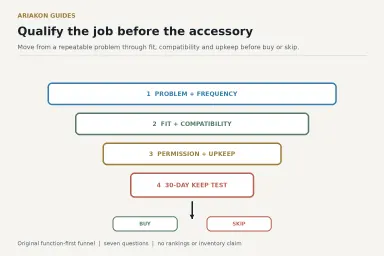
Use a function, fit, compatibility and upkeep worksheet to compare pool accessories without inventing rankings or buying a tool for an undefined problem.