
Bank and kick shots · 3 min read
Build Reliable Bank Shots From a Simple Baseline
A bank is not just an angle copied to the other side of a cushion. The contact point, object-ball speed, cut-induced spin and the table's cushions and cloth all influence the rebound. Build one simple reference shot first, then measure how the current table changes it instead of collecting corrections you cannot reproduce.
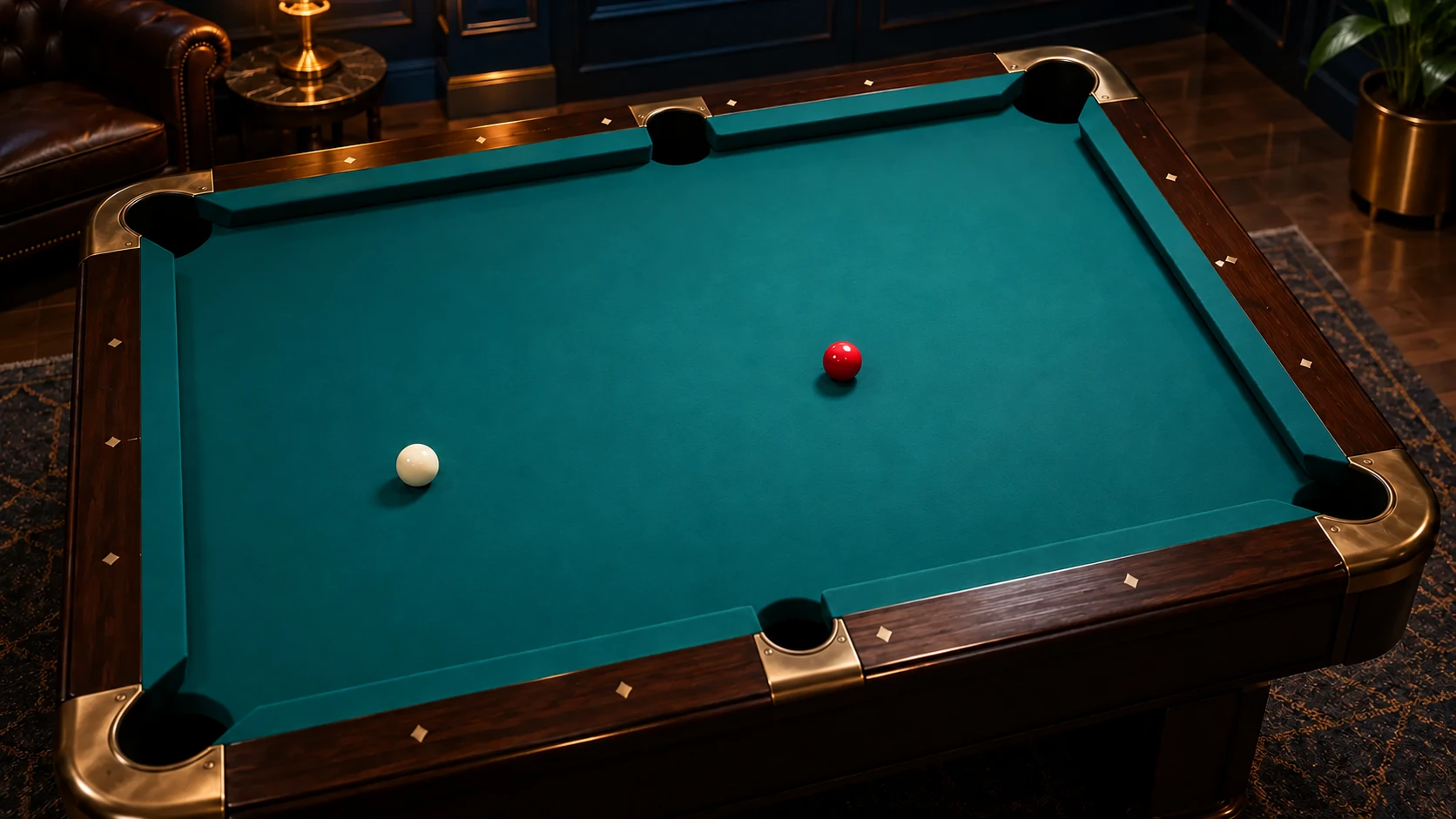
Start with one easy reference bank
Place an object ball about one diamond from a side pocket and one diamond away from the long rail. Put the cue ball where you can make a modest cut without crowding another ball. Mark both positions with removable reinforcements if the room permits.
Choose the intended cushion contact and visualize the object-ball path into the pocket. This reference is a starting line, not a promise that equal-looking angles will rebound equally on every table.
Aim the object ball, not the cue ball
For a bank, the important incoming path is the object ball's path to the cushion. First find the cue-ball contact that sends the object ball toward your chosen rail point, then check the expected rebound toward the pocket.
A mirror or equal-angle picture is useful for organizing the shot. Cushion deformation, friction and spin make the real rebound depart from that picture, so treat the geometry as a baseline to test.
Hold speed constant before adjusting aim
Shoot the same bank five times at a comfortable medium-firm speed. Record whether the object ball repeatedly reaches the pocket long, short or near center. Do not change aim after one result.
Bank speed changes both forward roll and cushion response. A faster shot often rebounds shorter and can be more consistent, but pocket acceptance gets less forgiving. Use the slowest speed that gives a stable result for the chosen shot.
Remove sidespin from the first test
Begin with a vertical-axis cue-ball hit. Sidespin can transfer to the object ball and alter its rebound, while squirt and swerve can also change the cut before contact.
After the center-axis bank is repeatable, add one deliberate spin variation at a time. If a correction only works with an unmeasured amount of english, it is not yet a dependable bank system.
Read the table as a separate variable
Cushion response, cloth condition, ball cleanliness, humidity and table construction can change bank length. Test the reference bank on an unfamiliar table before a match and write down the direction and size of the adjustment.
Do not assume every miss is table error. A scattered group suggests delivery or contact variation; a tight group consistently long or short supports a table-specific aim adjustment.
Use a twelve-shot bank baseline
- Mark one cross-side bank and one cue-ball position.
- Choose a medium-firm center-axis delivery.
- Shoot four balls without changing aim.
- Move the rail target by half a ball if the group is consistent.
- Repeat the four-shot set twice.
- Record speed, contact point and the table-specific correction.