
Equipment guides · 6 min read
How to Choose a Pool Cue for Your Stroke and Budget
A good cue choice starts with the shots you play and the setup you can deliver comfortably. Begin with length, balance, shaft feel and compatibility. Price, material and appearance matter, but they do not replace a cue that fits your normal stance and helps you repeat a familiar stroke.
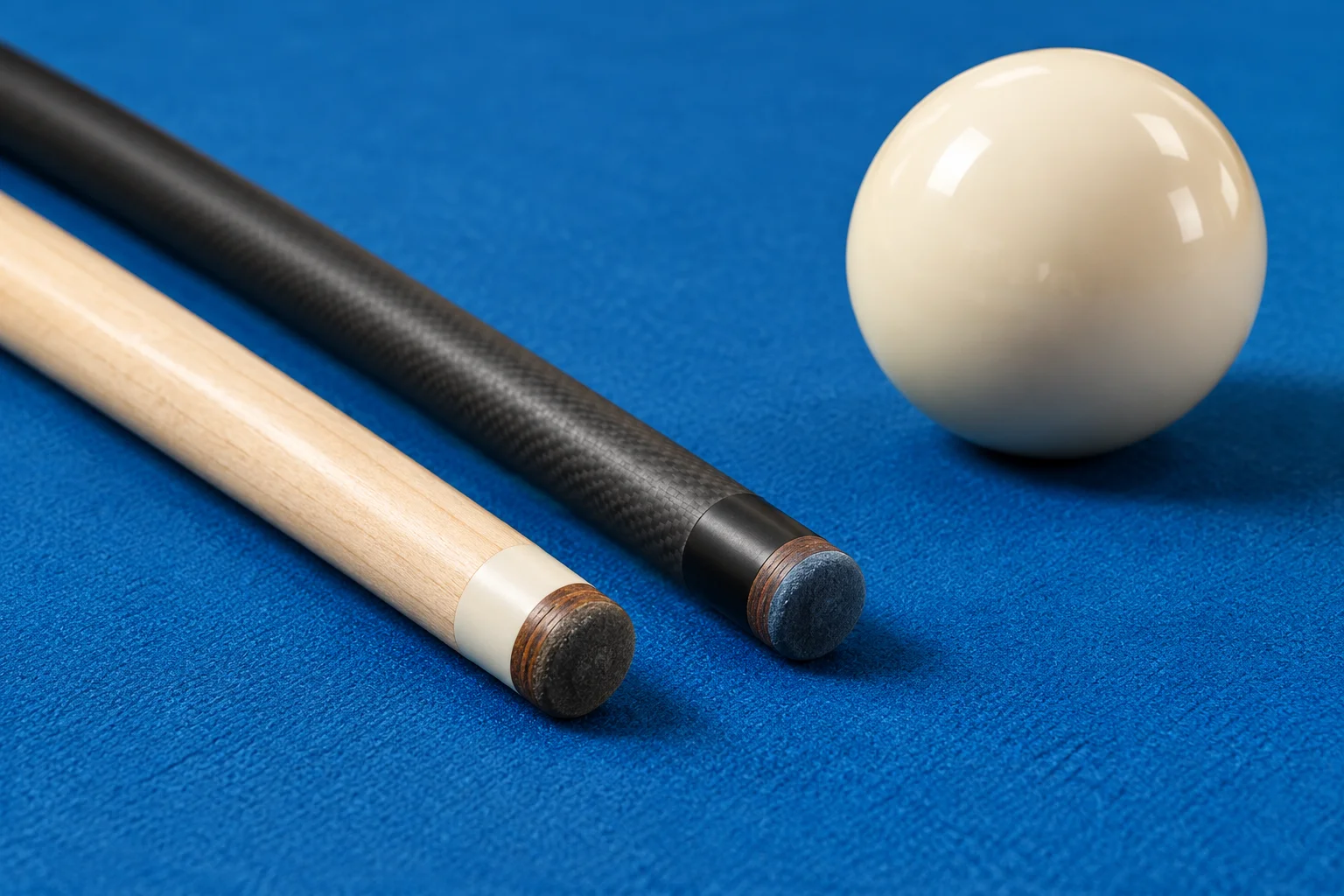
Decide which job the cue needs to do
A playing cue is your everyday tool for potting, position and safety play. A break cue or jump cue has a different job. If you are buying your first personal cue, give the playing cue priority. Add specialist equipment when it solves a problem you can identify and when the rules at your venue allow it.
Write a short buying brief: games you play, how often you practice, whether you already own a butt or shaft, your preferred grip feel and your total budget. Include the cost of a case and any accessories you actually need. Spending the entire budget on the cue can leave you without a practical way to protect it.
Check length in your normal stance
Test a cue while addressing an ordinary shot, using your usual bridge length and grip position. You should be able to hold it comfortably without crowding the butt or changing your stance to accommodate the equipment. Height alone is not a complete cue fitting method; arm length, stance and personal preference matter too.
If you struggle to reach shots, first distinguish a normal table reach problem from a cue length problem. A bridge or extension may help with particular shots. A permanently longer setup should still feel comfortable on the routine shots that make up most of your play.
Check the actual assembled dimensions. Shafts, butts and extensions can produce different lengths, even when the product names sound similar. If you are combining components, measure the complete setup rather than assuming a familiar total.
Compare balance as well as weight
Two cues with the same listed weight can feel different because the weight is distributed differently. Try several controlled practice strokes and ordinary shots before deciding. Notice whether the cue moves naturally through your bridge and whether the butt feels comfortable in your grip.
A heavier cue does not automatically create a better stroke, and a lighter cue does not automatically produce a faster effective break. Your ability to deliver the cue matters. Choose the playing weight you can handle consistently, and treat adjustment systems as a way to refine feel rather than a cure for technique.
Avoid changing weight, length, tip and shaft at the same time while evaluating equipment. Keeping most variables familiar makes it easier to identify what you prefer.
Separate shaft material from shaft behavior
A material label describes one aspect of construction, not a measured performance ranking. Compare the exact shaft, its taper through your normal bridge, documented service limits and the complete assembled cue. Do not transfer a claim from one design to another because both use wood or carbon.
Keep unfamiliar equipment separate from unfamiliar technique. A short trial may reflect adjustment or novelty rather than an enduring difference. Use the same defined comparison session and save the exact configuration instead of judging from one memorable shot.
Choose tip diameter and feel deliberately
Tip diameter affects what you see when addressing the cue ball and how the shaft fits your bridge. A smaller diameter is not a shortcut to more usable spin. Reliable spin depends on contact position, appropriate chalking, the tip's condition and your delivery.
Soft, medium and hard are useful buying labels, but hardness ratings are not necessarily comparable across manufacturers. Ask how the maker describes the intended feel and maintenance. Look at the actual fitted tip and the care instructions instead of assuming a label predicts every aspect of play.
For a first purchase, a comfortable familiar diameter and manageable maintenance routine can be a sensible choice. Players with established preferences should use those preferences as a testable starting point, not feel obliged to follow a fashionable specification.
Verify joint compatibility before buying components
If you are purchasing a shaft for an existing butt, identify the exact joint specification. A similar looking pin or an approximately matching thread description is not enough. Collar diameter, joint geometry and fit can matter in addition to the name of the thread.
Get written compatibility confirmation from the manufacturer or seller when uncertain. Send clear photographs of the butt pin and the shaft joint and include any known model information. Do not force mismatched parts together to test them. Check the full purchase and return terms before ordering a component that may be incompatible.
Create the complete joint packet before ordering a shaft for an existing butt.
Use a recorded demo rather than an undefined few hits
Get permission before using a candidate. Inspect its actual condition, then use the separate twenty-shot demo protocol. That guide supplies exact setups, attempt counts and outcome versus repeatability records; do not invent a faster version and compare its total with an earlier session.
An essential fit or condition problem stops the choice even if the pocketing total is attractive. Different complete cues change several variables at once, so the trial supports a personal configuration preference, not a causal material advantage.
Run the repeatable cue demo after the purchase brief and safety checks.
Record reach, balance and grip when basic fit is still uncertain.
Make the final choice with support in mind
Save the exact assembled length, supplied parts, fitted tip, joint configuration and permitted care instructions. Ask what normal maintenance or qualified service would require. Read the actual seller terms; this article promises no inventory, discount, warranty coverage or repair service.
Ariakon’s carbon-equipment FAQ specifies a clean soft cloth and avoidance of abrasive cleaners, excessive heat and modifications. Ask support before an unfamiliar care product. Do not apply that guidance as a complete recipe for an unknown wooden finish.
Read current Ariakon playing-cue information at the verified destination; confirm the exact configuration and current terms.
Close a fit-first purchase ledger
Work the full budget before choosing the cue price. Hypothetical allowance: 500 currency units total, 50 for protection, 30 for necessary supplies and 40 kept uncommitted. The remaining cue allowance is 500−50−30−40=380. These are planning numbers, not live Ariakon prices, recommended spending or proof that an item exists at that amount.
A candidate within 380 still fails if its normal fit or exact compatibility is unresolved. A more expensive option can be considered only by revising the whole budget deliberately, not by silently deleting protection or changing an unknown into a pass.
| Decision field | Required evidence | Stop condition |
|---|---|---|
| Playing task | Games, ordinary shots and permitted use ___ | A specialty role is being assumed |
| Complete fit | Length, reach, balance and actual grip observations ___ | Routine stance must be forced |
| Condition and compatibility | Normal assembly and exact pair confirmation ___ | Damage, binding or unresolved fit |
| Ownership | Protection, permitted care and service route ___ | Essential ownership cost is omitted |
| Preference | Appearance and documented demo observations ___ | A preference is being sold as measured superiority |
Check the narrower cue-purchase risk worksheet when a listing or seller detail remains uncertain.
Sources and further reading
References support the specific factual information above. The practical checklists are Ariakon editorial guidance.