
Table calibration · 3 min read
Calibrate Banks and Kicks When Table Size Changes
A larger table does not create a different law of reflection, and a smaller table does not guarantee easy banks. Size changes travel distance and the location of useful landmarks, while cushion construction, cloth, balls and room conditions change the actual rebound. Separate those effects so your adjustment is based on a test rather than the table label.
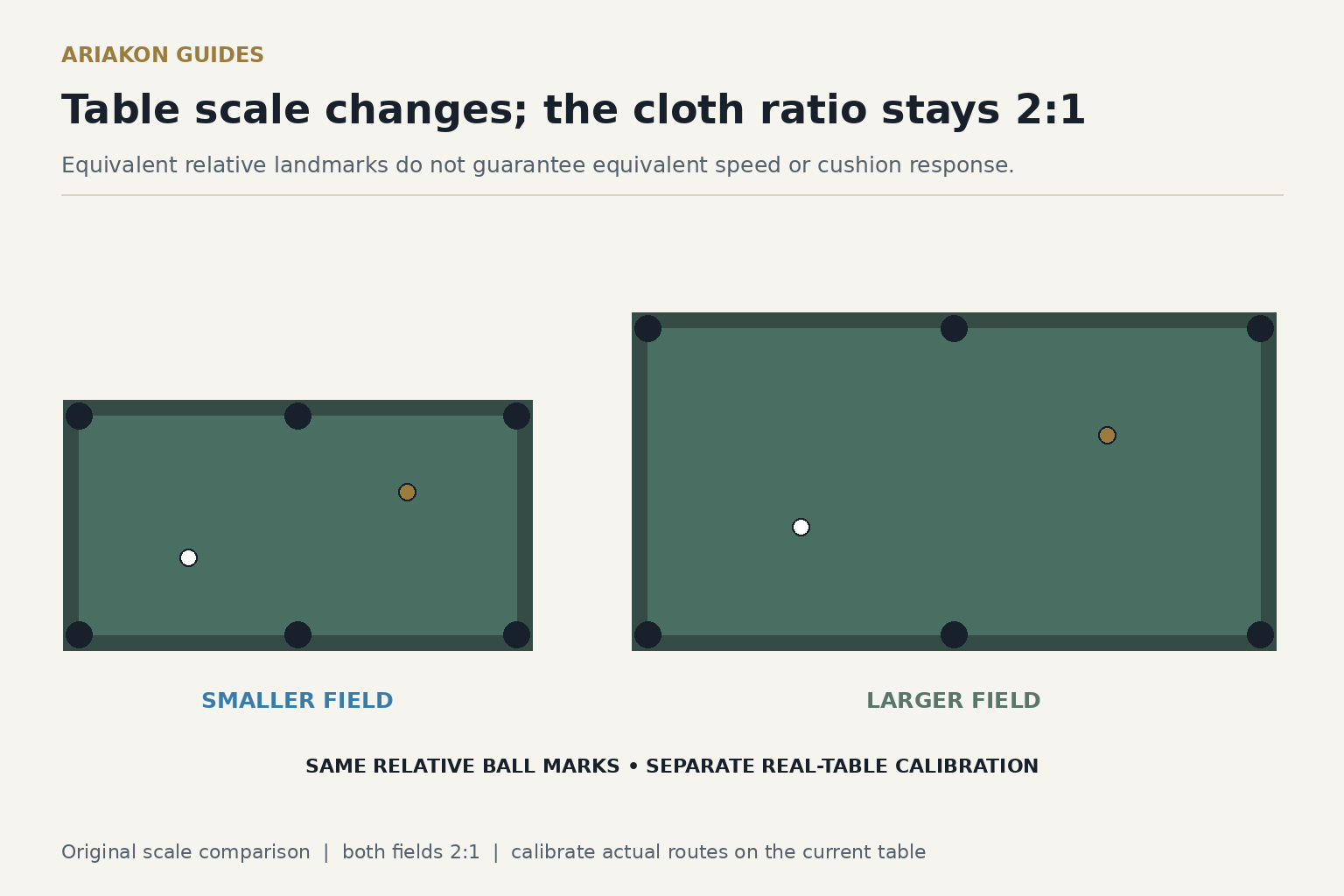
Keep geometry and equipment separate
The same basic mirror picture can organize a one-rail path on tables of different sizes. On a larger surface, the ball simply travels farther between equivalent relative positions, giving friction and spin more time to influence the result.
The table's size alone does not reveal how lively the cushions are or how fast the cloth plays. Two tables with the same nominal dimensions can require different bank and kick adjustments.
Use diamonds as references, not rulers
Sights divide the rails into repeatable segments and are useful for locating test shots. They do not guarantee identical physical distances across table sizes or identical rebound behavior across models.
Record the start, rail target and finish by relative rail positions. Then record the actual correction required on that table instead of carrying a fixed inch measurement from another table.
Expect distance to amplify variation
Longer travel makes a small aim or speed error produce a larger miss at the destination. Cloth friction also has more time to convert sliding motion to roll and to reduce speed.
For a long kick, use a larger legal contact zone when strategy allows. For a long bank, choose a pocket-speed plan that still reaches the pocket without asking an uncertain shot to be unnaturally soft.
Test cushions and cloth directly
Shoot a straight speed test to learn how far the cue ball rolls, then a one-rail kick at a comfortable medium speed. Repeat each test rather than judging a table from one surprising rebound.
Clean, slick cloth and balls often play differently from worn or humid conditions. Cushion nose height and rebound efficiency also matter, so label the observation as a table response—not merely a seven-foot or nine-foot effect.
Recalibrate speed before adding spin
Begin with natural roll and a vertical-axis hit. If the cue ball repeatedly returns long or short, adjust the rail target by a small measured amount.
Use running or reverse spin only after the center-axis path is known. Spin can lengthen or shorten a rebound, but it also makes the result more sensitive to tip placement and table friction.
Run a five-minute table check
- Roll the cue ball up and down-table to check speed and drift.
- Shoot one medium-speed one-rail kick three times.
- Shoot one familiar bank three times.
- Record whether each group finishes long, short or centered.
- Choose one aim correction for the session.
- Retest after conditions or ball cleanliness change.