
Cue ball control · 2 min read
Connect Cue Tip Contact Errors to Cue Ball Route Errors
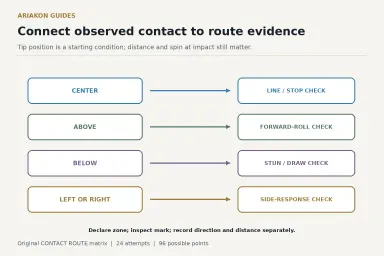
Use a 24-shot CONTACT–ROUTE matrix to record the intended strike, observed chalk mark and resulting cue-ball direction separately.
Read the guide ↗Ariakon Guides
Practical guides to equipment, cue ball control, practice and match decisions. Find a useful next step for your game.
523 guides. Page 20 of 22.
Cue ball control · 2 min read
Use a 24-shot CONTACT–ROUTE matrix to record the intended strike, observed chalk mark and resulting cue-ball direction separately.
Read the guide ↗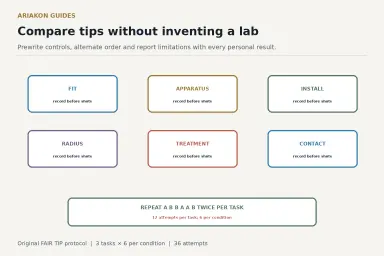
Equipment guides · 3 min read
Plan a prospective 36-shot cue-tip comparison that controls cue, contact, shape, chalk, setup and order while reporting only personal observations.
Read the guide ↗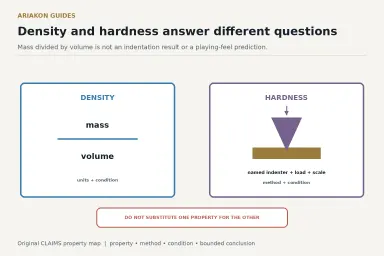
Equipment guides · 3 min read
Separate density, hardness, grade and feel using a six-field claim audit, exact unit conversions and a hypothetical volume calculation with bounded input ranges.
Read the guide ↗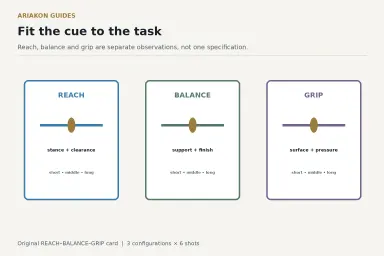
Equipment guides · 4 min read
Use three exact reach layouts, a measured configuration record and eighteen attempts with separate 54 process and 18 outcome points to evaluate complete cue fit.
Read the guide ↗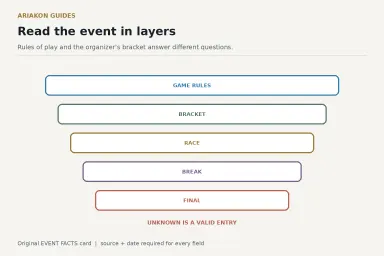
Competition · 2 min read
Use an EVENT FACTS card to separate discipline rules, bracket structure, race length, break format and final-stage changes in a women’s professional event.
Read the guide ↗
Poolroom basics · 2 min read
Check the venue, learn its house expectations, protect your equipment and set clear boundaries while settling into a new poolroom.
Read the guide ↗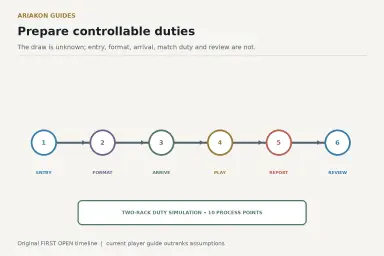
Competition · 2 min read
Use a FIRST OPEN checklist, a two-rack match simulation and a post-event debrief to prepare for an open field without pretending to know the draw.
Read the guide ↗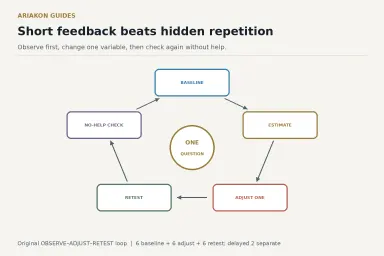
Practice planning · 2 min read
Run three six-attempt feedback blocks and a delayed two-shot check, preserving one question and one changed variable.
Read the guide ↗
Match strategy · 2 min read
Separate match preparation, the opening, early evidence, middle-rack decisions, closing pressure and post-match notes into manageable jobs.
Read the guide ↗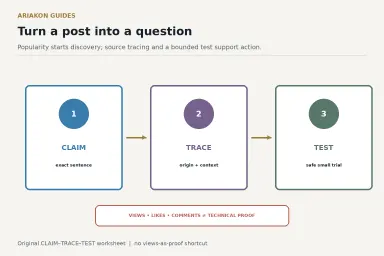
Learning resources · 2 min read
Use a CLAIM–TRACE–TEST worksheet to turn a short pool post into a bounded practice question without treating popularity as proof.
Read the guide ↗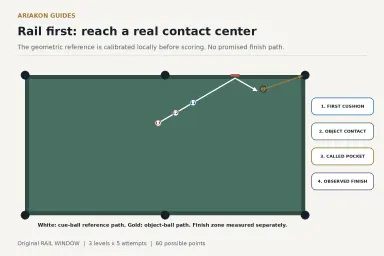
Practice drills · 3 min read
Set up Ariakon’s original RAIL WINDOW shot, progress through three distances and score legal rail-first contact, pocketing and cue-ball control.
Read the guide ↗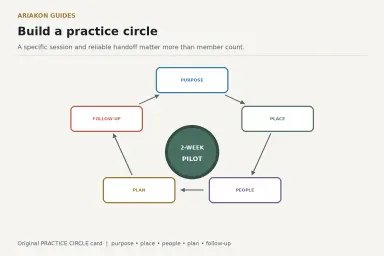
Practice planning · 3 min read
Use a PRACTICE CIRCLE worksheet and a two-week pilot to turn a local social group into small, reliable table sessions with clear expectations.
Read the guide ↗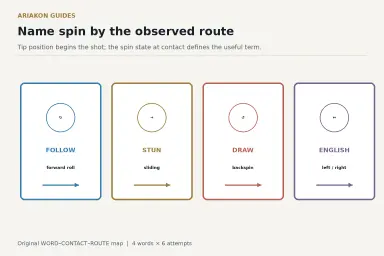
Fundamentals · 3 min read
Separate four cue-ball terms by spin at impact and observed route, then score a 24-shot WORD–CONTACT–ROUTE progression.
Read the guide ↗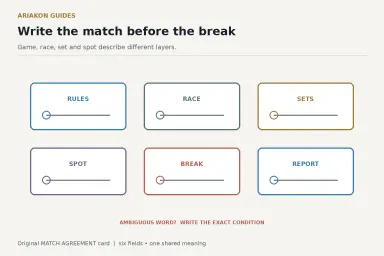
Competition · 3 min read
Use a MATCH AGREEMENT card to distinguish games, races, sets, handicaps and ball spotting before an informal or organized pool match begins.
Read the guide ↗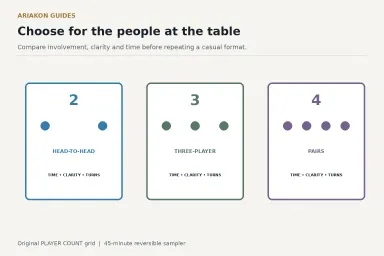
Getting started · 2 min read
Use a PLAYER COUNT grid to choose a clear, time-bounded pool format for two, three or four casual players without presenting house variants as official rules.
Read the guide ↗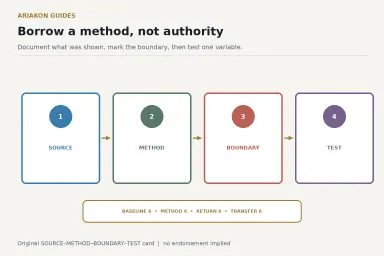
Practice planning · 3 min read
Use a SOURCE–METHOD–BOUNDARY–TEST card to separate a professional player's documented practice statement from sponsor context and your own table experiment.
Read the guide ↗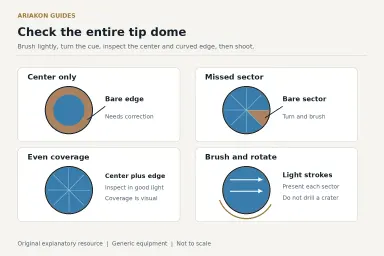
Equipment procedure · 5 min read
Apply chalk with a light sweep, inspect eight sectors plus the center, troubleshoot missed edges and run a fifteen-application coverage practice with separate process records.
Read the guide ↗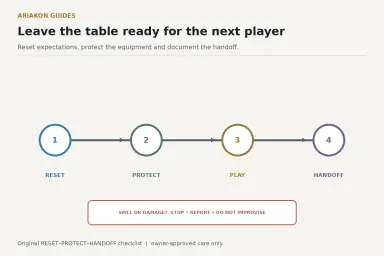
Etiquette · 4 min read
Agree on authority, protect shared property and document the handoff using four stages, twelve confirmations and a timed spill-or-damage example.
Read the guide ↗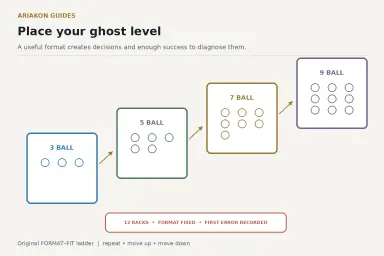
Practice drills · 3 min read
Use a FORMAT–FIT card and a twelve-rack placement test to choose a ghost level that challenges offensive runout skills without turning every rack into a foregone result.
Read the guide ↗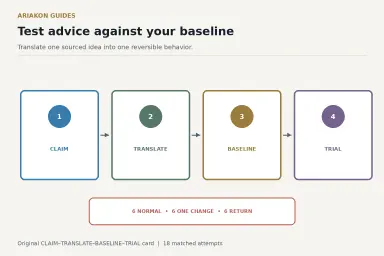
Practice planning · 2 min read
Turn one documented professional practice idea into a reversible BASELINE–TRIAL–RETURN comparison without treating reputation as proof that the method fits your game.
Read the guide ↗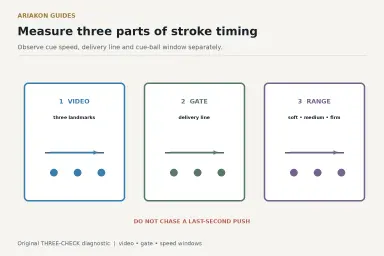
Stroke mechanics · 3 min read
Use video landmarks, a cue-delivery gate and three speed windows to diagnose deceleration or rushed timing without chasing acceleration as a source of extra cue-ball action.
Read the guide ↗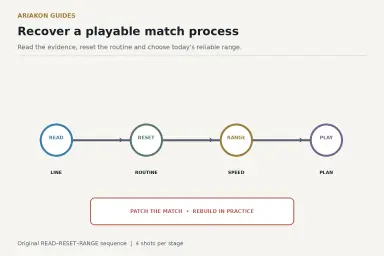
Competition · 3 min read
Use a bounded READ–RESET–RANGE sequence to recover useful match readiness after a poor warmup without starting a mechanical rebuild minutes before play.
Read the guide ↗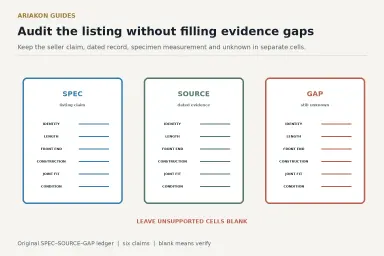
Equipment reference · 3 min read
Turn a used cue-shaft listing into six evidence rows, separate documented claims from measurements and unknowns, and decide what must be verified before purchase.
Read the guide ↗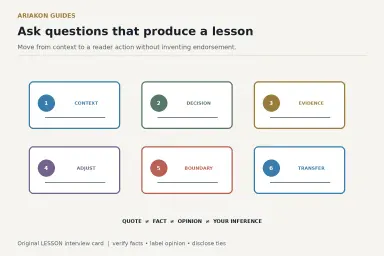
Learning resources · 3 min read
Use a six-part LESSON interview card to turn a player conversation into verifiable decisions, practice methods and reader actions instead of biography-only answers.
Read the guide ↗