
Competition · 3 min read
Return to Match Stroke After a Poor Pool Warmup
A poor warmup is information, not a prediction. Minutes before a match, the useful task is to identify one repeatable shot, restore a familiar routine and choose a realistic speed and shot-selection range. Do not rebuild the stroke because a few opening balls rattled. Use twelve bounded shots, then enter the match with a simple plan.
Read the warmup without turning misses into a story
Record the first observable failure rather than labels such as terrible stroke or no confidence. The response must be small enough to use immediately and reversible after the match.
A pre-performance routine is a sequence of task-relevant thoughts and actions. Current AASP guidance describes behavioral, physiological and cognitive components; choose familiar components rather than adding a new ritual under time pressure.
| Observation | What it may show | Immediate response |
|---|---|---|
| Start line is inconsistent | Alignment or delivery is not settled | Use one straight center-ball reference |
| Line is sound but distance varies | Speed calibration is missing | Choose a wider cue-ball zone |
| Only firm shots fail | Current reliable range is narrower | Avoid unnecessary power early |
| Everything feels unfamiliar | Attention is scattered | Return to the normal pre-shot sequence |
Use a twenty-minute pool tune-up when normal preparation time is available.
Compete with your B game when today's reliable shot range stays narrower.
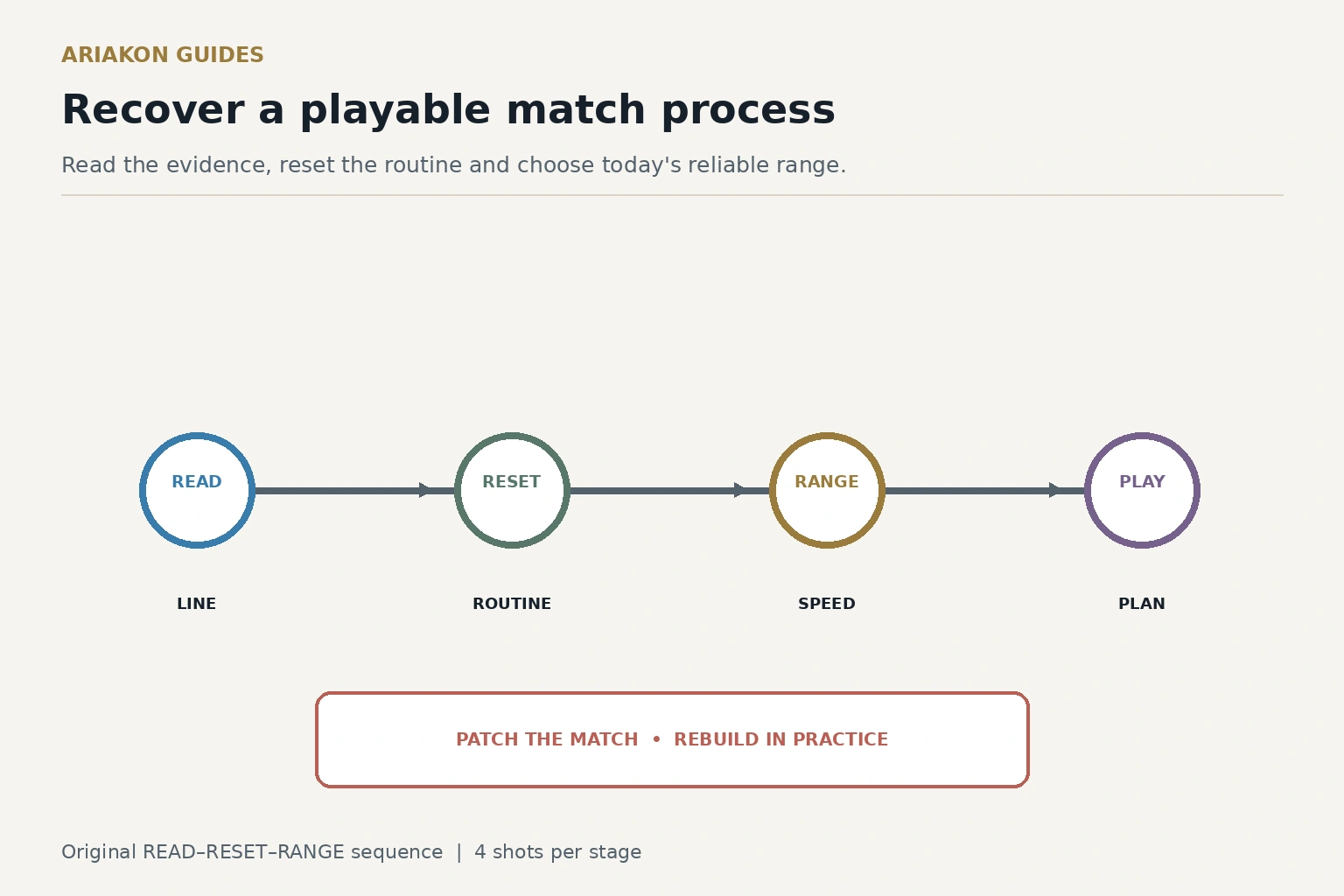
Run twelve READ–RESET–RANGE shots
Score one point for the declared process and one for the outcome on each attempt, for eight possible points per stage. The goal is not twelve perfect shots. It is enough evidence to choose a stable first-match plan.
If venue time or rules allow fewer shots, keep one attempt from each stage rather than spending every ball on a favorite shot. Confirm the tournament's warmup limits and leave the table when instructed.
| Stage | Setup | Observable question |
|---|---|---|
| Read | Straight center-ball stop shot | Did the cue ball start and finish on the chosen line? |
| Reset | Same shot with complete normal routine | Did the routine stay intact on all four? |
| Range | One medium-speed position route | Did the cue ball finish in a generous playable zone? |
| Decision | No extra shots required | What speed and shot-selection boundary will open the match? |
Choose a match patch and a post-match handoff
This player does not need a new stroke. The line and routine recovered; position-speed evidence stayed weak. The match plan reduces exact-position demands, accepts longer but makeable next shots and uses defense when a narrow route is optional.
After play, write whether the patch protected decisions. Mechanical work belongs in a separate practice session with a baseline, not in the chair between racks.
| Evidence | Temporary match choice | Practice follow-up |
|---|---|---|
| Read 7/8 | Trust the start line | No alignment rebuild |
| Reset 8/8 | Use the complete routine | Retain the same sequence |
| Range 4/8 | Favor center-ball and wider zones early | Recalibrate medium speed later |
| Match note | One breath, one target, committed delivery | Review only after the match |
Sources and further reading
References support the specific factual information above. The practical checklists are Ariakon editorial guidance.