
Competition · 2 min read
Play a Stronger Pool Opponent Without Beating Yourself
A stronger opponent can change your behavior before the first ball moves. Players rush, force runouts or treat every open shot as the last chance they will receive. The better approach is to respect the opponent's ability without surrendering your own decision process.
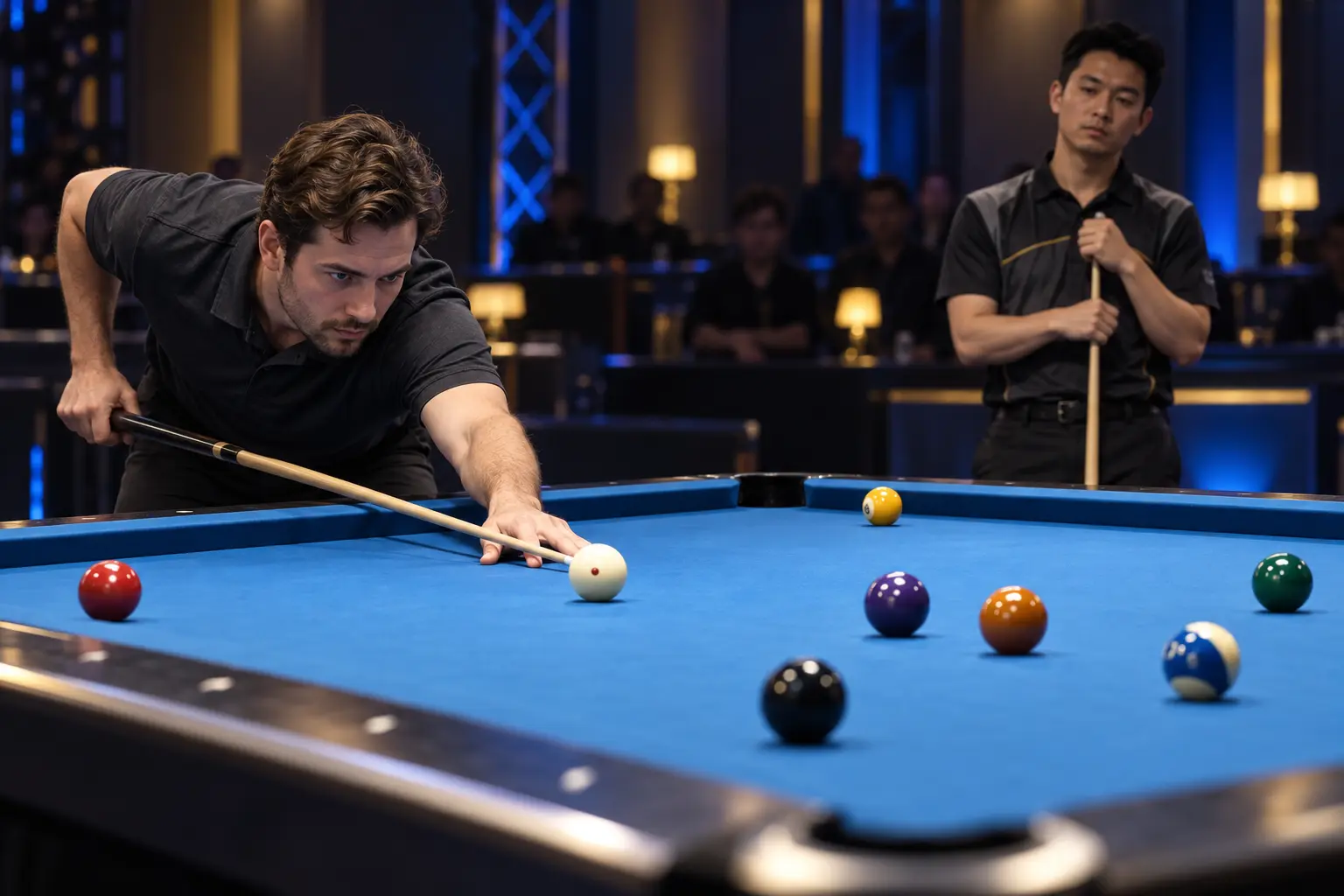
Play the layout, not the reputation
The opponent's name does not change the angle, scratch line or cluster in front of you. Complete the same table scan you would use in practice and choose from what the position actually offers.
APA guidance for playing different skill levels encourages lower-rated players to welcome the challenge and keep playing their own game. That begins by giving each shot its normal amount of attention.
Do not manufacture a runout
A strong opponent may punish an open table, but that does not make a low-percentage attack correct. If the pattern has no reliable finish, solve a problem ball or play a safety before exposing the rack.
Use the same runout test every time: identify the key ball, the transition into it and a realistic landing zone. If one link depends on a miracle, the pattern is not ready.
Choose safeties with a purpose
A passive shot that merely leaves distance may not trouble a skilled player. Prefer safeties that hide the legal target, move a problem ball or force cue-ball travel with scratch risk.
Include a defensive candidate in the same comparison as the attack. Practice the cue-ball and object-ball outcomes separately so the safety is more than hope.
Keep the same tempo
- Stand until the shot and speed are decided.
- Use the usual number of warm-up strokes.
- Stand up when the picture changes.
- Do not copy the opponent's faster or slower pace.
- Reset after long periods in the chair.
- Treat the game ball like every other important ball.
Use pressure as information
Notice what tightens first: grip, breathing, backswing or decision time. Choose one observable reset, such as opening the grip hand or taking a full breath before stepping onto the line.
Avoid predicting how many racks the opponent will run. Your task ends with the current decision and execution; imagined future racks only consume attention.
Take evidence home from the match
Record the patterns and safeties that the stronger player handled well, but do not imitate a difficult shot without understanding the route and risk. Recreate a few positions in practice at your own speed.
Success can include forcing good responses, maintaining routine and making sound choices under pressure. Those are repeatable improvements even when the final score favors the stronger player.
Sources and further reading
References support the specific factual information above. The practical checklists are Ariakon editorial guidance.