
Competition · 3 min read
Prepare for a Multi-Discipline Pool Tournament
A multi-discipline tournament tests more than shotmaking. Banks, one-pocket and rotation games reward different decisions, while a long event punishes poor sleep, missing equipment and rushed rule study. Preparation should reduce avoidable decisions so your attention stays on the table.
Read the current event information
Use the organizer's current schedule, rules and entry information rather than an old recap. For example, the official 2027 Derby City Classic rules list separate bank pool, one-pocket and nine-ball events, each with its own race length and schedule.
Confirm check-in time, player meeting, equipment rules, buyback policy, dress requirements and how draws are announced. Save the authoritative page offline or as a screenshot in case service is poor at the venue.
Prepare for the discipline switch
Bank pool rewards object-ball speed and cushion calibration. One-pocket adds pocket ownership, ball count and long safety sequences. Nine-ball demands legal first contact, break control and rotation patterns. Give each game a short warm-up rather than using the same routine for all three.
Write one tactical reminder per discipline. Keep it simple: bank with margin, count every one-pocket ball, or protect the cue ball in rotation. A small cue survives fatigue better than a page of new technique.
Build one dependable equipment kit
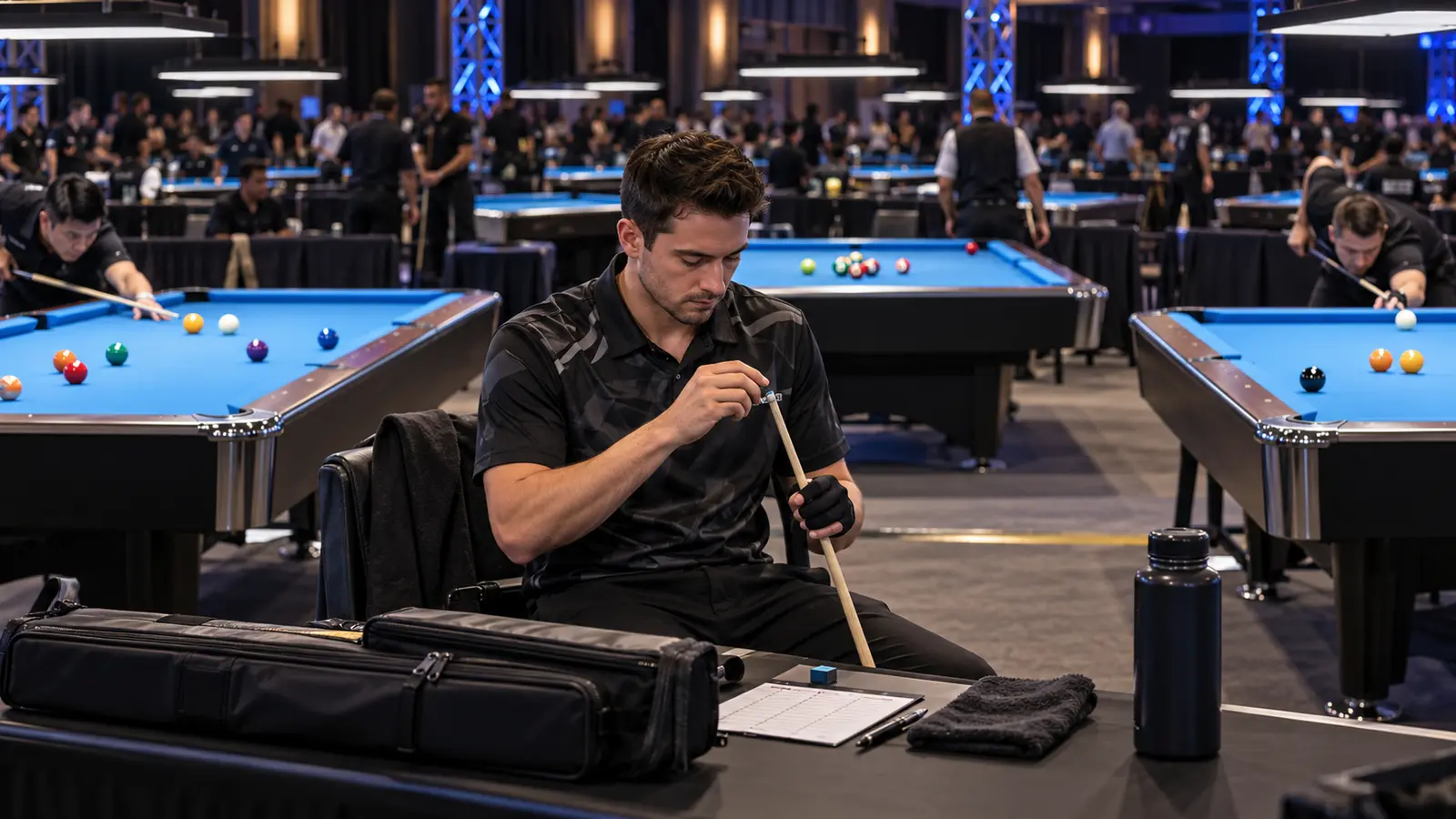
Pack your playing cue, legal break or jump equipment if allowed, chalk, glove if used, shaft cloth, tip tool, water and a light layer for changing room temperature. Bring backups only if you already know them; the event is not the place to learn a different shaft.
Inspect tips, joints and cases before travel. Do not perform major tip work on the night before the event unless damage makes it necessary. Familiar equipment with a minor cosmetic imperfection is often safer than an untested replacement.
Manage a long day
Eat and hydrate on a schedule that you have already tolerated during practice. Carry simple food that will not depend on a narrow venue break. Use waiting time to rest instead of continuously hitting balls.
Warm up enough to read speed and alignment, then leave energy for the match. After a late finish, prioritize sleep and a short reset over a long mechanical repair session.
Use between-match notes carefully
Record table speed, one repeated decision error and one strength that held up. Avoid rebuilding the stroke after every loss. A tournament produces emotional evidence; not all of it is technically reliable.
If the next discipline changes, close the previous match deliberately. Review the new rules cue, shoot two or three representative speeds and start the next match with your normal routine.
Use a seven-day preparation outline
- Seven days out: verify current rules, check-in and allowed equipment.
- Five days out: play short sets in every entered discipline.
- Three days out: test the complete equipment and food kit.
- Two days out: reduce volume and keep normal sleep.
- One day out: travel, register if available and avoid major technique changes.
- Event day: arrive early enough to find the room and complete a brief discipline-specific warm-up.
Sources and further reading
References support the specific factual information above. The practical checklists are Ariakon editorial guidance.