
Competition · 3 min read
Compete With Your B Game When Your Best Stroke Is Missing
A B game is not a second identity or an excuse. It is the honest level of execution available in the current match. You cannot order your best stroke to appear, but you can calibrate speed and contact, choose routes with margin, defend when the run is fragile and keep each decision inside a trusted routine.
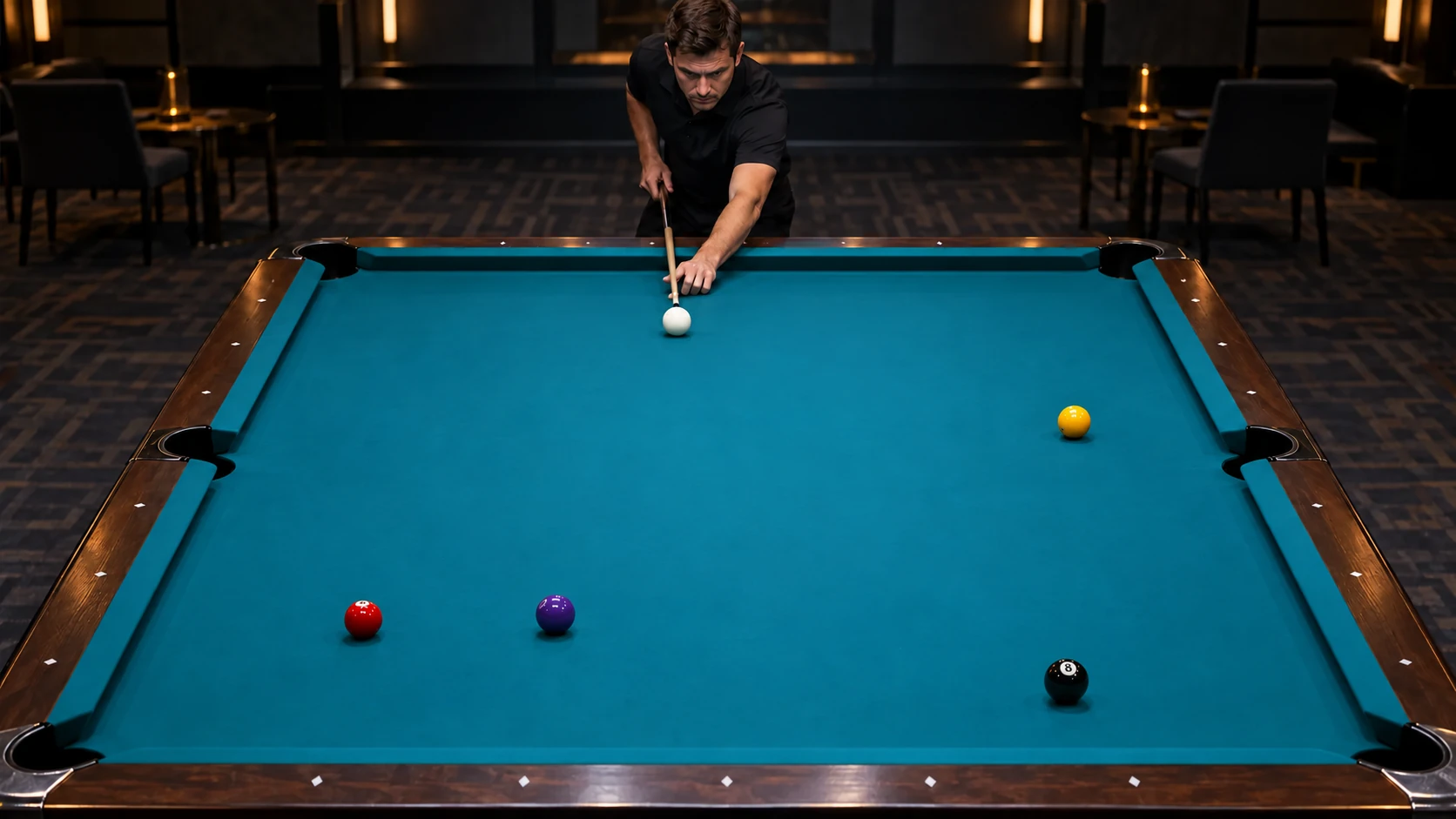
Measure today's table and stroke
Use warm-up or the first simple opportunities to observe three things: whether center-ball contact is reliable, whether speed is running long or short, and whether the table is accepting firm pocket speed. Treat those observations as data, not a prediction that the entire match will go badly.
Do not test the most difficult shot in your repertoire to see whether the A game has returned. Start with the shot qualities the next rack actually requires.
Shrink the execution demand
Favor center ball, natural angles, wider position zones and fewer cushions. Choose the route whose acceptable outcomes cover the largest part of the table, even when it leaves a slightly longer next shot.
Reduce sidespin when its benefit is small. A lower-risk route is not timid if it increases the chance of completing the pattern.
Make defense part of the plan
Before a difficult shot, compare the offensive reward with the miss location and the available safety. A controlled safety can preserve the rack better than forcing a low-percentage shot just to prove confidence.
Plan the cue-ball destination and the object-ball destination separately. A safety that controls only one ball can still sell out the table.
Use a process scoreboard
Track four actions after the inning: a decision completed while standing, the ordinary pre-shot sequence, a committed delivery and a useful reset. Mark each action from what happened on that shot. Keep the rack score alongside these notes so a fortunate result cannot erase a skipped step.
This does not mean ignoring the match situation. Know the score and rules, then let that information shape the choice before the stance rather than the stroke during it.
Do not repair mechanics mid-match
If a clear physical issue is unsafe or prevents contact, address it. Otherwise, avoid a live rebuild of grip, stance or stroke. Internal troubleshooting can divide attention and turn one miss into five competing instructions.
Use a single positive cue, then collect mechanical notes for the practice table. The match task is to use the available game intelligently.
Apply the B-game checklist
- Calibrate center-ball contact and speed from simple evidence.
- Choose the largest useful position zone.
- Prefer natural angles and fewer rails.
- Compare every fragile attack with a two-ball safety.
- Reset after each result and run the full routine again.
- After the match, record one execution issue and one sound decision.