
Competition · 2 min read
Prepare for Your First Open Pool Event Against Experienced Players
An open event may put a first-time entrant beside highly experienced players, but the useful preparation is the same: learn the exact current event rules, arrive with working equipment and identification, rehearse the clock-and-score duties you control, and define success with process evidence as well as the result.
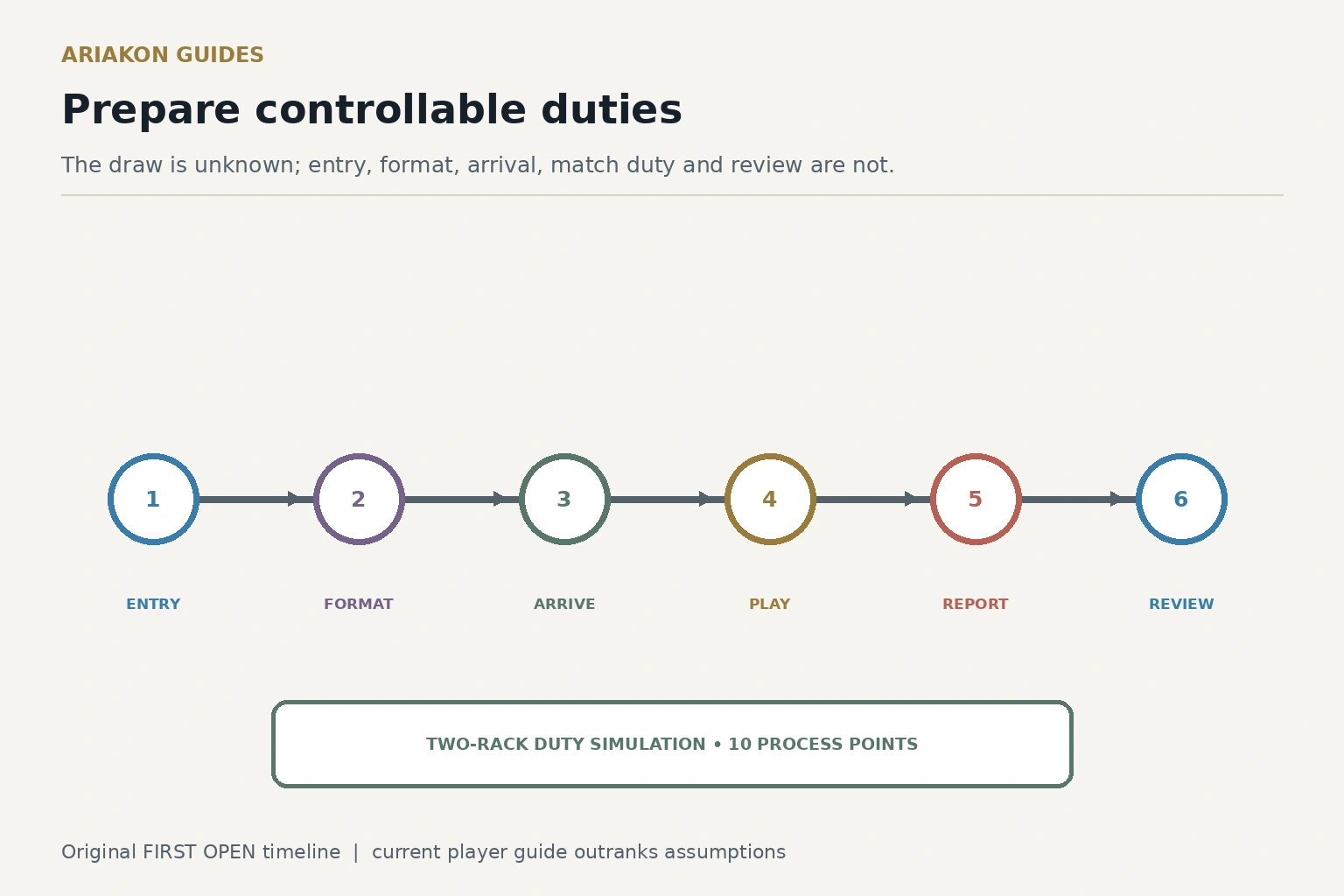
Complete the FIRST OPEN checklist
WPA materials place responsibility on the player to know the applicable rules, regulations and schedules, while current CSI guidance explicitly gives the event Player Guide or Tournament Regulations priority when they differ from general game rules. Always use the actual organizer's hierarchy.
Do not infer eligibility from the word open. Some events are open/pro; others still require membership, qualification, licensing or registration deadlines. Unknown means contact the organizer before travel.
| Stage | Confirm | Evidence to carry |
|---|---|---|
| Entry | Eligibility, payment, refund and identification requirements | Receipt and current player guide |
| Format | Game, race, bracket, break, shot clock and dress code | Dated rules or event page |
| Schedule | Check-in, player meeting, first match and reporting method | Organizer schedule and contact |
| Equipment | Cue condition, legal dimensions, chalk and permitted aids | Inspection checklist |
| Match duty | Lag, score, referee request, timeout and result reporting | One-page sequence |
| Recovery | Food, water, medication and quiet reset appropriate to you | Personal plan, not a performance promise |
Pack for the pool tournament you entered after the player guide defines the equipment and dress requirements.
Use a first-match nerves checklist for the final pre-match minutes.
Rehearse a two-rack event simulation
Add a friend only to create normal waiting and scoring interruptions, not to imitate a professional player. Use the event's real shot clock only if it has been published and you can operate it safely.
Worked example: the player scores 8/10. Both lost points come from result reporting after the rack. The next practice is two report-and-reset repetitions, not an emergency stroke rebuild.
| Checkpoint | Point | Observable evidence |
|---|---|---|
| Ready | 1 | At table before the declared start with equipment checked |
| Rule | 1 | Break, call-shot and timeout procedure stated correctly |
| Routine | 1 | Same standing decision and shot routine on ordinary shots |
| Report | 1 | Rack score recorded without delay or dispute |
| Reset | 1 | Next-shot or between-rack reset completed |
| Maximum | 10 | Five points across each of two racks |
Define a useful first-event result
A loss can still produce a clean, specific next task. Do not diagnose the whole match from one dramatic shot or compare your private expectations with another player's résumé.
| Write | Example | Next action |
|---|---|---|
| One format surprise | Alternate break changed warm-up expectations | Add it to the next player-guide card |
| One process kept | Routine used on 14 of 18 recorded shots | Keep it |
| One costly error | Two rushed position decisions | Build a six-shot decision drill |
| One logistical fix | No quiet food option | Pack an allowed alternative |
Sources and further reading
References support the specific factual information above. The practical checklists are Ariakon editorial guidance.