
Practice planning · 2 min read
Use a Short Pool Feedback Cycle Instead of Endless Repetition
Repetition becomes useful when each short block answers a question. Declare one outcome, shoot a small baseline, estimate your own error, review only the evidence needed for that variable, and retest. A hundred unlabelled shots can hide the same miss; six well-recorded attempts can expose the next action.
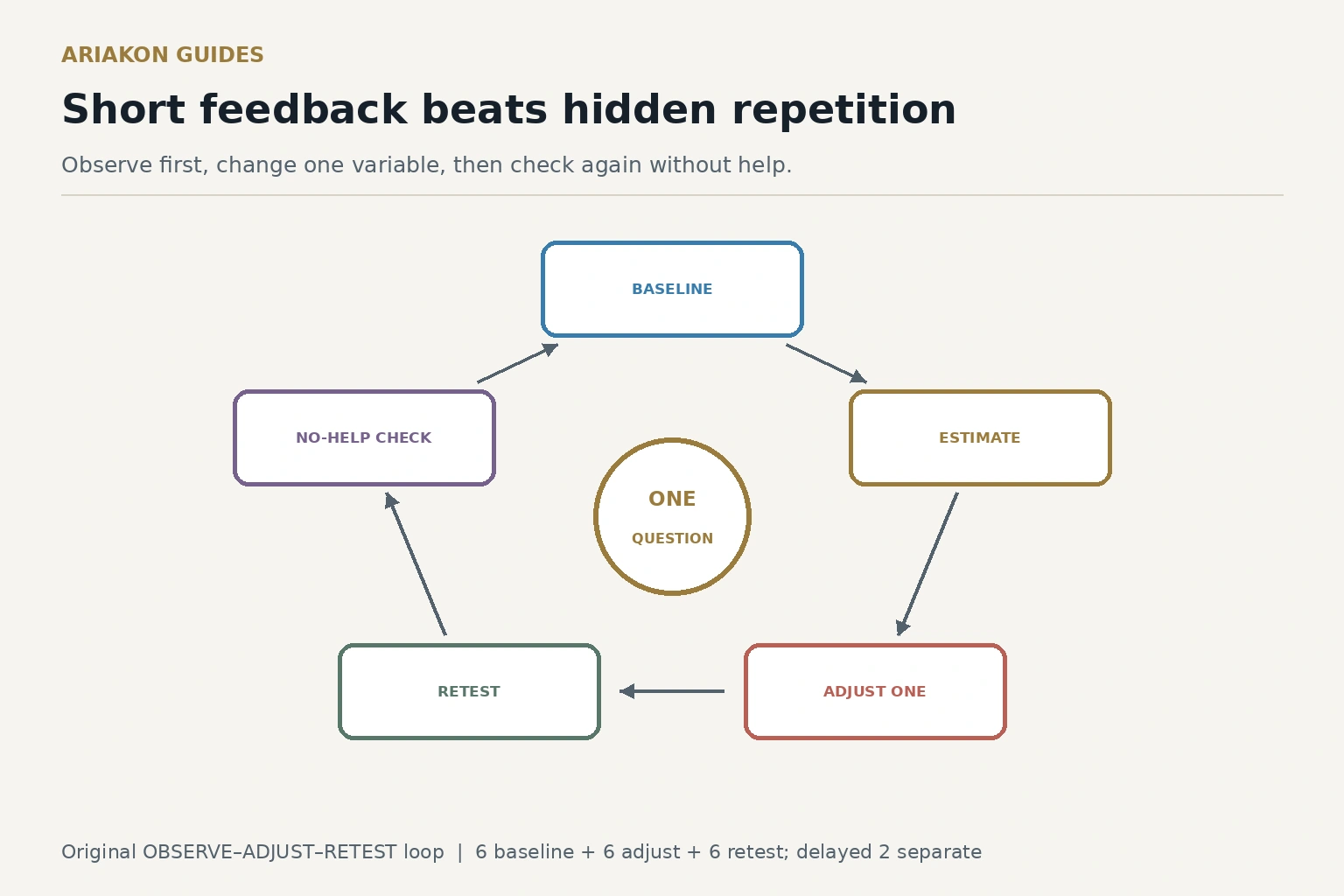
Use three six-attempt blocks
Immediate practice performance and a later unaided check answer different questions. This eighteen-attempt session is an original practical schedule, not a universally validated feedback dose. Keep one variable fixed long enough to compare the three six-attempt blocks.
Use video, a coach or a training aid only when it answers the declared question. Continuous guidance can make practice look clean while leaving the player dependent on the guidance.
| Attempts | Action | Feedback rule |
|---|---|---|
| 1 to 6 | Baseline from fixed marks | Estimate error before viewing any feedback |
| 7 to 12 | Apply one reversible change | Review evidence only on that variable between attempts |
| 13 to 18 | Retest without augmented feedback | Keep the same marks and score all six |
| Later | Two no-feedback attempts after a break | Log separately; no inference of permanent learning |
Improve your pool game faster for the wider baseline-to-transfer plan.
Make pool repetitions productive when the drill needs clearer scoring.
Score the evidence, not just the pocket
Worked example: the baseline block scores 15/24, with each failed finish long. Contact evidence is stable, so the adjustment block changes only speed intention. The following six-shot unaided retest scores 20/24. A later two-shot check lands both balls in the zone. That small delayed check justifies another session, not a conclusion that the skill is permanently learned.
| Point | Evidence |
|---|---|
| 1 — Declare | Contact, speed and finish zone named before descent |
| 1 — Observe | Direction and distance recorded before external feedback |
| 1 — Match | Chosen variable executed as intended |
| 1 — Result | Object ball and cue ball meet the declared outcome |
| Maximum | 24 points per six-attempt block;72 across the three blocks; delayed checks separate |
Stop the cycle when the question changes
Keep the written question narrow enough that the next session can begin from evidence rather than memory.
| Pattern | Decision | Avoid |
|---|---|---|
| Same directional miss | Inspect alignment or contact next session | More speed advice |
| Contact varies | Simplify setup and shorten the block | Route complexity |
| Practice improves; delayed check fails | Reduce feedback and retest later | Calling it learned |
| Pain, equipment damage or unsafe setup | Stop | Practicing through risk |