
Practice planning · 3 min read
A Focused Solo Pool Practice Routine With a Clear Session Budget
A solo session needs a beginning and an end as well as a skill target. This resource is a session-budget worksheet: decide what fits the available time, keep setup and rest inside that budget, and distinguish practice scores from game evidence. It is not a full-table clearance game, an ability examination or a promise of rapid progress.
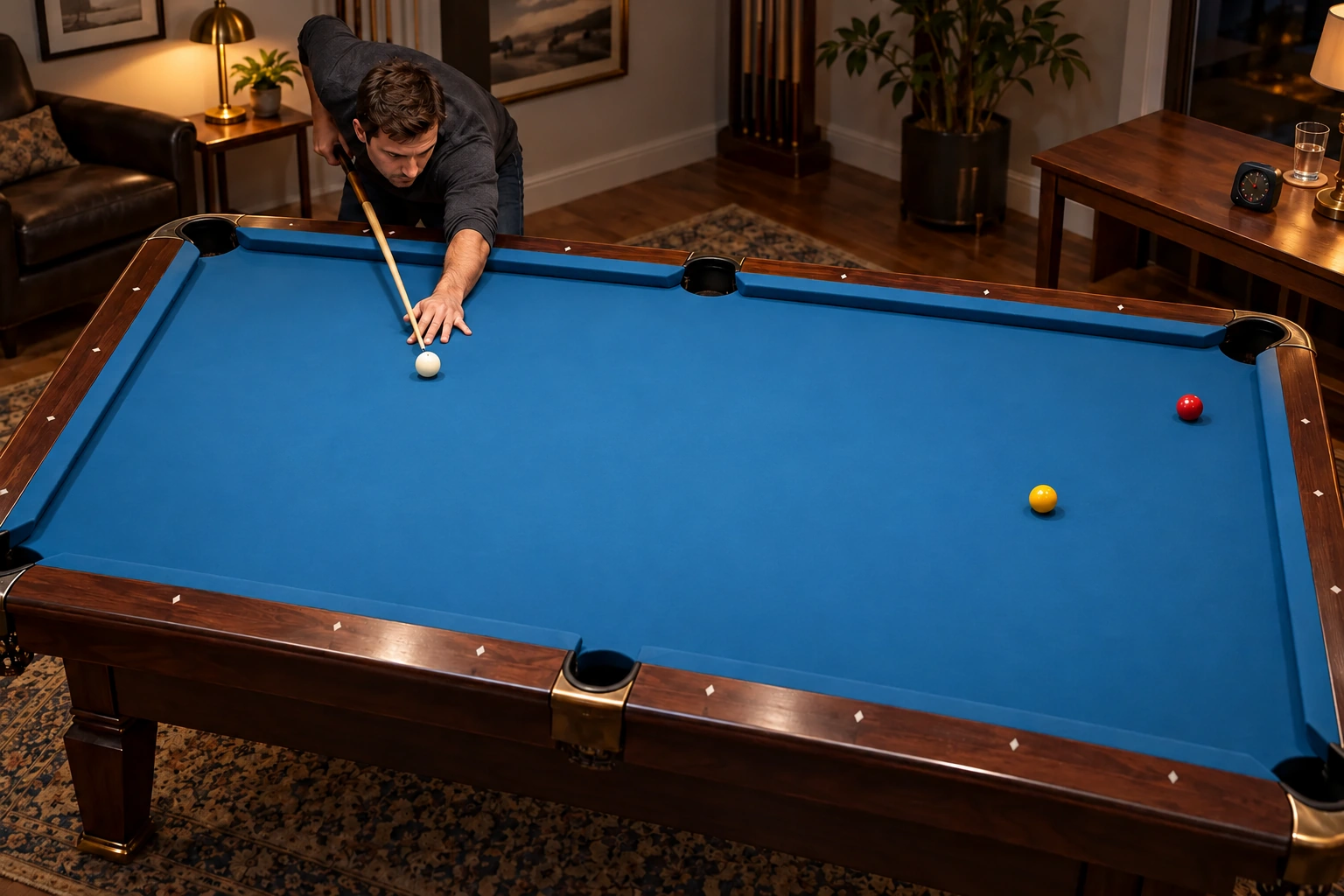
Write one session card before placing balls
Keep the same cue, table and scoring version within a comparison. If the table or task changes, label the record rather than comparing unlike percentages. A planned dose is an upper allocation, not a requirement to finish through fatigue.
Choose the focus from an observed difficulty. Do not add a new named program simply because you are practicing alone.
| Field | Write before starting |
|---|---|
| Available time | A real end time, including packing and rest |
| Focus question | One observable difficulty, not improve everything |
| Protocol version | Exact centers, target, rules and scoring from the chosen guide |
| Maintenance | One already familiar task, with a small planned dose |
| Transfer | An ordinary game observation kept outside drill totals |
| Stop condition | Discomfort, unsafe reach, uncontrolled contact or the end time |
Choose a drill from observed errors when the focus question is not yet clear.
Use one of the exact three-task stroke protocols when stop control, free-roll speed or follow contact is the selected question.
Allocate all minutes once
These budgets are original planning examples, not prescribed training volumes. Move minutes between blocks before starting; do not add maintenance or breaks on top and still call the session 30 minutes. If you need a longer rest, reduce shooting time or end early.
Set a timer for the block boundary, not a shot clock. Finish only the current safe attempt and log any overrun. A slow reset is information about the task cost, not a reason to rush the stroke.
| Block | 30 minutes | 60 minutes |
|---|---|---|
| Readiness and setup | 5 | 8 |
| One focus task | 12 | 24 |
| Familiar maintenance | 5 | 8 |
| Ordinary-game transfer | 5 | 15 |
| Review and pack | 3 | 5 |
| Total | 30 | 60 |
Use struck attempts rather than the planned ceiling
Suppose the focus is the eight-attempt stop task in the linked stroke resource. In the short budget you plan eight but strike six before the block ends. Four successful stops and five called-pocket outcomes become 4/6 and 5/6; the two unused slots remain unplayed, not misses or automatic passes. Setup interruptions before striking are not attempts; struck fouls stay in the denominator.
For maintenance, select one already calibrated cue-only target and allocate four strikes. A 3/4 maintenance record cannot be added to the stop record: the tasks and success definitions differ. Record table conditions, actual attempts and one useful observation beside each fraction.
Make transfer a separate ordinary-game record
During the transfer block, play your chosen ruleset without resetting a failed shot into a drill. Before each shot identify the next useful cue-ball zone; after it, record whether the resulting next shot was usable. Stop on the actual miss or foul according to that game. This observes planning under changing layouts, not a clearance contest with invented exemptions.
If only three relevant opportunities occur and two are usable, write 2/3 transfer opportunities. Do not call that a 67% overall skill rating or combine it with drill makes. If no relevant opportunity occurs, write no transfer evidence rather than zero ability.
Validate a next-shot zone before treating arrival near a ball as usable position.
Close with a repeatable next session
Record planned versus elapsed minutes, actual struck attempts, unused allocations and the one question the session left open. If the focus setup was unstable, repeat it before raising difficulty. If it was repeatable but games exposed another error, use that game evidence for a later selection rather than changing the current score.
Hypothetical short session: 5+12+5+5+3=30 minutes, six focus strikes, four maintenance strikes and three relevant game opportunities. Ten drill strikes are not thirteen identical attempts. Save this session card and its protocol version for the next visit.
Check whether a proposed improvement change is useful before spending another week on it.
Place this session within a wider training guide when planning several skills over time.
Sources and further reading
References support the specific factual information above. The practical checklists are Ariakon editorial guidance.