
Stroke fundamentals · 3 min read
Stay Still Through the Pool Stroke
Staying still does not mean locking every joint before the shot. It means the stance supports the body while the cueing arm performs the planned motion. A quiet head, torso and bridge preserve the view and cue line you established; a brief finish hold makes unwanted movement visible enough to correct.
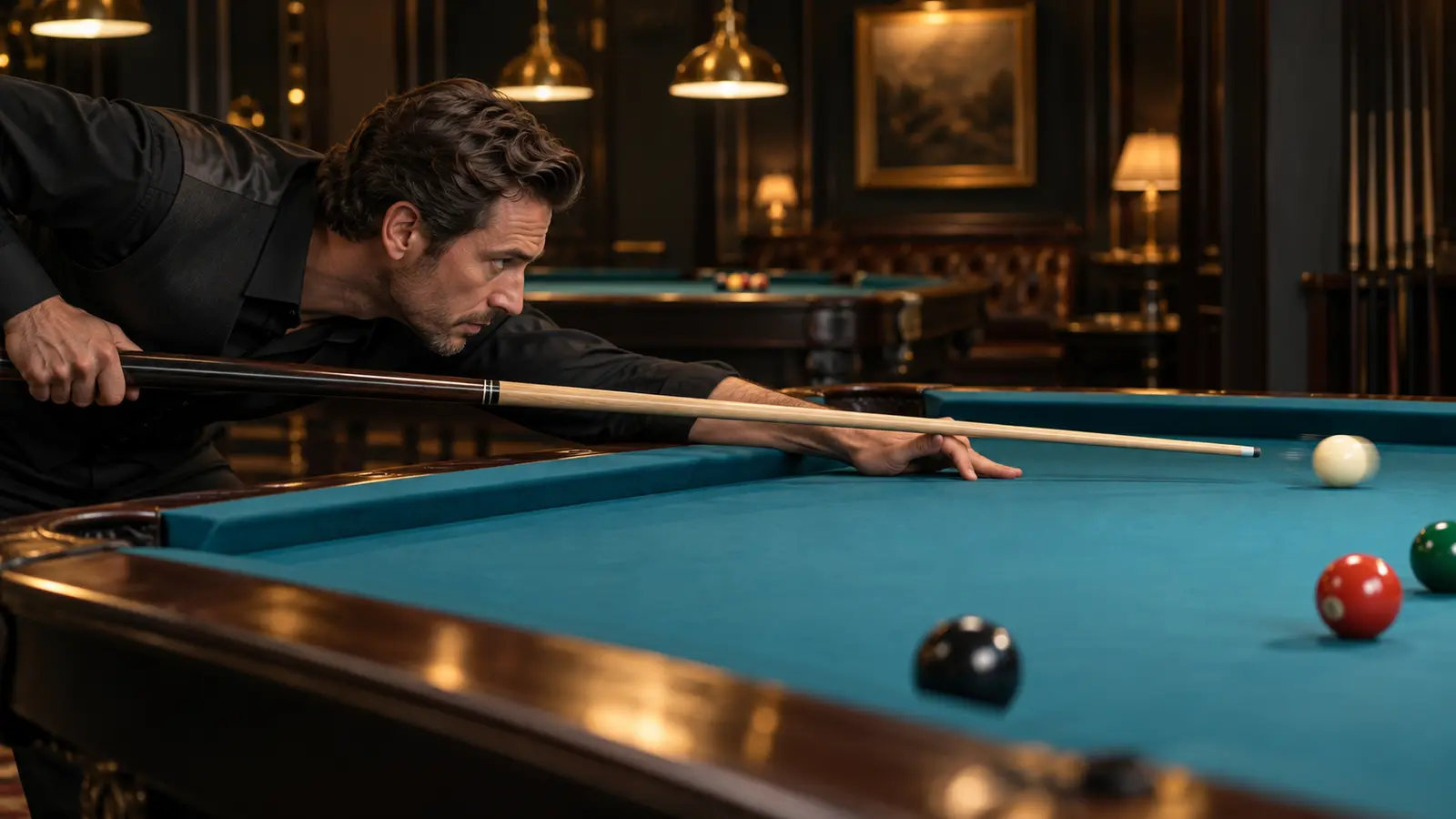
Earn stillness with balance
Place the feet so the body can remain down without leaning heavily on the bridge hand. Lower into the stance, then check whether the head and torso feel supported before the cue begins moving.
If the body rocks when the cueing hand is relaxed, rebuild the stance. Trying to freeze an unstable position adds tension without solving the balance problem.
Let only the necessary parts move
During warm-up strokes, the forearm can swing while the upper arm, shoulder, head and bridge remain quiet. Some players use a different stroke pattern, but every extra body movement should be deliberate and repeatable rather than a reaction to impact.
Watch for a shoulder lift, head turn or bridge slide that begins before contact. Those changes can redirect the cue while the shot is still being delivered.
Keep the eyes quiet at delivery
Complete the final visual check before the forward stroke. Do not chase the moving cue ball with the head as the tip approaches contact.
After impact, keep the face and chin in place for a short moment and observe the ball path from the same viewpoint. Standing immediately removes useful feedback about the cue's finish.
Hold the finish without posing
Let the cue finish naturally along the intended line, then count one beat before rising. The hold should reveal the result, not force the arm into an artificial position.
If balance requires a step or the grip collides with the body, change the stance or bridge length. A still finish should feel sustainable, not like a photograph captured at the edge of a fall.
Diagnose the first movement
Film one straight shot from the front and another from the side. Identify the first body part that moves away from its set position; later motion may only be a consequence.
Change one cause at a time. A head lift can come from poor balance, fear of the cue hitting the body, an overlong backswing or an urge to watch the pocket too early.
Use a ten-shot stillness check
- Set a comfortable straight-in shot.
- Balance before placing the bridge hand.
- Complete the final visual check at the set position.
- Deliver and hold the finish for one beat.
- Score head, torso and bridge as quiet or moving.
- Correct the earliest repeated movement before adding speed.