
Position play · 2 min read
Use Short-Side Position Only When It Solves the Rack
The short side is the smaller, more restricted side of the next useful position area—often between an object ball and a nearby rail. Reaching it can create a natural cut or open the next route, but the landing window is less forgiving. Treat short-side position as a specific pattern solution, not as proof of advanced cue-ball control.
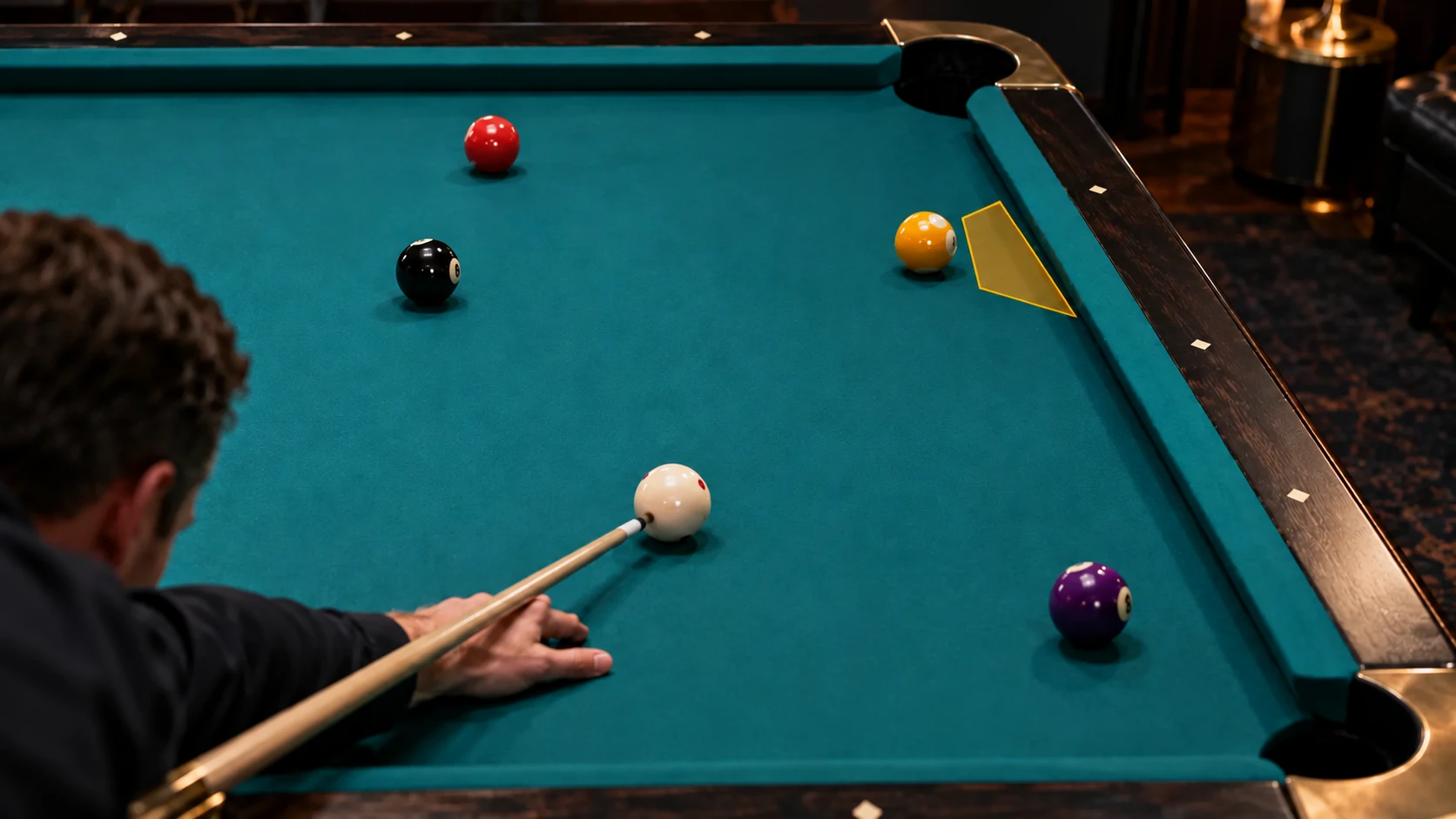
Name the benefit before choosing the risk
Use the short side when it creates a clearly better pocketing angle, avoids traffic or gives access to the correct side of a later ball. If the larger side offers a simple route, take the larger margin.
Work backward from the next two shots. A beautiful landing on the narrow side is still a mistake if it leaves no route after the next ball.
Draw the full landing zone
Identify the rail boundary, the object ball, any blockers and the angles that remain makeable. The target is an area with a useful shot line, not a single imagined dot.
Mark the zone with removable paper markers during practice. Compare its width with the normal-side target so the added difficulty is visible before you choose the route.
Enter along the long dimension
Whenever possible, choose a cue-ball path that travels through the target zone rather than crossing its narrow width. A small speed error then changes where the cue ball stops without immediately leaving the usable area.
Check natural stun, follow and draw reference lines before adding sidespin. The simplest route usually gives the most reliable speed window.
Protect the rail and scratch lines
A nearby rail can shrink the bridge space and turn excess speed into a snooker or scratch. Map both the intended path and the miss path before committing.
If two-rail shape widens the speed margin compared with forcing one rail, test both. The shortest path is not automatically the safest.
Practice from the next shot backward
Set the desired short-side position first and shoot the next ball to confirm that the angle actually helps. Then replace the cue ball at the prior shot and practice entering the zone.
Record how often you reach a usable angle, not merely whether the object ball is pocketed. Compare the result with the normal-side option over equal sets.
Use a decision checklist
- What exact problem does the short side solve?
- How wide is the usable landing zone?
- Can the cue ball travel through the zone's long dimension?
- Where are the rail, blocker and scratch boundaries?
- What shot and route remain after the next ball?
- Does the normal side offer a larger honest margin?