
Strategy · 3 min read
Break Pool Clusters Without Losing Control
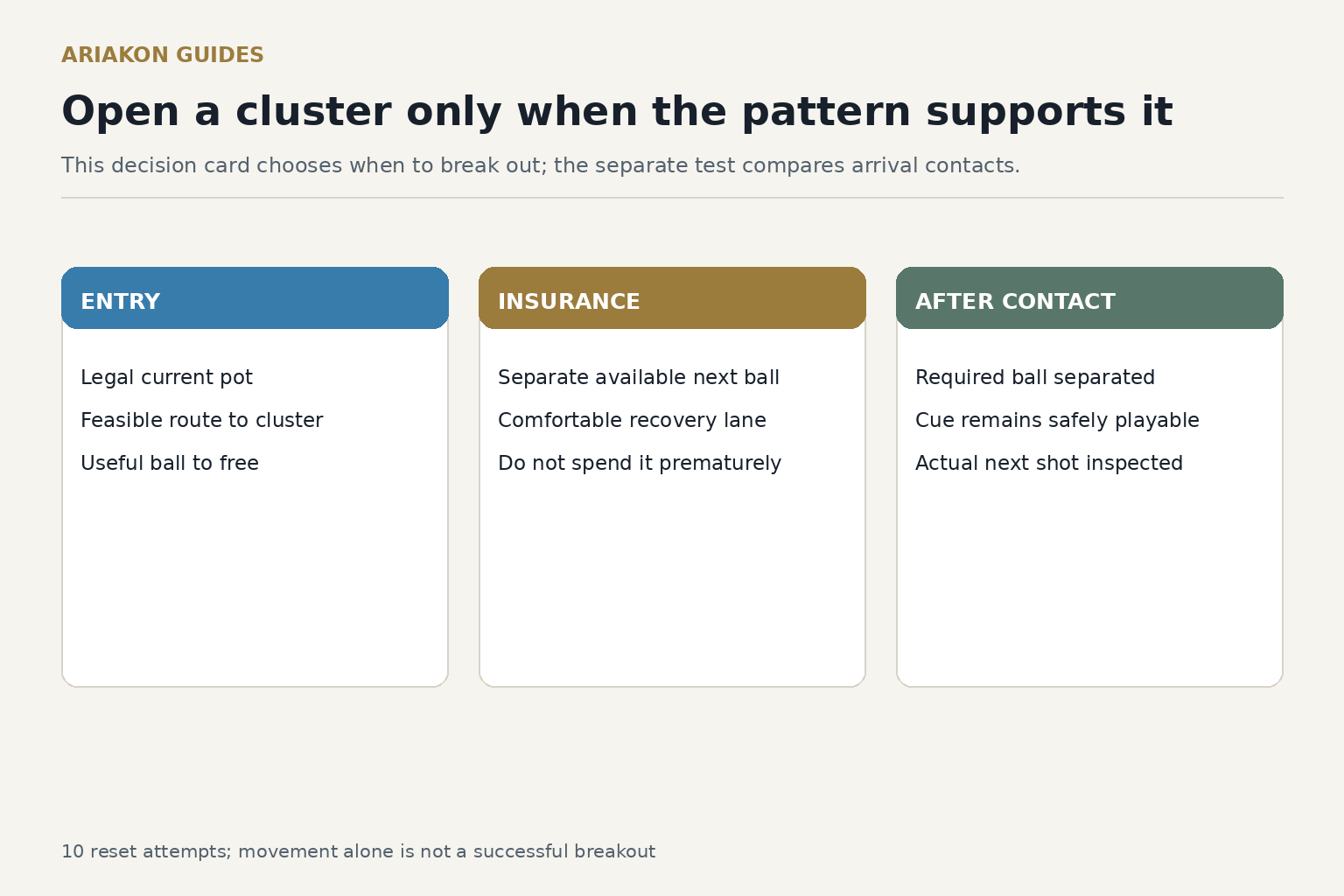
A cluster is not solved merely because balls move. A good breakout creates a pocketable ball, keeps the cue ball away from scratches and leaves a next shot. The most reliable plan identifies the problem early, chooses a controlled contact point and keeps an insurance ball available.
Read the cluster before choosing a group
In eight ball, examine which solids or stripes are tied up before committing to a group. Identify balls that share a pocket, block each other or have no useful route. Write which group has a workable route before treating an early open pot as the best choice.
Also check whether the opponent’s ball is part of the cluster. Opening it may improve both layouts. Sometimes the better plan is to develop another pocket or play safe rather than solve everything immediately.
Choose the entry ball and contact point
Work backward from the cluster. Which nearby object ball lets the cue ball contact the cluster naturally after a make? Favor a route that approaches a visible edge rather than charging into the center without a predicted result.
Pick the specific ball and side of the cluster you want to touch. A small change in contact can decide whether one problem ball opens or the whole group scatters unpredictably.
Keep an insurance ball
An insurance ball is a separate, available shot that remains after the breakout. Position it near the expected cue-ball finish so the run can continue even when the cluster opens differently than planned.
Do not use the insurance ball as the breakout ball unless another recovery shot remains. Preserve it until the difficult work is complete.
Use only the speed the job needs
- Open a two-ball tie with light contact before considering a hard collision.
- Avoid driving the cue ball toward a pocket or rail gap.
- Predict where the first freed ball can travel.
- Keep already-open balls away from unnecessary collisions.
- Favor a broad post-contact cue-ball zone.
- Re-read the entire layout after the balls stop.
Practice controlled breakouts
Build the same three-ball cluster and place one entry ball plus one insurance ball. Shoot ten attempts and record whether the target ball opens, the cue ball remains safe and a next shot exists.
Change one element at a time: contact side, cue-ball angle or speed. A successful breakout is all three outcomes together, not the loudest spread.
Know when to delay or defend
Break the cluster early when a reliable entry and insurance ball are available. Delay when the only angle requires excessive speed or risks opening the table for the opponent.
A safety can move a problem ball while leaving the opponent limited. Treat cluster management as pattern play: solve the obstacle at the moment with the largest margin, not simply at the first possible collision.
Sources and further reading
References support the specific factual information above. The practical checklists are Ariakon editorial guidance.