
Practice · 3 min read
Maintain Pool Stroke Readiness During a Busy Week
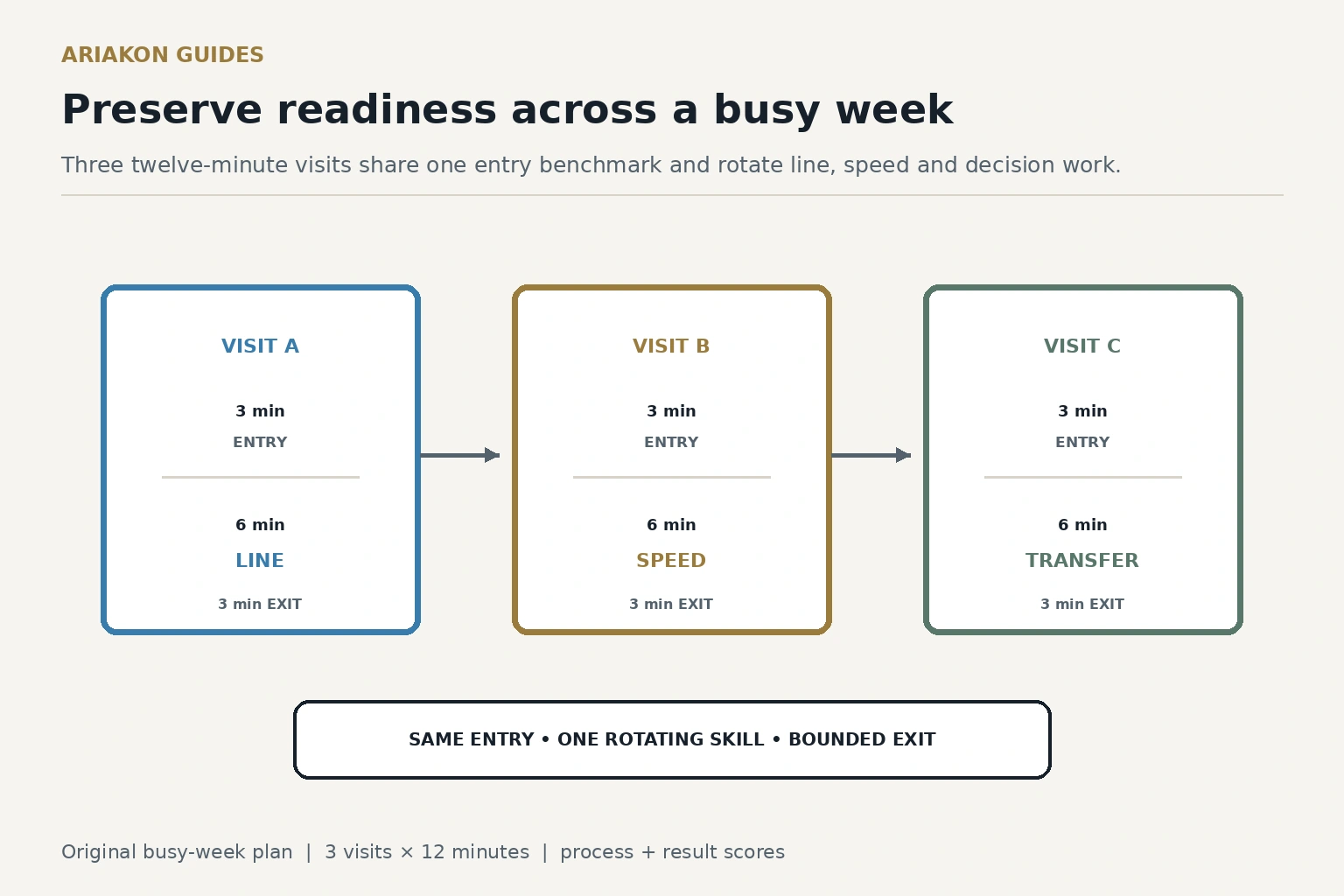
A busy week is a maintenance problem, not the best time for a stroke rebuild. Use three short table visits with the same entry shot, one rotating skill and one exit decision. The twenty-minute tune-up prepares for immediate play; this plan distributes readiness checks across several days and shows when maintenance is no longer enough.
Define readiness with three components
Readiness means the familiar process is available and the table has been calibrated. It does not mean peak form. Record raw counts so one short session is not exaggerated into a permanent improvement or decline.
| Component | Fixed task | Evidence |
|---|---|---|
| Line | Six straight center-ball shots | Pocket plus cue-ball finish corridor |
| Speed | Six rolls to a one-diamond target zone | Ball finishes inside zone |
| Decision | Six simple two-shot layouts | Route named before lowering plus completion |
Use the twenty-minute pre-play tune-up when a match or session starts immediately afterward.
Run a balanced fundamentals workout when normal practice time returns.
Schedule three twelve-minute visits
Leave at least one ordinary day between visits when possible. If only one visit is available, use the twenty-minute tune-up instead of pretending three distinct checks occurred. If no table is available, prepare marks and decisions off table but do not record physical readiness scores.
| Visit | Minutes 0–3 | Minutes 3–9 | Minutes 9–12 |
|---|---|---|---|
| A — Line | Inspect, settle, two easy shots | Six straight-line attempts | Two ordinary shots; note miss side |
| B — Speed | Repeat two entry shots | Six target-zone rolls | One two-shot route twice |
| C — Transfer | Repeat two entry shots | Six two-shot decisions | Repeat the weakest component twice |
Score every visit without adding technique
Each six-attempt block has a maximum of twelve. Keep process and result totals separate. The busy-week rule is one cue only: if an error repeats, write it down for later practice instead of installing a new stance or stroke under time pressure.
| Point | Line visit | Speed visit | Transfer visit |
|---|---|---|---|
| Process | Cue stays in corridor | Named speed used | Route named before lowering |
| Result | Pocket and center finish | Target zone hit | First shot plus playable second shot |
Use entry and exit checks to read the week
The two easy entry shots are the same marked straight shot every visit. They are not a formal score, but they show whether the body and table need more settling. The exit task varies slightly so a preserved benchmark is not confused with memorizing one layout.
If a repeated miss side appears on two visits, add one full diagnostic session when the week permits. If line remains stable but speed shifts, recalibrate the table before changing mechanics.
Worked week and return-to-practice rule
A hypothetical player scores Line 10/12, Speed 7/12 and Transfer 9/12. On Visit C, the two weakest-component repeats both finish long. The week preserved delivery and decision readiness, while speed needs a longer calibration block. The next full session starts with twelve target-zone rolls rather than a stroke rebuild.
After the busy period, compare the same line and speed tasks with the last ordinary-week record. Resume a balanced workout when either component remains below its usual range for two matched sessions. Stop immediately for pain, dizziness, unsafe fatigue or damaged equipment.