
Practice · 2 min read
Learn Pool as an Adult Without Rushing the Process
Experience is not a reason to stop learning, but it can tempt you to protect old habits. Treat a change as a small experiment: choose one observable skill, practice it at a manageable difficulty and keep evidence of what improves. Age does not erase the need for repetition, recovery and feedback.
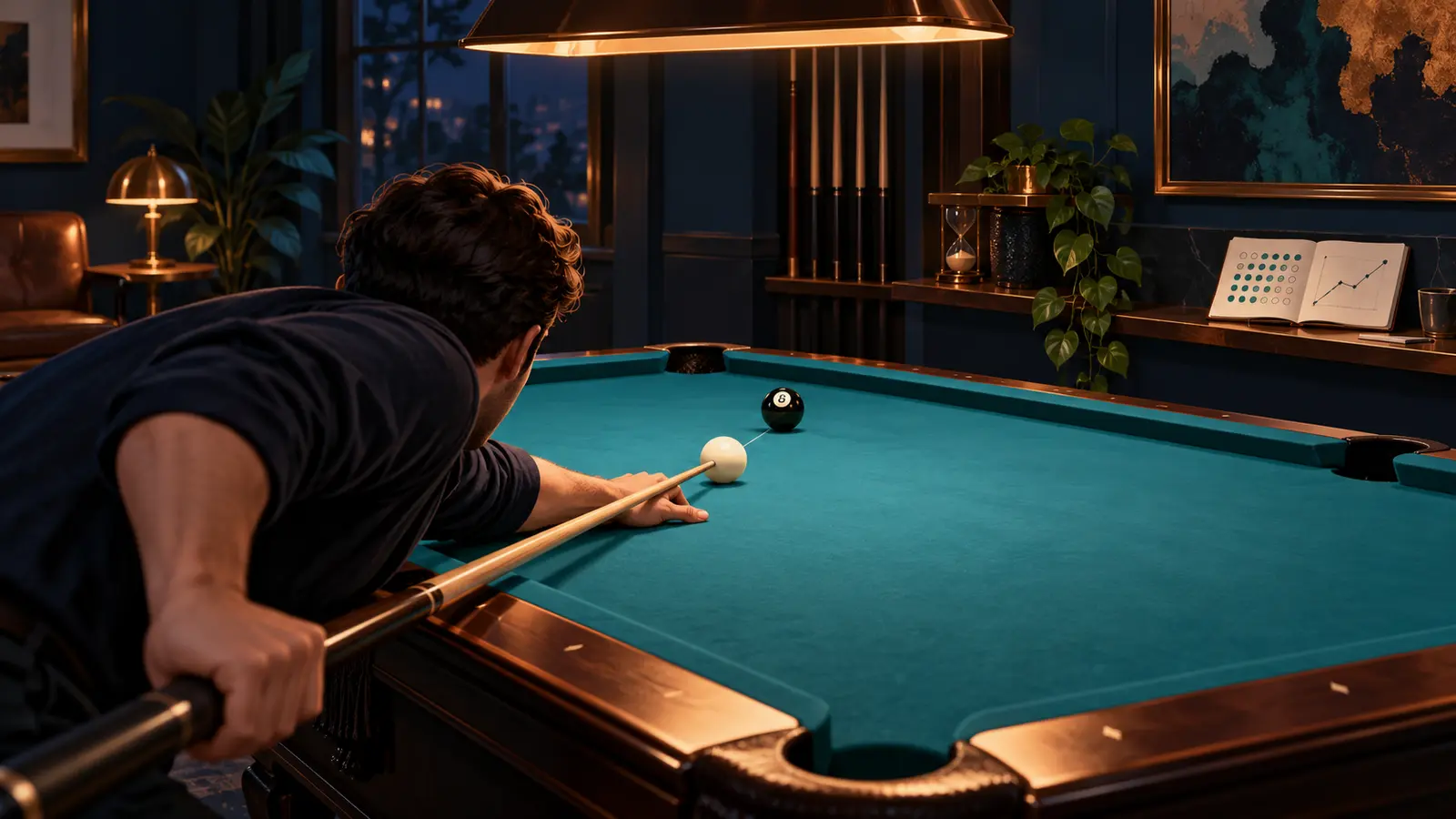
Start with a baseline, not a verdict
Shoot a repeatable ten-shot test before changing anything. Record makes, cue-ball finish and the most common miss. A baseline turns 'I am too old to learn this' into a specific result you can revisit.
Measure aiming, alignment, stroke and speed control separately under the same conditions before and after a practice block. The comparison should identify one useful next task rather than predict progress from the player's age.
Shrink the change
Choose one task, such as finishing the cue on line or stopping the cue ball inside a hand-sized target. Keep your bridge, speed and shot layout simple while the new action is unfamiliar.
Do not rebuild stance, grip, aim and delivery in the same session. When several variables move at once, a good or bad result cannot tell you what caused it.
Use progressive difficulty
Begin close enough to succeed with attention, then add distance after a run of clean attempts. Move closer again after repeated misses. Difficulty should expose the next error without turning every attempt into survival.
This approach keeps feedback relevant. A miss from a moderate distance can reveal alignment or speed; a desperate table-length shot often reveals only that the task was too hard.
Let feedback guide the next set
Use one external result: object-ball entry point, cue-ball path or final target area. Add video or a qualified coach when the result repeats and you cannot identify why.
Treat your own repeatable baseline as the comparison. Rates of progress vary; this practice design does not predict them from age or promise a clinical or neurological effect.
Finish while the practice is still useful
- Warm up with five comfortable center-ball shots.
- Run two sets of ten on one measured task.
- Pause briefly between sets and name one adjustment.
- Stop if fatigue changes the stance or delivery.
- Repeat the baseline weekly, not after every miss.
- Keep the change only when it survives normal game shots.