
Stroke mechanics · 3 min read
Keep the Pool Cue Grip Stable During the Forward Stroke
A stable grip is not a frozen hand. Fingers can accommodate the cue as it swings, and some movement after impact is normal. The useful target is a cue that arrives without an abrupt pre-contact squeeze, wrist twist or hand lift that changes tip height or direction.
Define what the camera should look for
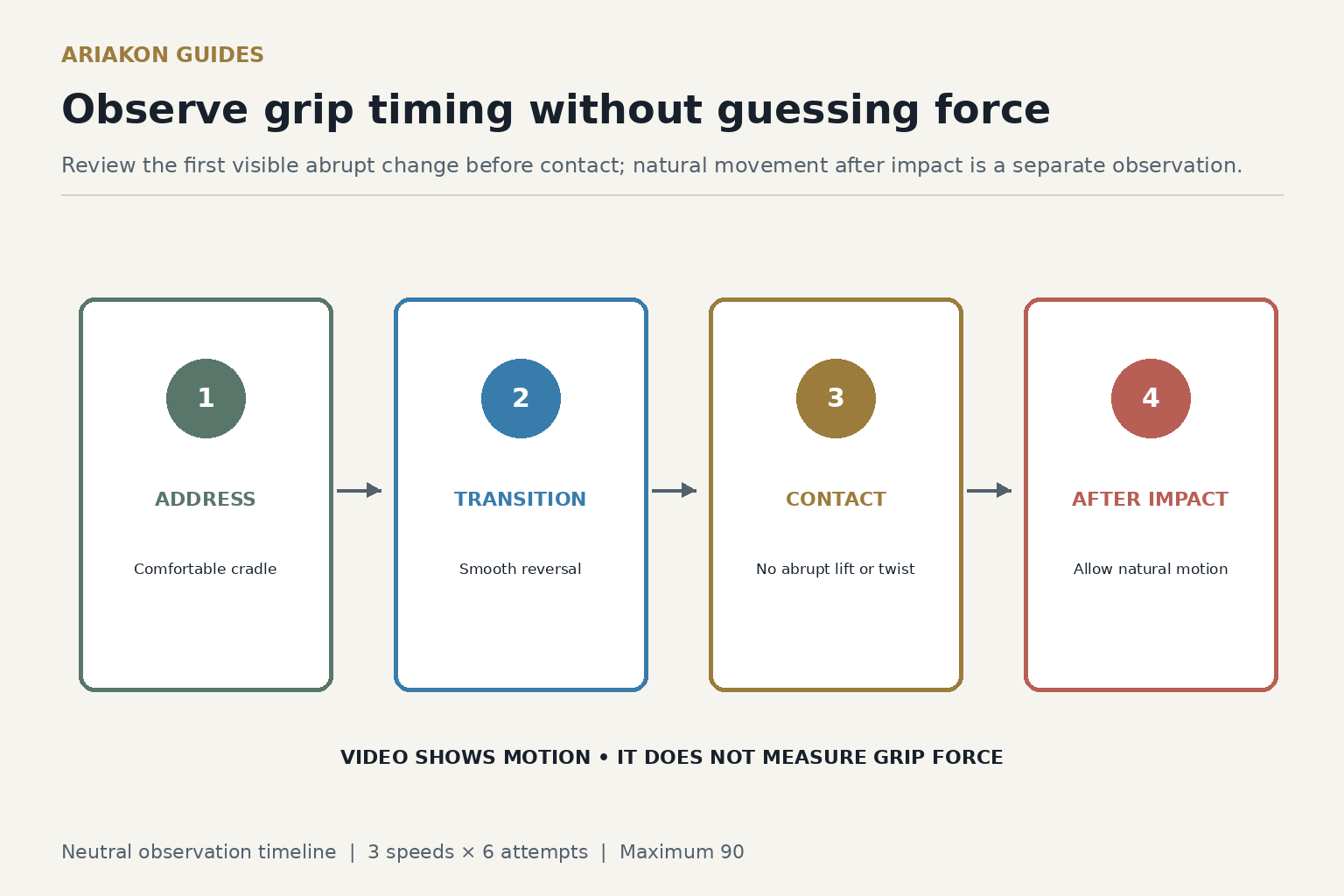
Frame the grip hand, wrist and lower forearm from the side, with the device safely outside the stroke and ball paths. Make three slow rehearsal swings. At address the cue rests in a comfortable cradle; through transition the wrist stays neutral for that player; approaching contact there is no sudden finger clench, thumb press, lift or sideways roll.
Do not require the hand to look identical after the cue ball is gone. Visible post-impact hand flex does not by itself establish a pre-contact error. Use the first visible abrupt change before contact as diagnostic evidence, and compare it with the tip mark and cue path rather than inferring grip force from a still frame.
Build a relaxed baseline grip before testing when the hand changes.
Observe the whole stroke systematically if the first movement is outside the hand.
Use one straight shot at three deliveries
Place the object ball one diamond from a corner and the cue ball two diamonds away. Mark both centers. Choose a comfortable grip position and do not slide the hand merely to create more power. If the firm set cannot be delivered without a lunge, shorten the backswing and reduce the requested speed.
| Station | Delivery | Attempts | What stays fixed |
|---|---|---|---|
| A | Pocket speed | 6 | Straight centers, vertical-axis hit |
| B | Medium position speed | 6 | Same ball centers and grip placement |
| C | Firm controlled speed | 6 | Same line; stop before strain |
Score the forward-stroke timeline
| Point | Visible requirement |
|---|---|
| 1 | Grip position selected before bending |
| 1 | Back-to-forward transition is unhurried |
| 1 | No abrupt squeeze before contact |
| 1 | No wrist lift or sideways twist before contact |
| 1 | Object ball reaches the called pocket |
| Maximum 90 | Six attempts at each delivery speed |
Change only the first unstable event
| Evidence | Next action |
|---|---|
| Thumb presses into the cue before contact | Rehearse a cradle with the thumb resting, not pinching |
| Fingers snap closed at transition | Slow the transition and reduce backswing length |
| Wrist lifts and tip drops | Return to pocket speed; keep wrist orientation neutral |
| Hand twists only at firm speed | Lower speed until the line is stable, then rebuild |
| Hand stays stable but cue leaves line | Inspect bridge, forearm path and standing alignment |
Worked example and game transfer
A hypothetical player scores 29/30 at pocket speed, 25/30 at medium and 18/30 firm. Video shows a pre-contact thumb-and-index pinch on five firm attempts, followed by a tip drop. The next set keeps the same grip placement, reduces the backswing and rehearses a slower transition; no new wrist action is added.
For transfer, play two racks and tag only shots that require more than pocket speed. After the rack, review whether the first hand change occurred before or after contact. The goal is a repeatable arrival, not copying another player's hand shape or claiming that grip force during the tiny collision creates extra spin.