
Cue care · 3 min read
Fly With Pool Cues Without Guessing the Baggage Rules
For travel through U.S. checkpoints, the TSA currently lists pool cues as checked-bag items rather than carry-ons. That does not settle airline size limits, fees, international screening or liability. Check the current rules for every leg, then pack the cue as precision equipment inside a durable outer case.
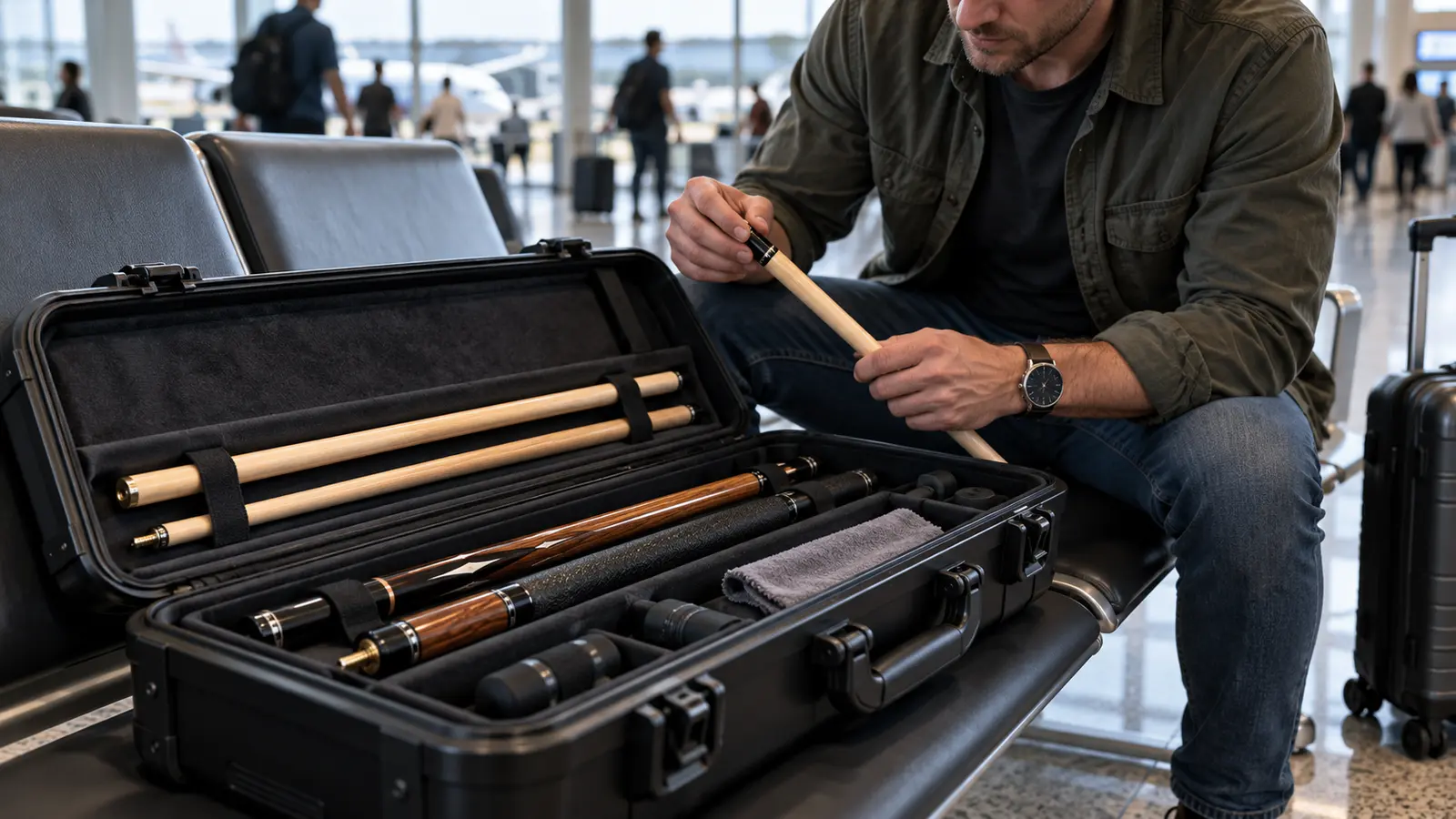
Verify both security and airline rules
Check the TSA What Can I Bring list close to departure and follow the final decision of the security officer. For travel outside the United States, check each country's screening authority as well.
Separately read the operating airline's current checked-baggage limits, sporting-equipment treatment, fees and route-specific restrictions. A codeshare may involve more than one carrier, so verify every leg.
Use a rigid protective system
Disassemble the cue and install properly fitting joint protectors. Place butt and shaft in a hard cue case that prevents side-to-side movement, then use a durable checked-bag shell or protective travel cover when airline rules allow it.
Do not rely on a soft case alone against crushing loads. Keep loose accessories from contacting shafts or finished surfaces, and do not pack prohibited tools or chemicals.
Protect against movement and climate
Use clean, non-abrasive padding to remove empty space without forcing parts into the case. Close every latch and add an identification card inside as well as a secure exterior tag.
Cues should not be left in extreme heat, cold or humidity longer than necessary. After arrival, let the closed case move toward room conditions before inspecting and assembling the cue.
Create a condition record
Photograph the assembled cue, each section, serial or identifying marks and the packed case immediately before check-in. Keep purchase or valuation records where practical, but do not place irreplaceable originals in the bag.
Read the airline's liability and claim deadlines. U.S. Department of Transportation guidance explains that airlines are responsible for repairing or reimbursing passengers for damaged baggage and contents when liability applies, but exclusions and limits matter.
Inspect before leaving the airport
Open the case in a safe area as soon as the bag is returned. Check the case, joints, shaft straightness, finish and tips before leaving the baggage-claim area.
If anything is missing or damaged, report it to the airline immediately and keep the claim number, bag tag, photographs and receipts. Do not repair the cue before documenting the condition and following claim instructions.
Use the departure checklist
- Recheck the current security rule for every country.
- Confirm each airline's size, fee and equipment policy.
- Install joint protectors and immobilize every cue section.
- Photograph condition and packed placement.
- Put identification inside and outside the case.
- Inspect and report damage before leaving baggage claim.
Sources and further reading
References support the specific factual information above. The practical checklists are Ariakon editorial guidance.