
Equipment guides · 4 min read
Compare a Plain-Style Two-Piece Cue Without Inferring Its Construction
A cue with little decoration can still have a detachable joint and several different internal constructions. Choose the appearance because you like it, then document the actual build and the intended playing task separately. This guide examines the gap between what a plain-style cue looks like and what its evidence establishes; it makes no history, popularity or performance claim for a named style.
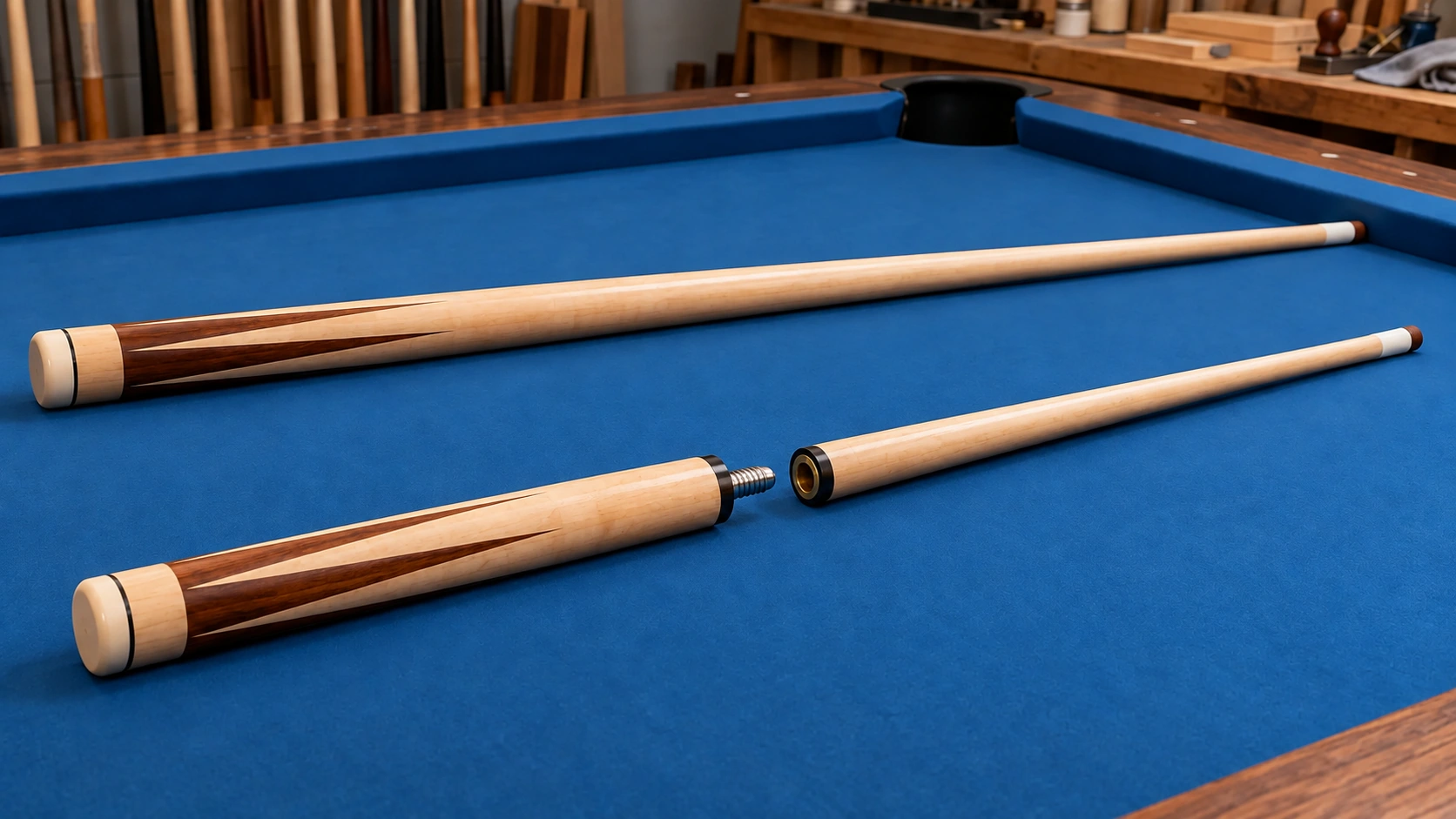
Sort appearance, build and function into separate records
Low ornament describes what you can see: little inlay work, a restrained finish and perhaps wood points. It does not tell you whether points are structural splices, how far a splice extends, whether the butt is cored or laminated, or what hidden joint components are present. Record the visible feature and the documented construction as different statements.
Likewise, a no-wrap grip is a surface choice, not proof that the cue feels like a one-piece cue. A playing role, permitted break use or service limit must come from the actual model instructions. Avoid stories about disguising equipment or assumptions that a simple exterior guarantees value or skill.
Read the construction inspection guide for the separate manufacturing evidence task.
Map complete-cue features when comparing components beyond this appearance/build gap.
Use a twelve-cell appearance/build worksheet
Four claims × three evidence cells = twelve cells. Write OBSERVED, DOCUMENTED or UNKNOWN with a date and the supporting note. A construction statement cannot move from UNKNOWN to DOCUMENTED merely because a decorative point is visible. An illustration cannot serve as a document for a real cue.
Hypothetical comparison: both cues look similarly plain, but Candidate A has a dated splice description while Candidate B has only an appearance photograph. This establishes a documentation difference, not that one build lasts longer or plays better. If Candidate B’s construction matters to the purchase, request the missing record.
| Claim | Visible observation | Dated document | Remaining unknown |
|---|---|---|---|
| Points and wood contrast | Where they appear ___ | Splice/inlay/depth description ___ | Internal extent ___ |
| Plain grip surface | Actual finish and accessible texture ___ | Finish and care instructions ___ | Response after ordinary use ___ |
| Detachable construction | Normal joint and section boundaries ___ | Exact joint/pair information ___ | Hidden components ___ |
| Playing role | Tip and overall configuration observed ___ | Permitted use and service limits ___ | Undocumented performance ___ |
Inspect the normal section boundary safely
Over a clean padded area, detach only the normal joint in accordance with the actual instructions. The usual butt carries the pin and the shaft carries its receiving assembly, but inspect rather than assume the arrangement. Look for accessible damage, a face gap in the normal matched assembly, loose components and unusual resistance. Never open a glue joint or remove a finish to prove a splice.
Document the complete joint before choosing another shaft. A visually unobtrusive joint is still a physical interface with thread, face, collar and possible pilot requirements. Stop for damage or binding; simple appearance is not permission to tighten harder.
Create the exact joint packet before considering interchangeability.
Separate mating surfaces from the fastener instead of using visible wood as a construction verdict.
Try the actual grip without creating a stress test
With the owner’s permission, handle the cue under normal dry conditions and record where your hand rests, whether the finish catches or slips, and whether ordinary stance changes the grip location. Use clean hands and follow material-specific care. Do not deliberately soak, heat, abrade or oil the grip to test it.
A cue that fits your ordinary grip can still have an unsuitable balance, length or tip response. Use the separate repeatable demo session for table performance rather than attributing every observation to the plain exterior. If you compare two complete cues, several variables change at once; a preferred cue is not proof that its point construction caused the preference.
Run the repeatable playing-cue demo with its exact setups and scoring as a separate task.
Close the evidence gap before choosing
No price, stock, warranty, maker endorsement or measured superiority is supplied here. For Ariakon carbon equipment, the current FAQ’s soft-cloth, abrasive, heat and modification boundaries apply to the documented equipment—not automatically to an unfamiliar wooden finish. Ask for the exact care record for the actual cue.
- Write the visual feature you actually want and keep it separate from performance.
- Resolve required construction, intended role and service evidence.
- Confirm the exact normal joint and any replacement-pair requirements.
- Record ordinary grip observations without a destructive challenge.
- Keep unsupported durability, feel and value statements as claims, not facts.
Choose accessories by their actual function after the cue and its care needs are established.
Sources and further reading
References support the specific factual information above. The practical checklists are Ariakon editorial guidance.