
Practice · 3 min read
Play Casual Pool Without Practicing Careless Habits
A friendly rack does not need to become a drill, and every shot does not need tournament intensity. But repeated careless movement is still repetition. The solution is not to make social pool joyless; it is to protect a few simple nonnegotiables while letting the score and difficulty stay light.
Decide what kind of session this is
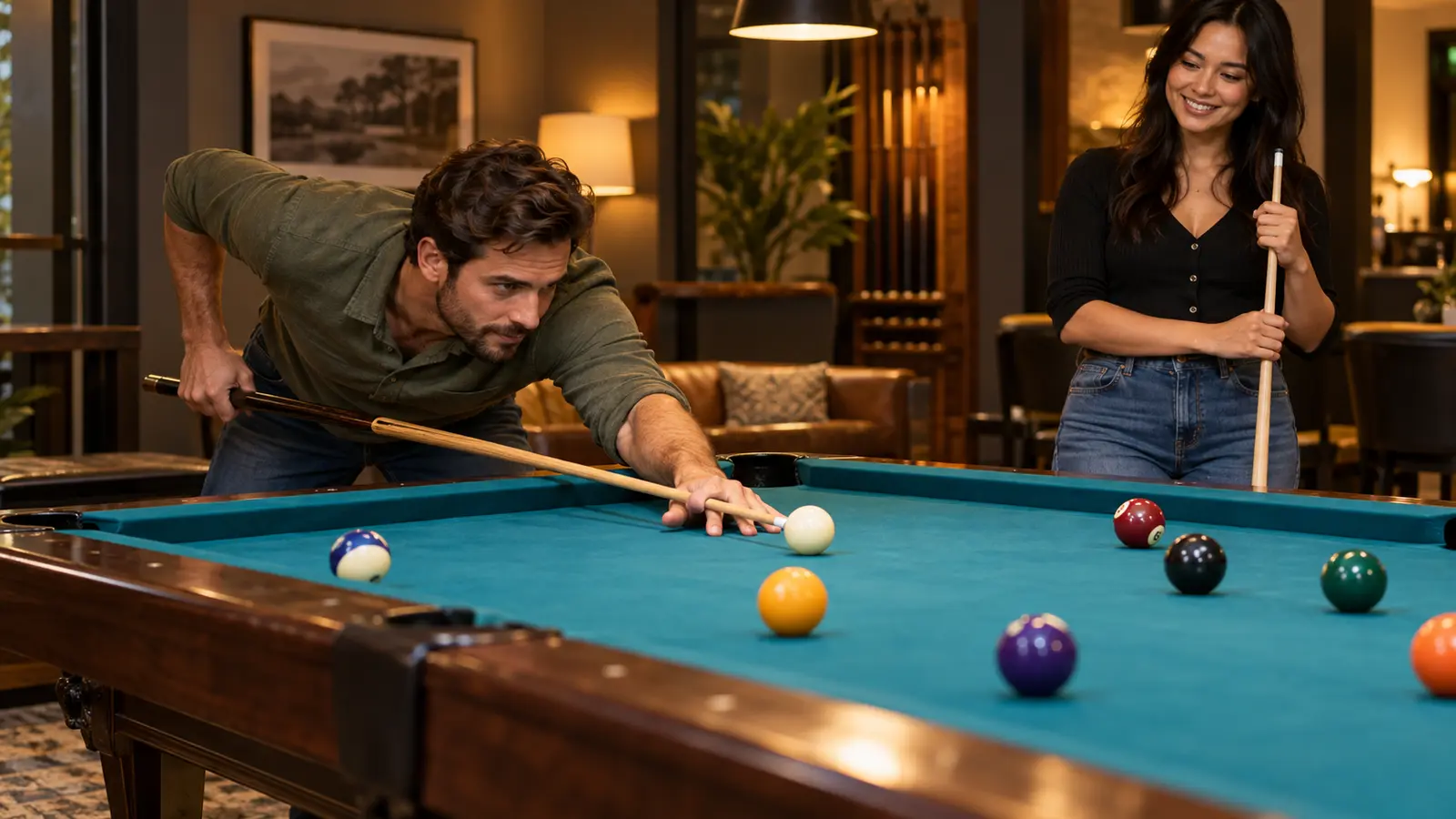
Before the first rack, choose whether the main purpose is conversation, competition or skill work. A social session can stay social. Just avoid judging it later as if it were a controlled practice test.
If improvement also matters, name one small process goal for the evening. Trying to rebuild the stance, grip, aim, speed and strategy during a friendly game usually produces noise rather than learning.
Protect three nonnegotiable habits
Use a brief pre-shot routine, build a safe stable bridge and finish the stroke without deliberately steering. These behaviors take only seconds and reduce the chance that rushing becomes your default movement.
Handle cues, balls and the table with the same care you would use in practice. Casual play is not permission for unsafe jump attempts, drinks on the rail or hard contact with the cloth.
Use one external cue
Choose an intended effect such as object ball through pocket center or cue ball into the large side of the position zone. External-focus research suggests that attention on the movement effect can support motor performance and learning better than a stack of body-part instructions.
Keep the cue stable for several racks. If a technical cue stops helping, drop it instead of adding three more.
Let variety test transfer
Friendly games present changing layouts, opponents and decisions. That variability can reveal whether a skill transfers beyond a repeated drill, but a single make or miss does not prove the technique works or fails.
When an unusual shot appears, commit to a sensible percentage choice. Save repeated experimental attempts for a later block when the table is free and the setup can be restored.
Interrupt carelessness early
If you notice three rushed shots, repeated unsafe speed or a collapsing routine, take one rack off, slow the next shot or run a short center-ball calibration. A small reset is easier than trying to erase an evening of frustration with harder strokes.
Do not turn the reset into public self-criticism. Simply return attention to the selected process and continue enjoying the game.
Close with a ten-minute baseline
- Shoot five straight center-ball shots with the full routine.
- Roll five cue balls to a generous position zone.
- Record only the setup and result, not a verdict on your talent.
- Note one layout that deserves deliberate practice later.
- Stop if fatigue makes the repetitions careless.
- End the session with the same equipment care used in formal practice.
Sources and further reading
References support the specific factual information above. The practical checklists are Ariakon editorial guidance.