
Practice · 3 min read
Build a Six Month Pool Development Roadmap
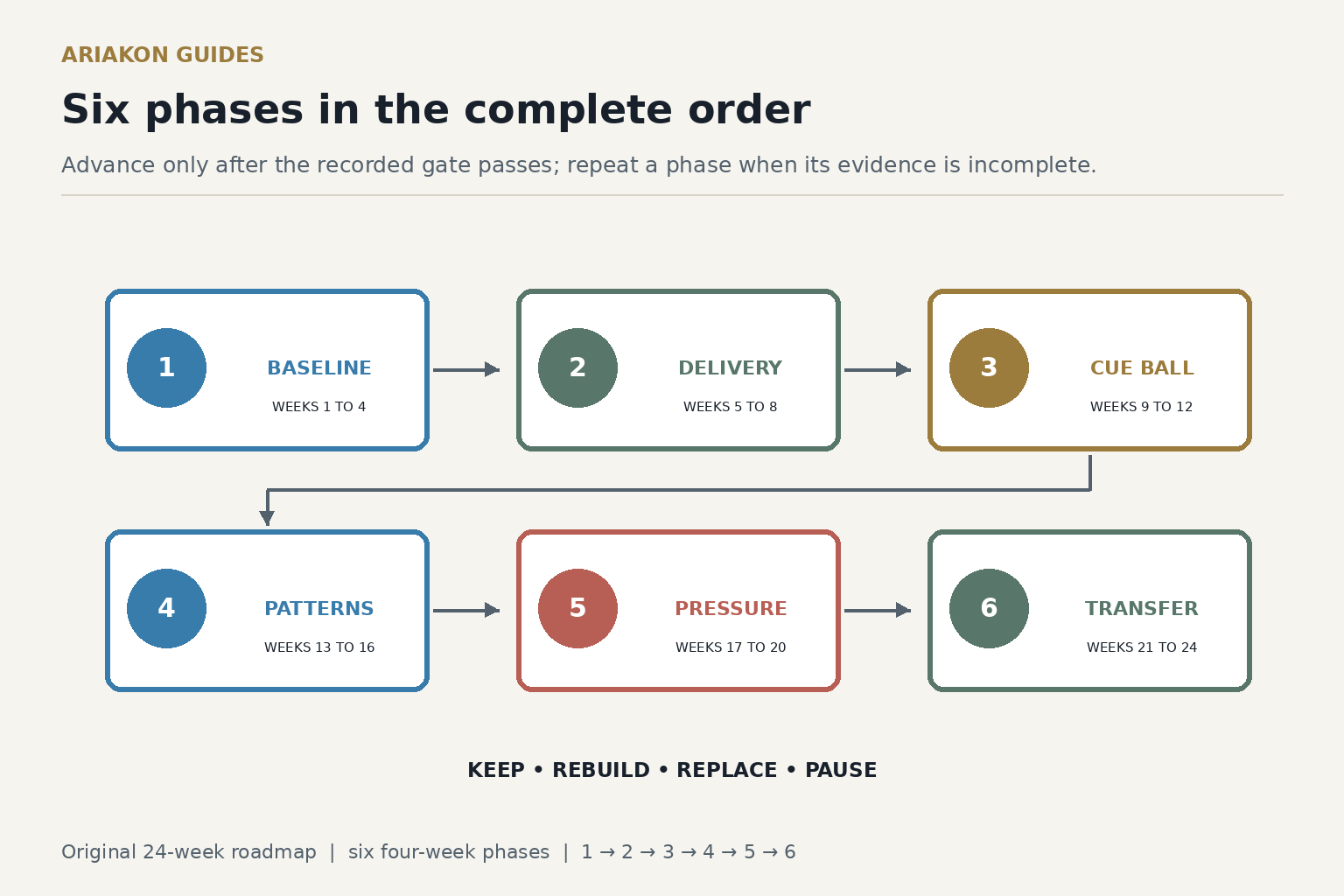
Long-term improvement is easier to manage when the next month has a job. This roadmap divides twenty-four weeks into six four-week phases, but it does not promise a level, rating or tournament result. Each phase has a baseline, a small practice dose and an evidence gate so the plan can repeat a phase instead of advancing on the calendar alone.
Choose one development destination
Use the quarterly baseline worksheet to create the starting scores. The broad deliberate-practice guide explains why focused attempts matter; this roadmap supplies the order and review gates across six months.
| Field | Write now | Boundary |
|---|---|---|
| Playing context | Home practice, league, tournament or social play | Do not borrow another player’s goal |
| Current evidence | Three registered baseline scores | No rating claim without its official test |
| Six-month destination | One observable match or practice behavior | Not a guaranteed win total |
| Table access | Sessions and minutes realistically available | Plan around real access |
| Support | Partner, instructor or solo review method | Credentials and fit must be verified separately |
Register quarterly baseline scores before filling the roadmap.
Turn table time into deliberate practice for the feedback loop inside each phase.
Sequence six four-week phases
The 80% example is a process threshold for this worksheet, not an industry standard. Replace it with a realistic, written threshold when a different component matters. A phase can repeat; skipping a gate creates calendar progress without skill evidence.
| Weeks | Primary lane | Gate before moving on |
|---|---|---|
| 1–4 | Baseline and routine stability | Rebuild three tests and complete the routine on 80% of trials |
| 5–8 | Alignment and cue delivery | Two sessions meet the chosen straight-shot component target |
| 9–12 | Stop, follow, draw and speed | Three cue-ball tasks land in declared zones |
| 13–16 | Position routes and pattern choice | Plan and complete the same three-ball pattern repeatedly |
| 17–20 | Random order and pressure simulation | Process score survives mixed tasks |
| 21–24 | Game transfer and final retest | Baseline tests plus a written next-cycle decision |
Use the same weekly skeleton
Use fewer attempts when fatigue changes technique. The plan is a workload template, not medical advice. Pain or injury requires stopping and appropriate professional guidance.
| Session | Sixty-minute example | Output |
|---|---|---|
| A — Build | 10 warm-up, 35 primary skill, 10 transfer, 5 notes | Component score |
| B — Repeat | 10 warm-up, 25 primary, 20 related skill, 5 notes | Second comparable score |
| C — Test | 10 warm-up, 20 registered test, 25 game-like play, 5 notes | Gate evidence |
| Limited access | One shorter session with test plus primary skill | Preserve the baseline; reduce volume |
Worked roadmap: from delivery to patterns
A hypothetical league player has reliable short pocketing but inconsistent long straight shots, weak stop distance and no written pattern plan. The six-month destination is to enter a league rack with a declared three-ball route and complete the routine under a simple shot clock used in practice.
Weeks 5–8 repeat because the first gate shows centered pocket entry but lateral cue-ball drift. After a center-contact block, the second gate passes. Cue-ball control begins in Week 13 rather than Week 9. The calendar moved; the evidence sequence stayed intact. By the final phase, the player compares the original three tests and records which gains transferred to racks.
Close the cycle with three decisions
| Decision | Evidence | Next action |
|---|---|---|
| Keep | Improved and transferred | Maintain with a small weekly dose |
| Rebuild | Improved in drills but not play | Add representative decisions and pressure |
| Replace | No improvement across comparable retests | Narrow the task or obtain qualified coaching |
| Pause | Access, health or motivation changed | Preserve records and restart with a new baseline |
Sources and further reading
References support the specific factual information above. The practical checklists are Ariakon editorial guidance.