
Equipment planning · 3 min read
Pack a Pool Cue Case for Match Day Without Overloading It
Match-day packing starts with the event you are attending, not a universal list of possessions. This load audit keeps necessary equipment protected and frequently used items accessible. It is separate from choosing case dimensions or planning airline baggage: use a case that has already passed its fit check, then qualify the actual load for this event.
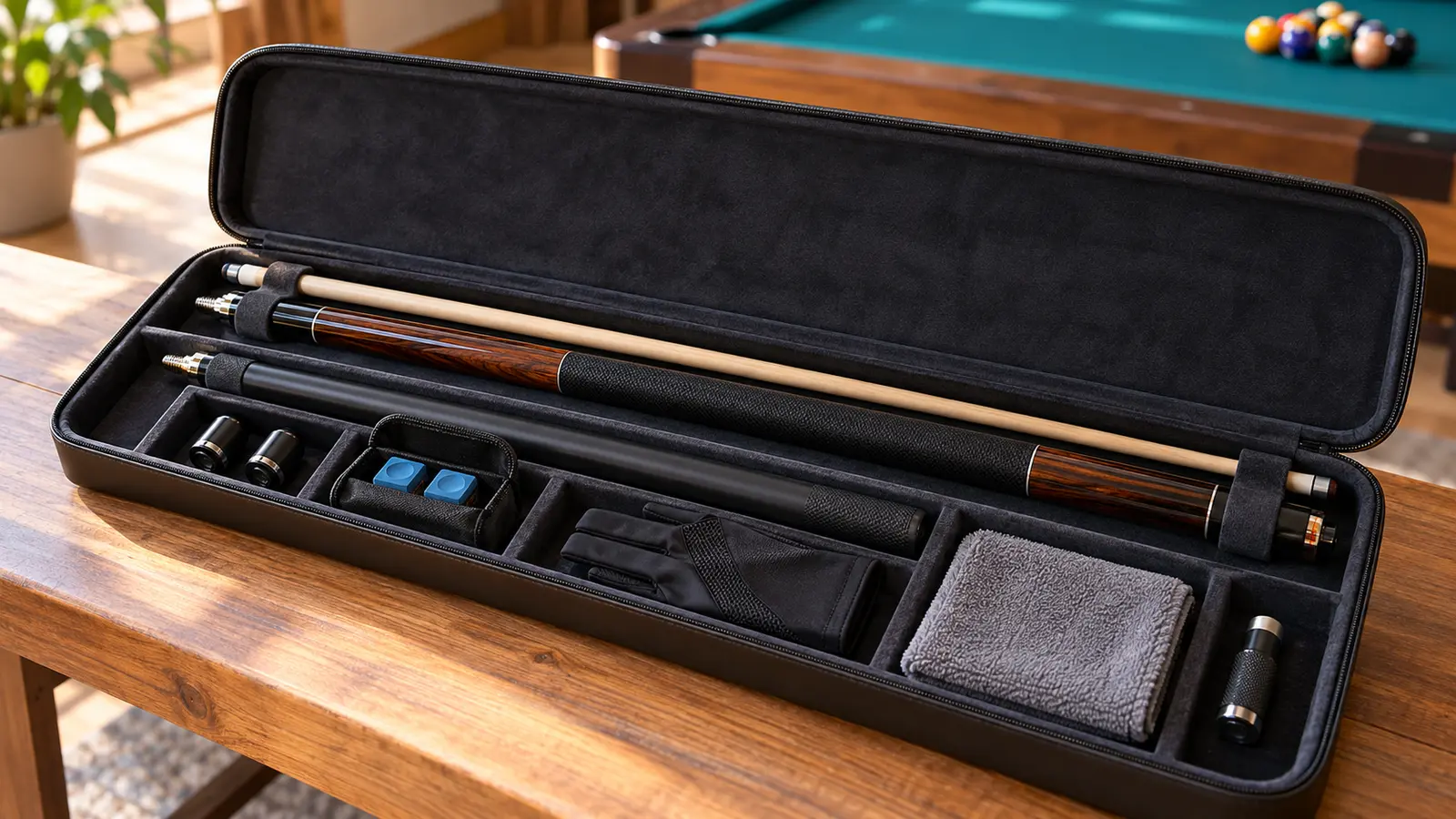
Write the event card before opening the case
Mark an unconfirmed permission UNKNOWN, not permitted by habit. The governing rules and event organizer determine acceptance; a shop description does not. Identify a safe fallback for a damaged cue before deciding that every possible repair tool belongs in the load.
| Field | Evidence to save |
|---|---|
| Event and venue | Date, location, arrival instructions and organizer contact |
| Equipment permissions | Current event rules for extra cues, extensions, templates and accessories |
| Playing load | Each butt, shaft and permitted spare you actually intend to use |
| Access needs | Items required before play, between racks and after play |
Verify case fit before using this event-load worksheet.
Check your transport route for walking, driving or flying requirements.
Check the Ariakon break/jump listing if that role is part of your permitted load; verify the actual configuration rather than assuming case fit.
Allocate three zones with no cross-contact
Keep hands and cue-care cloths separate. A cloth that absorbs hand products should not automatically wipe the shaft. Cap working faces before storage. If a tool requires an emergency repair you cannot safely perform, omit it and carry the service record instead. Health supplies need their own secure storage and access, following their instructions.
| Zone | Include only when needed | Exclude |
|---|---|---|
| Protected sections | Dry cue sections in fitted compartments; compatible protectors if instructed | Keys, coins, loose hard tools or pressure from an overfilled pocket |
| Clean contact items | Contained chalk; clean glove; separate hand towel and approved cue-care cloth | Open powders, leaking liquids or a cloth used on an incompatible material |
| Documents and covered tools | Event card, identification, small record sheet; a familiar permitted covered tool | Exposed edges, unsupported repair supplies or an untested new procedure |
Audit tool substitution to reduce duplicated functions without exposing sharp surfaces.
Separate shaft-care kits when carrying different shaft materials.
Run three retrieval rehearsals on a clear surface
With the real load closed, place the case on a stable surface away from table cloth. Rehearse retrieving the playing cue, then the between-rack contact item, then the event document. Return each to its assigned location before the next rehearsal. Do not reach past exposed metal, open a cue compartment to reach chalk or set a section where it can roll.
For each retrieval, record elapsed time if useful and count unrelated items removed. Zero unrelated removals is the organization target, not a universal time limit. Rearrange accessible pockets if you repeatedly unload the case, then repeat all three. Never obtain a faster time by dropping protective covers or leaving the case unsecured.
Complete twelve departure confirmations
Maximum: 12 confirmations. All twelve must be verified for a completed departure record. UNKNOWN and FAILED both leave that field unconfirmed. Any unsafe fit, exposed edge or missing permission stops packing regardless of the total. A 12/12 record is a documented check, not a guarantee against loss or impact.
| Group | Required confirmations |
|---|---|
| Permission | Event details saved; current rules saved; each cue permitted; each accessory permitted |
| Protection | Dry sections; correct compartments; protected joints as instructed; no closure force or internal contact |
| Access | Three retrievals completed; items returned; documents accessible; closure and carry fittings secure |
Use the log to remove the right item
Hypothetical example: the playing cue fits, but a second tool pouch presses against a shaft compartment and the zipper needs force. Permission is 4/4, Protection 3/4 and Access 4/4: 11/12 is not ready. Remove the redundant pouch, confirm the compartment remains isolated and recheck closure. Only then can the record reach 12/12.
After the event, mark each item USED, UNUSED or NEEDED BUT ABSENT. Keep required identification and justified spares even if unused once. Remove optional duplication after several event records, not by guessing that an unused safety fallback has no purpose. This loop improves the next load without becoming an accessory buying list.
Evaluate an accessory purchase when the missing item solves a repeated problem.
Track cue condition through travel for departure-to-storage custody evidence.
Sources and further reading
References support the specific factual information above. The practical checklists are Ariakon editorial guidance.