
Equipment guides · 4 min read
Choose a Pool Cue Case for Walking, Driving or Flying
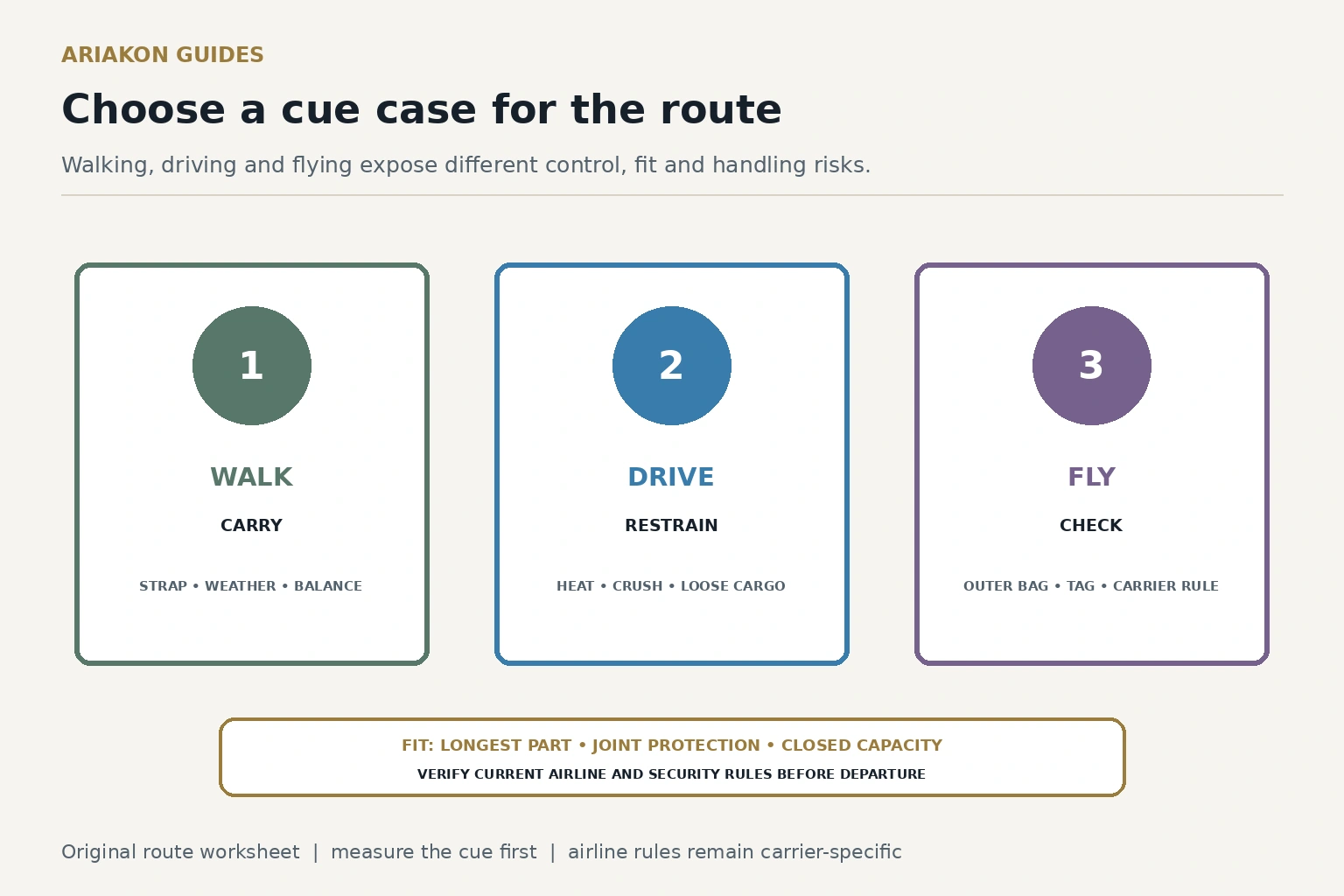
A case that works for a short walk may be awkward in a vehicle and insufficient as checked baggage. Start with the same measured equipment inventory, then add the hazards of the actual route. The general case guide covers capacity and basic fit; this worksheet compares carrying, vehicle and flight conditions without claiming one case is best for everyone.
Build one measured load card
| Record | Measurement | Fit evidence |
|---|---|---|
| Butts and shafts | Count and longest protected section | Usable internal length and compartment |
| Jump sections | Count, length and diameter | Dedicated sleeve or measured pocket |
| Extensions and tools | Longest item and packed location | Closure works without pressure |
| Loaded case | Total weight with ordinary contents | Carry test uses real load |
| Fragile or loose items | Chalk, tools and electronics | Separated from cue finish |
Choose a case that fits your equipment for capacity labels, internal length and first-arrival fit checks.
Plan pool-equipment delivery when shipping is safer than checking the cue.
Compare the route, not just the shell
| Route | Primary risks | Evidence to check |
|---|---|---|
| Walking | Loaded weight, rain, visibility, strap failure and crowding | Ten-minute loaded carry; secure attachment points; weather plan |
| Driving | Heat, theft, shifting cargo and impact | Case fits secured passenger/cargo location; remove after trip |
| Flying | Checked handling, airline size/weight, inspection and delayed baggage | Current TSA and airline rules; outer travel protection; identification |
| Mixed route | Transfers between all three | Weakest segment controls the protection plan |
Run a loaded walking test
Pack the ordinary tournament load and walk ten minutes on a safe familiar route. Check strap adjustment, pressure points, case swing, closure security and whether a pocket or buckle catches clothing. Set the case down as you would at a crowded venue and confirm it does not obstruct a walkway.
A comfortable empty case is not useful evidence. Record loaded weight and any adjustment. Do not continue a test that causes pain, loss of balance or unsafe distraction near traffic.
Check at minute 0, minute 5 and minute 10: secure attachments, closed compartments, controlled case movement and comfortable safe carriage. That is 3 × 4 = 12 confirmations. Require 12/12 for this route trial, with any pain, instability or equipment shift stopping it immediately. This is a personal fit check, not a drop, weatherproofing or crash test.
Treat a vehicle as transport, not storage
A hard shell does not make long exposure to vehicle heat, moisture or theft safe. Follow each cue and case maker's storage instructions.
| Before driving | During transport | At arrival |
|---|---|---|
| Close every compartment | Secure against sliding or crushing | Remove cue and valuables |
| Separate liquids and sharp tools | Keep away from direct heat where practical | Inspect after unusual impact |
| Record case and contents | Do not leave visible and unattended | Let condensation or dampness dry safely |
Verify air-travel rules for the exact trip
Checked on October 13, 2026, TSA’s official indexed pool-cue listing classifies cues as checked baggage, not carry-on, with the screening officer retaining final authority. The direct page returned an access error during this check; verify the official listing again for your trip. Airline dimensions, fees, handling and liability remain separate facts to obtain from the operating carrier for each segment.
A cue case designed for room-to-room use may need a separate rigid or padded outer travel container. Protect protruding hardware, prevent internal movement, place identification inside and outside, photograph the packed condition and keep irreplaceable small items within whatever carry-on rules allow. A lock does not guarantee that a bag will not be inspected.
Worked comparison: one load, three decisions
A hypothetical player carries two butts, four shafts, a jump handle and an extension. The 2×4 interior fits every protected section. The loaded shoulder carry passes ten minutes, and the case can be secured flat in the vehicle. For a flight, however, the case exceeds the player's airline bag plan and has exposed hardware.
The worksheet does not force a larger everyday case. It keeps the fitted case for walking and driving and adds a measured outer checked-baggage solution for flying, after current airline confirmation. If the outer protection cannot be verified, insured shipping or rental equipment becomes the comparison—not wishful packing.
Use a final five-gate departure record: measured outer dimensions; loaded weight; documented carrier acceptance; no internal movement during normal handling; identification and condition photos. Each gate is required. A 5/5 confirms that record only; it does not guarantee acceptance, damage prevention, insurance coverage or on-time arrival.
Sources and further reading
References support the specific factual information above. The practical checklists are Ariakon editorial guidance.