
Equipment guides · 4 min read
Choosing a Billiard Glove That Fits Your Bridge Hand
A billiard glove should let the cue shaft move through your normal bridge without bunching, pinching or repeated adjustment. Identify the hand that supports the shaft, use guidance for the exact model and test the glove in your actual bridge positions. Features matter only when they solve a problem you can observe.
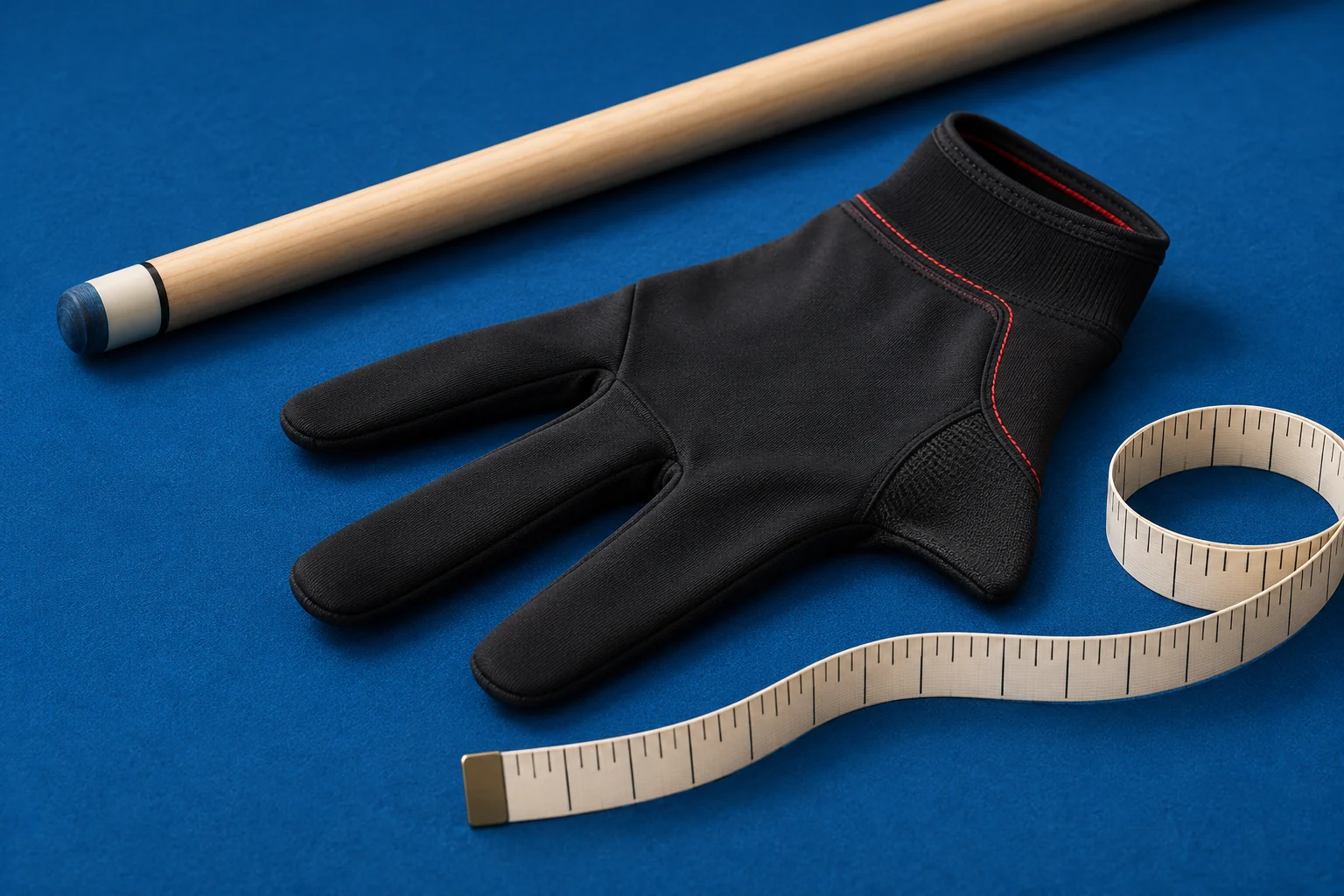
Select by bridge hand, not grip-hand label
The bridge hand supports the shaft near the cue ball; the grip hand holds the butt. A player who grips with the right hand commonly bridges with the left and therefore selects a left-bridge-hand glove. Read the actual selector instead of relying on a general right-handed or left-handed description.
The current Ariakon Liquid-Glide listing provides separate Left Hand Bridge and Right Hand Bridge choices. Confirm that choice and the labeled size in the order summary. This documents the selector; it does not prove fit for an individual hand or confirm current inventory.
Use the exact model's sizing process
The Ariakon listing currently shows five labeled sizes but does not publish a numeric chart on the inspected page. Do not invent one. If the fit cannot be selected confidently, provide the measurement method and value to Ariakon support and ask for current guidance.
A wrist closure adjusts the cuff; it cannot make finger panels or shaft-contact seams the correct length. Keep tags and packaging intact during the fit check.
| Field | Record | Why |
|---|---|---|
| Bridge hand | left / right | Prevents ordering for the grip hand |
| Model | exact listing name | Charts do not transfer automatically |
| Measurement method | where and how measured | A number without method is ambiguous |
| Measured value | value and unit | Lets support interpret the request |
| Selected size | label from that model | Medium is not universal |
| Preference | close / relaxed | Clarifies comfort question without promising fit |
Map features to an observable job
These four construction details are documented on the current Ariakon product page. They are evaluation prompts, not test results. Judge comfort and interference directly; do not convert a material or stitch description into a performance percentage.
| Listed feature | Question at the table | Unsupported leap |
|---|---|---|
| Breathable mesh | Does the hand remain comfortable during the session? | Guaranteed sweat elimination |
| Double stitching | Do seams stay flat in the bridge positions? | A promised service life |
| Elastic wrist closure | Does the cuff stay set without pinching? | Correction of an oversized glove |
| Non-slip palm pad | Does the planted hand feel stable on clean cloth? | Automatic improvement in pocketing |
Run an 18-stroke bridge fit test
Score one point for each of the four checks after each bridge, for 12 possible points. A score below 4 in any bridge means pause and identify the failure; a total alone cannot hide a painful seam or blocked shaft path.
Then play twelve easy straight shots at one comfortable speed. Record glove adjustments, discomfort and shaft catches—not made-ball percentage as a product claim. If the shaft still catches, inspect shaft cleanliness separately rather than adding powder or cleaner during the same test.
| Bridge | Six-stroke task | Pass checks |
|---|---|---|
| Open | Set the hand, place the clean shaft and deliver six slow strokes without a ball | Shaft path clear; fingers spread; no seam pinch; cuff stable |
| Closed | Form the usual loop and repeat six strokes | No bunching in channel; loop closes naturally; no finger pull; cuff stable |
| Rail | Set the normal rail bridge and repeat six strokes | Palm sits flat; shaft path clear; no twist; cuff stable |
Follow the documented care instructions
The current Ariakon listing directs hand washing with warm water and mild soap or detergent, air drying and no ironing. Those instructions apply to the listed glove. Follow a different product's own label rather than transferring this routine.
Let the glove dry before closing it in a cue case. Inspect the shaft-contact area, seams and closure. Replace or stop using a glove when damaged fabric interferes with the bridge or exposes a rough edge.
- Confirm left or right bridge hand.
- Use current guidance for the exact model.
- Pass open, closed and rail bridge checks.
- Record repeated adjustment or discomfort.
- Follow the listed washing and drying directions.
Care for a cue shaft when shaft cleanliness may be contributing to friction.
Compare open and closed bridges for a separate bridge-technique exercise.
Sources and further reading
References support the specific factual information above. The practical checklists are Ariakon editorial guidance.