
Break shot · 4 min read
Inspect an Eight Ball Rack Before You Break
A break begins with an input you can inspect before adding speed: the rack. Under current WPA 8-Ball rules, the fifteen object balls are tight in a triangle, the apex is on the foot spot, the 8 is directly below the apex, one ball from each group occupies the two lower corners and the others have no purposeful pattern. This guide turns those facts into a quick, neutral inspection rather than an argument after the break.
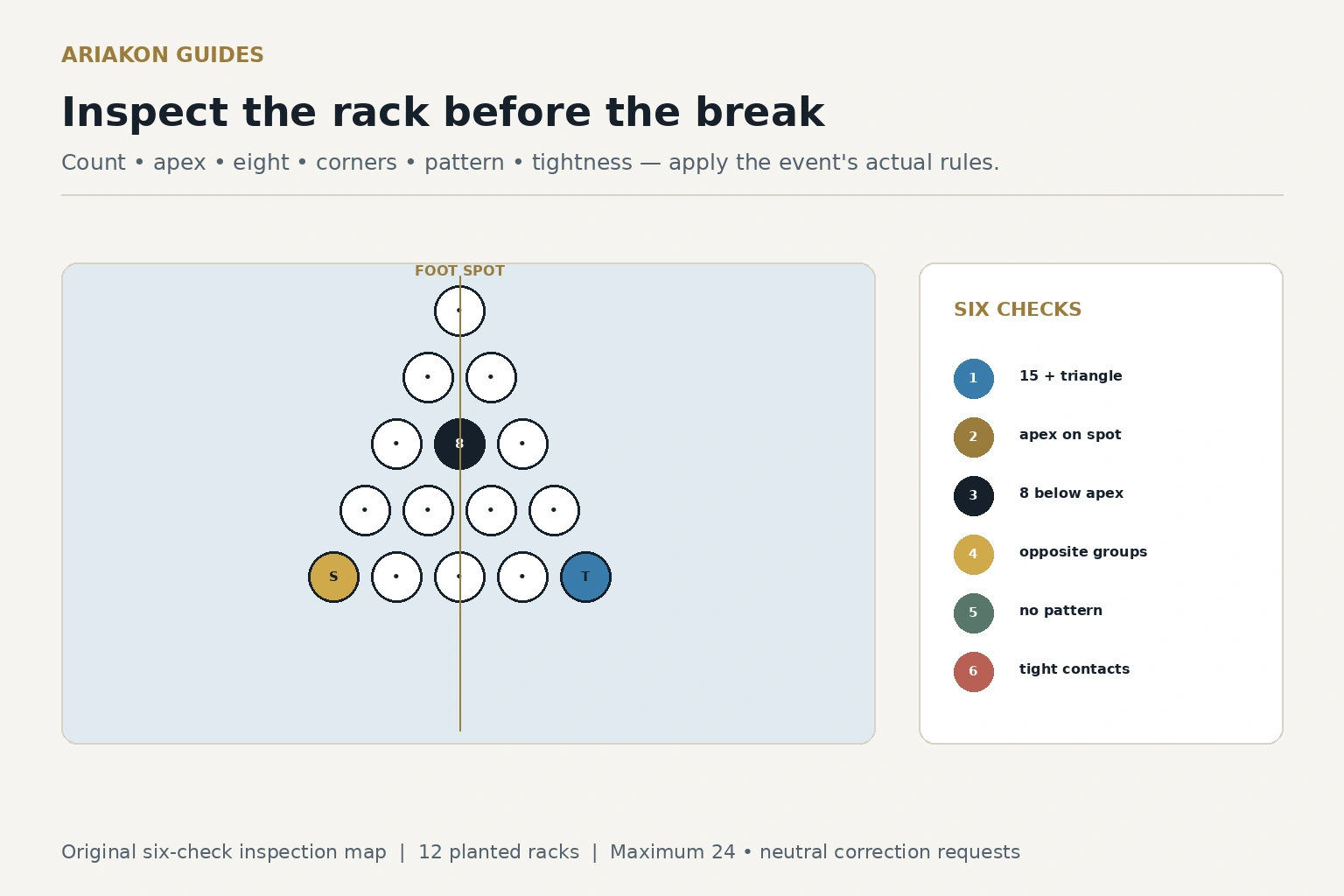
Confirm which rules own the rack
Write the organizer, discipline and effective rules before using this checklist. WPA 8-Ball is not automatically the rule set in a league, bar or tournament. If a referee racks or an event limits inspection, follow that procedure and ask before touching anything.
Under the current WPA rules effective September 15, 2025, a legal break begins with the cue ball in hand above the head string. If no object ball is pocketed, at least four object balls must reach one or more rails or the break is illegal. Those break outcomes matter later; they do not replace inspection of the initial rack.
Build the complete rack-and-break routine after the rack passes this pre-break inspection.
Read the six checks in the same order
| Check | Look for | Pass evidence | If it fails |
|---|---|---|---|
| 1. Count and shape | 15 balls in a triangle | Five-ball base and complete set | Re-rack before placement judgment |
| 2. Apex | Front ball centered on foot spot | Ball center over spot | Reposition rack |
| 3. Eight ball | First ball directly below apex | Center of row three | Correct before tightening |
| 4. Lower corners | One solid and one stripe | Opposite groups; either side | Swap only under the governing rule |
| 5. Remaining balls | No purposeful pattern | No designed sequence beyond required positions | Randomize remaining balls |
| 6. Tightness | Adjacent balls touching as tightly as possible | No visible daylight in critical front contacts | Lift, settle and tighten again |
Inspect without disturbing
Stand on the foot-rail side and read the triangle front to back. Check the apex over the foot spot from the long string, identify the 8, compare the lower corners, scan the remaining layout and look across contact lines under even light. Ask for a correction while the triangle or template is still under the racker's control.
Do not press, tap or rotate an accepted ball unless the rules and table owner allow it. A neutral description—visible gap between apex and row two—is more useful than a motive claim.
Find defects in twelve planted racks
| Round | Racks | Defect plan | Score per rack |
|---|---|---|---|
| 1. Single defect | 1–6 | A partner plants one of the six checklist faults | 1 identify + 1 name correction |
| 2. Mixed | 7–10 | Zero, one or two faults without disclosure | 1 exact count + 1 correct details |
| 3. Timed | 11–12 | Legal or single-fault rack; 20-second inspection | 1 decision + 1 neutral request |
Use the score as an inspection gate
Twelve racks have a maximum of 24 points. Pass when you score at least 20, correctly reject every apex, 8-ball and corner-group fault, and make no change to a legal rack. A false accusation is an error even if the rack is later unsuccessful.
When you miss a defect, rehearse only that visual comparison on three new racks. When you reject a legal rack, name the supposed fault and check it against the rule text instead of adding a personal preference to the standard.
Separate rack evidence from break evidence
| Observed after break | Could involve | Does not prove | Next controlled check |
|---|---|---|---|
| Apex and second row move poorly | Front contact, hit accuracy or speed | Intentional loose rack | Re-rack and use controlled center hit |
| One wing stays clustered | Local contacts, table or hit asymmetry | Wrong corner-group placement | Repeat same legal rack and cue-ball start |
| Cue ball deflects sideways | Off-center hit or uneven transfer | Apex off spot | Check break contact with lower speed |
| Four balls fail to reach rails | Rack, contact or energy | Only a rack fault | Apply event ruling, then isolate input |
Transfer to match procedure
Before your next match, say the six nouns silently: count, apex, eight, corners, pattern, tightness. If one fails, identify the exact check and request correction before accepting the rack. After acceptance, record only break contact and result.
This routine protects both players: a genuine issue is corrected early, a legal rack is accepted promptly and a poor break is not retroactively blamed on an unrecorded suspicion.
Sources and further reading
References support the specific factual information above. The practical checklists are Ariakon editorial guidance.