
Break practice · 3 min read
How to Build a Consistent Break and Rack Routine
A break comparison is unreliable when the rack changes unnoticed. This guide gives an eight-ball rack acceptance card and a versioned break-input record. It does not promise a ball in a particular pocket or prescribe airborne cue-ball motion. Equipment buying, break weight and contact training have separate resources.
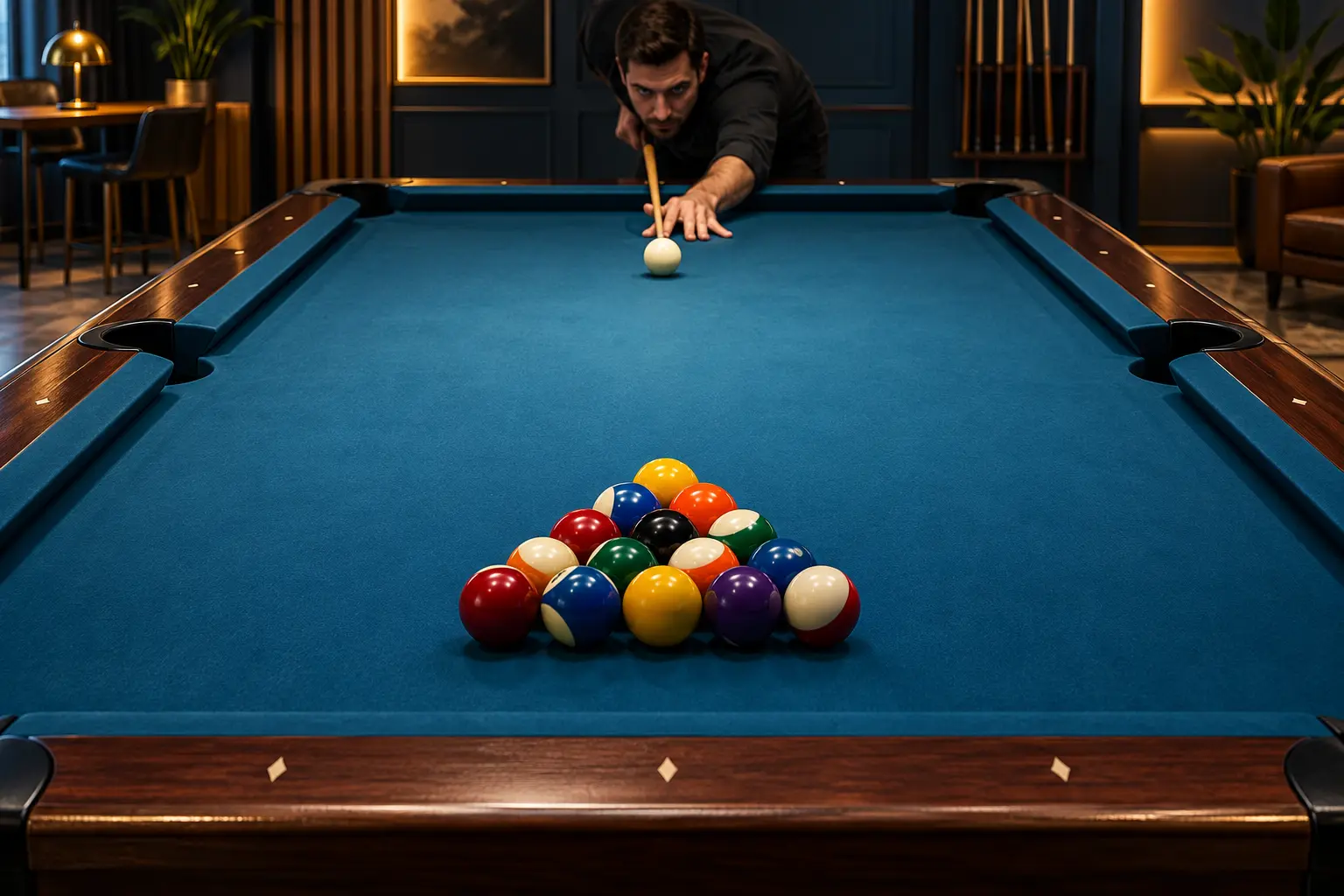
Confirm the rules before accepting the rack
Use the current WPA eight-ball rules for this worked protocol; confirm the event’s actual rules, racker and template policy before competition. Other games and leagues are not interchangeable. Under this ruleset the fifteen-ball triangle is tight, apex on the foot spot, eight in the third-row center, and one ball from each group at the rear corners. The other assignments must not be deliberately patterned.
The break starts from the head side of the head string. If no object ball falls, at least four object balls must reach rails. A pocketed eight has special spotting or rebreak options; it is not an automatic win. Scratch, off-table and other fouls require the applicable rule response. Use the official rule for disputed outcomes rather than this practice ledger.
Reproduce centers without numbering a pocket prediction
Coordinates start at the lower-left cushion-nose corner; head is x=0, foot is x=8 and the head string is x=2. Ball diameter is 0.18 units. Adjacent rows advance by √3×0.18/2=0.155884573, so neighboring centers are one diameter apart. Printed decimals are rounded references, not permission to leave measurable gaps. Scale to the measured bed and ball size.
Inspect placement and touching neighbors after removing the triangle without disturbing the balls. Ask the authorized racker or official to correct a visible gap or misplaced required ball before striking. Do not press a tip into cloth, abrade the spot, or alter assignments to hunt a specific pocket.
| Row | x center | y centers |
|---|---|---|
| 1 | 6 | 2 |
| 2 | 6.155885 | 1.91; 2.09 |
| 3 | 6.311769 | 1.82; 2; 2.18 |
| 4 | 6.467654 | 1.73; 1.91; 2.09; 2.27 |
| 5 | 6.623538 | 1.64; 1.82; 2; 2.18; 2.36 |
Freeze the input card and change one item
Both cue centers are on the head side of x=2, well clear of cushions. This is an input comparison, not a geometric guarantee of square impact or a safe postcollision finish. Use a controllable ordinary stroke and a safe room layout. Stop after unexpected jumping, repeated miscues or discomfort; more force is not the default correction.
Plan ten struck breaks at A and ten at B, twenty total, with the rack inspected before every strike. Repeat on a different occasion in reverse block order if the first comparison warrants it. Do not quietly change pace, cue weight or tip contact halfway through B.
| Input | A baseline | B comparison |
|---|---|---|
| Cue center | (1.5, 2) | (1.5, 2.15) |
| Intended first contact | Apex ball, comfortably controlled | Same |
| Tip contact and pace | Familiar, documented; no intentional sidespin | Same |
| Cue, balls and rack rule | Recorded unchanged | Same |
| Changed item | None | Cue start y only, +0.15 units |
Separate break-contact training when the intended contact cannot be repeated.
Compare cue weight separately instead of changing mass during this input trial.
Keep preparation, legality and outcomes apart
Hypothetical twenty-strike record: two prestrike rack corrections, A legal 8/10 and B legal 7/10, input flags 9/10 and 6/10. Legal outcomes total 15/20; rack corrections are 2 preparation events, not two extra failures. An input violation after striking remains in the break denominator.
A few extra pocketed balls cannot justify B when contact and input stability deteriorated. Retain the original rows, inspect the failure category, and choose a new question only after that evidence is clear.
| Field | Record |
|---|---|
| Rack refusals | Number corrected before strike; no shot denominator |
| Input retained | 1 when the frozen card was followed, otherwise 0 |
| Legal break | 1 only when the chosen ruleset is satisfied without foul |
| Object balls pocketed | Actual count, with eight and off-table events noted separately |
| Cue-ball rest | Actual center or scratch/off-table; no imagined route |
| Next decision | One available legal plan, or none; not an automatic group assignment |
Use the separate break-quality resource when judging spread and usable next play is the task.
Use the buying checklist when the equipment itself is under consideration.
Sources and further reading
References support the specific factual information above. The practical checklists are Ariakon editorial guidance.