
Aiming · 3 min read
Evaluate a Named Pool Aiming System With a Blind Shot Test
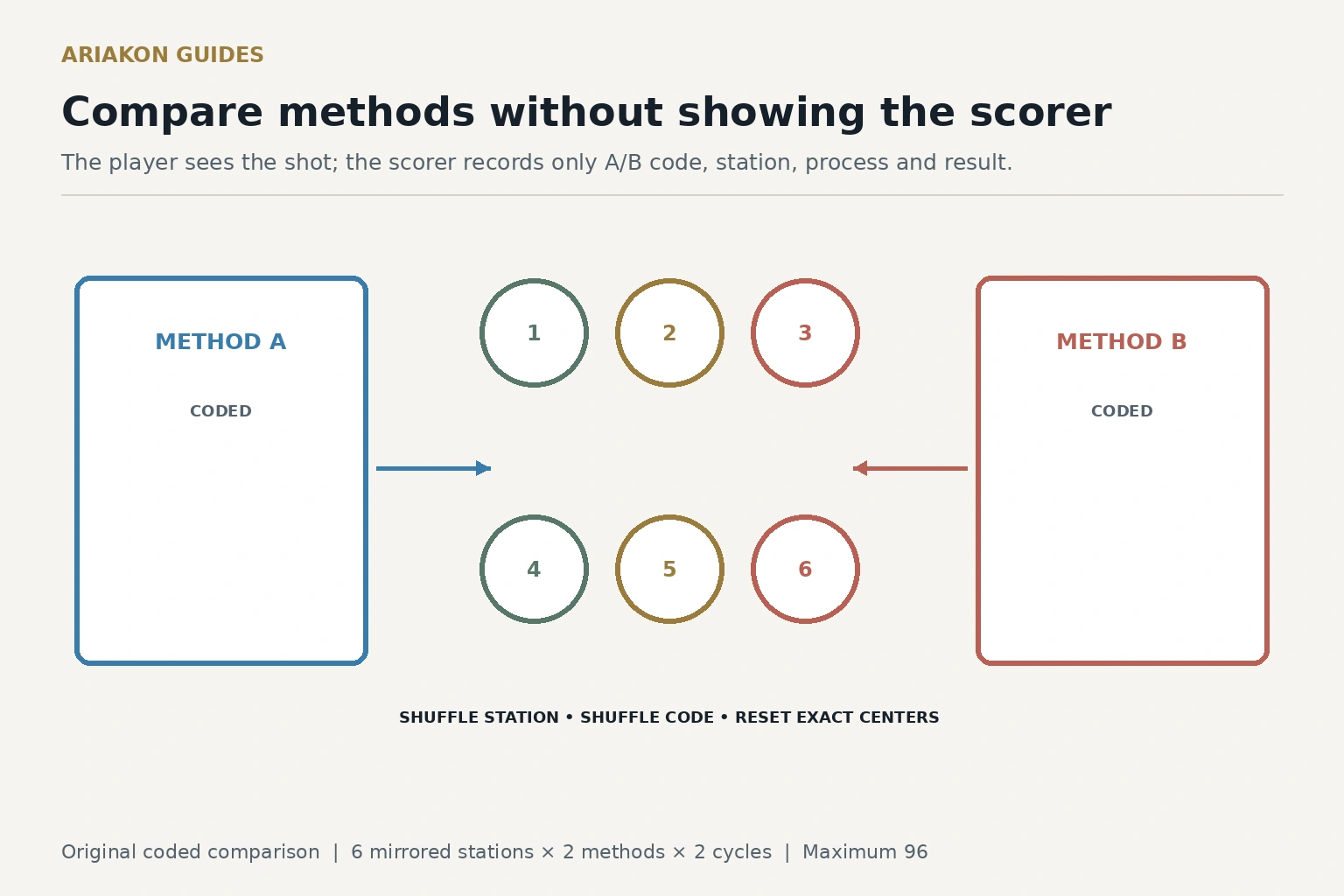
A blind aiming test should never mean shooting without vision. Here, blind means the scorer sees coded Method A and Method B rather than the method names, while the player sees every shot normally. Randomized layouts, exact resets and a normal-reference control reduce the temptation to remember only the shots that make a favorite system look good.
Define the named system before testing it
Write the system's actual steps in your own brief checklist: the visual reference, where it is established, whether a pivot or shift is required, and when the final line is accepted. If you cannot apply the same steps twice, the test would measure changing interpretations rather than the system.
Choose a control method you already use, such as a ghost-ball or contact-point picture. Put the named method and control in sealed or face-down cards labeled A and B. The player must know which procedure to perform, but the scorer needs only the code and result. Do not change alignment, bridge length, speed or cue-ball contact to rescue a method after a miss.
The scorer may recognize a method from the player’s movements; coding reduces disclosed expectations but does not guarantee full blinding. Have the player record procedural completion separately while the scorer records only observable outcomes and the A/B code.
Compare aiming references first if the method steps are still unclear.
Establish a center-ball delivery baseline before blaming the visual reference for stroke error.
Build six mirrored cut stations
Mark three object-ball centers one diamond from a corner pocket, producing mild, medium and thin cuts from fixed cue-ball starts. Mirror all three to the opposite side. Use vertical-axis cue-ball contact and pocket speed. Remove every loose marker before shooting.
Write the six station numbers on separate cards and shuffle them. For each station, shuffle the A/B card. Shoot one attempt, reset exact centers, then shoot the other method before moving to the next station. Repeat the twelve-shot cycle once for twenty-four total attempts.
| Station family | Method A | Method B |
|---|---|---|
| Mild left and right | 2 each | 2 each |
| Medium left and right | 2 each | 2 each |
| Thin left and right | 2 each | 2 each |
| Total | 12 attempts | 12 attempts |
Score the result without guessing intent
Pocketing is important, but a made ball cannot verify that the method was followed. A procedural failure loses the first point even when the ball drops. After all attempts, reveal the codes and total each cut family separately.
| Point | Observable requirement |
|---|---|
| 1 | Method steps completed in the written order |
| 1 | Cue starts and finishes through the intended center-ball line |
| 1 | Object ball reaches the called pocket |
| 1 | Miss side or pocket entry is recorded |
| Maximum 96 | 24 attempts; scorer records only station and A/B code |
Read the pattern before choosing a winner
| Pattern | Next action |
|---|---|
| One method leads across both sides and all cuts | Retest it on a second day before adopting it |
| Method helps mild cuts but loses thin cuts | Use it only where the tested reference remains clear |
| Misses reverse on mirrored shots | Check visual alignment or side-specific setup |
| Procedural points are low | Learn the steps before comparing pocket results |
| Both methods tie | Keep the simpler repeatable reference and spend practice on delivery |
Worked example and game transfer
In a hypothetical scorecard, A earns 41/48 and B earns 38/48. A leads on mild cuts but the methods tie on medium and thin cuts. That does not support claiming A is universally superior. The honest next test is another randomized day focused on mild cuts, with the codes reassigned so A does not always mean the same method.
For transfer, play three racks and mark each shot where the adopted method gives a clear reference. Use the method only on those shots; use the normal picture elsewhere. Record method clarity before the stroke and outcome afterward. A system earns a place in competition by surviving normal decisions, not by winning a single favorable layout.