
Fundamentals · 2 min read
Choose a Pool Stance Height You Can Repeat
Getting lower is not automatically better. A useful stance lets you see the line, move the cue without collision and remain balanced through the shot. Body proportions, mobility, vision and table reach differ, so the goal is a repeatable personal position rather than an imitation of another player.
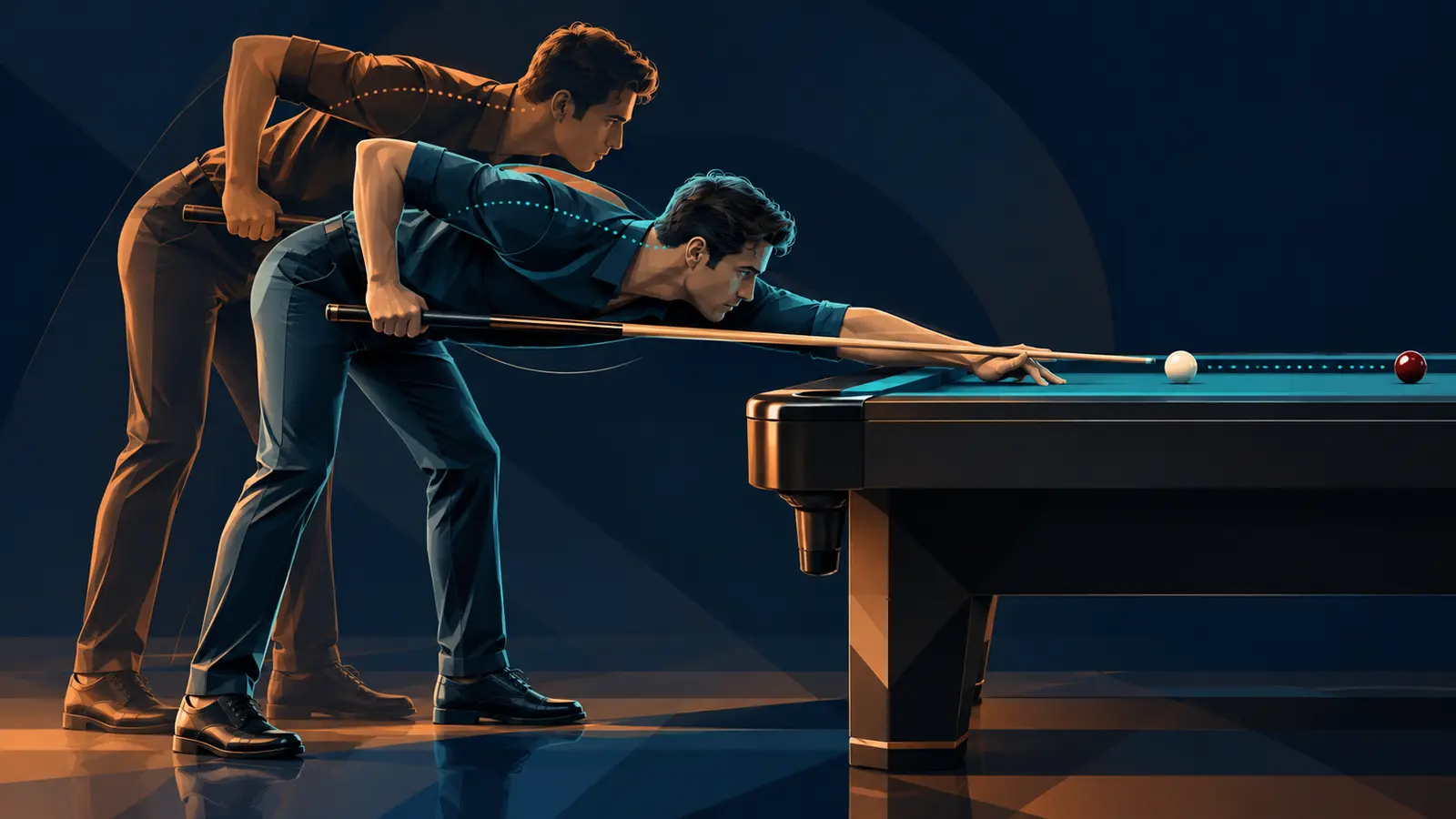
Protect balance and clearance
Set your feet so you can bend without loading all your weight onto the bridge hand. The cue should travel under the chest or beside the body without rubbing clothing, chin or ribs during warm-up strokes.
If lowering the head forces your grip arm outward, locks the neck or makes the bridge collapse, the new height has cost more than it gained.
Place the eyes over a stable line
Approach the shot from standing, establish the line and lower into it. Compare where the cue appears relative to the cue-ball center and object-ball contact line.
A lower view can make long alignment easier for some players, but eye dominance and visual perception are individual. Use repeated results, and consult a qualified eye-care professional for vision concerns.
Keep the head quiet without forcing it
Your stance height should allow the head to remain still through delivery without bracing every muscle. Quiet is useful; rigid is not.
Watch for the head rising before impact, the rear shoulder bumping the cue, or a late shift of weight. These are signs to adjust the stance before blaming aim.
Test two nearby heights
Shoot the same straight-in layout from your normal height and from a slightly higher or lower position. Record pocket entry, cue-ball finish and comfort across ten shots at each height.
Film from the side only if it helps you see clearance and movement. Do not select a stance because one frozen frame looks textbook-perfect.
Use a repeatability checklist
- You can breathe normally and see the intended line.
- Both feet and the bridge create a stable base.
- The cue clears the torso throughout the stroke.
- The grip arm swings without being forced sideways.
- The head remains quiet through contact.
- You can stand up without pushing hard on the table.