
Cue-ball control · 3 min read
Prevent Cue-Ball Scratches by Planning the Route
A scratch often begins before the stroke: the cue-ball route was never traced. Before committing to the object ball, identify where the cue ball will travel after contact, which pockets sit on that route and whether speed or spin will make the path safer or less predictable.
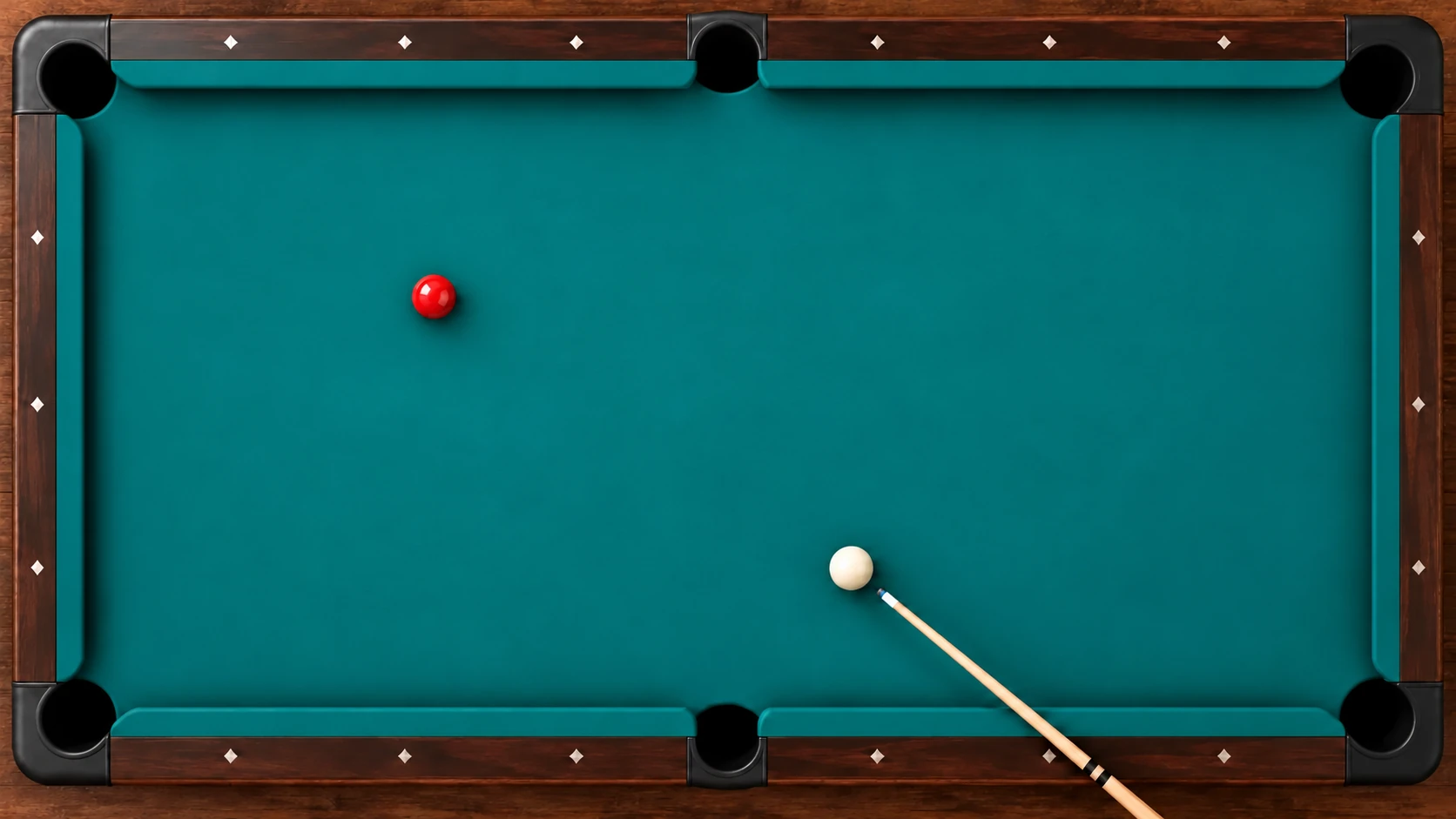
Trace the natural route first
Picture the cue ball immediately after object-ball contact. Near a stun condition it leaves close to the tangent line; follow bends the route forward, while draw bends it back after the initial separation. Cut angle and speed change how much of each effect remains.
This is a prediction, not a guarantee. Cloth, ball cleanliness, elevation and unintended sidespin can move the result, so choose a route with margin.
Mark every danger pocket
Scan beyond the called pocket. A side pocket may catch a cue ball traveling along the tangent line, and a corner pocket may sit on a two-rail path that looks harmless from the shooting position.
Treat a pocket as dangerous when the likely route or its reasonable error band crosses the opening. Widening the angle by a little is not enough if normal speed variation still reaches the pocket.
Control speed before adding sidespin
Many scratches can be removed by changing speed or using a simple center-ball vertical hit. Sidespin can change cushion angles, but it also adds squirt, swerve and throw that must be calibrated.
When a center-ball solution offers a broad safe zone, prefer it. Use sidespin only when you understand both its value and the new error it introduces.
Play into an area, not a dot
Choose a cue-ball landing area that leaves more than one workable next shot and does not border a pocket. A slightly longer shot from a large safe zone is often better than perfect shape with a narrow scratch line.
If no offensive route has enough margin, consider a legal safety. Avoiding a scratch is part of shot selection, not a rescue move after the cue is already down.
Calibrate the table
Use warm-up time to test a stop shot, a medium-speed follow shot and a simple cushion route. Faster or slower cloth changes travel distance, while rail response changes multi-cushion paths.
Update the plan from observed behavior. Do not assume a route measured on another table will finish in the same place.
Run the scratch check
- Confirm the legal first contact and called-shot requirements.
- Trace the cue ball from object-ball contact to rest.
- Identify every pocket within the route's error band.
- Choose speed and vertical spin before considering sidespin.
- Aim for a broad safe area with a useful next shot.
- Change to a safety when the offensive route is too fragile.