
Cue ball control · 2 min read
Choose the Right Kind of Position for the Shot
Not every next shot requires the same precision. Sometimes the cue ball can stop anywhere inside a wide area. Sometimes it should travel along the next shot's line. Only a few situations demand a small exact point. Matching the target to the real requirement reduces needless cue-ball work.
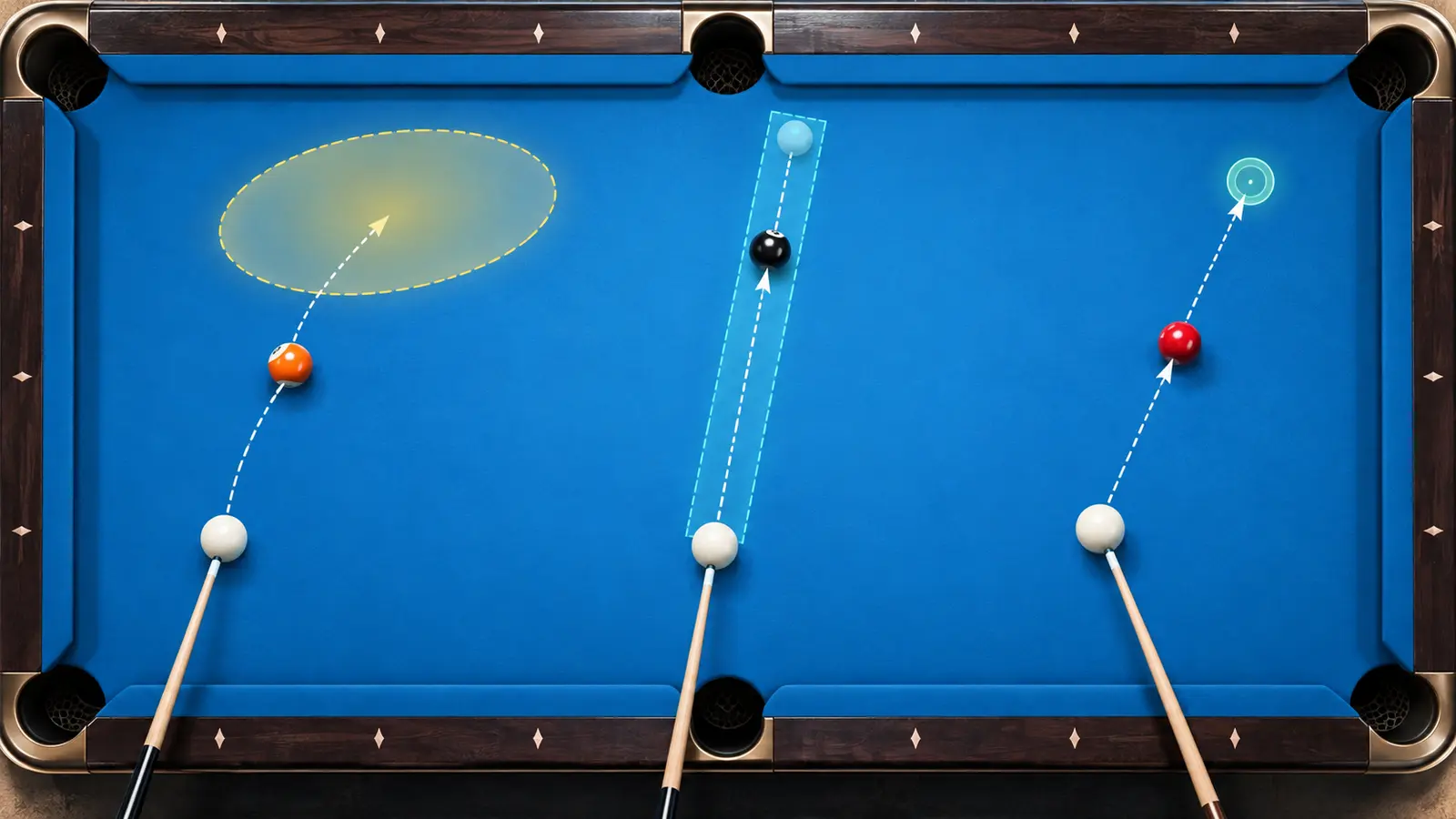
Use area position when the window is wide
Area position means playing into a broad shape zone rather than one exact spot. Use it when several cue-ball locations leave a comfortable angle and no blocker narrows the route.
Draw the zone mentally before choosing speed, then favor a finish with margin from its boundaries rather than insisting on its geometric center.
Use line position when angle matters
A line of position follows the family of cue-ball locations that preserve the next shot's useful angle. Traveling along that line is more forgiving than crossing it, because a speed error changes distance more than cut direction.
Find the line first, then choose a natural path that approaches it gradually. Avoid extra cushions or sidespin when a simpler route already joins the correct line.
Reserve exact position for true bottlenecks
An exact point may be necessary to open a cluster, avoid a blocker, reach a break ball or hold a specific angle. Recognize that the margin is small and choose the highest-percentage route that enters it.
Do not turn an ordinary shot into exact-position practice. If a six-inch zone works, targeting a coin-sized point adds risk without adding value.
Choose the target before tip position
First decide the acceptable destination. Next choose the cue-ball path and speed. Only then decide whether center ball, follow, draw or sidespin is needed.
Starting with spin encourages players to build a route around a favorite technique. Starting with the destination keeps the technique in service of the pattern.
Score the leave, not only the pocket
During practice, give one point for pocketing the ball and a separate point for reaching the intended area, line or exact target. The two-score system reveals whether misses come from shotmaking or speed control.
Keep the position point separate even when the pocket succeeds. A made ball with unusable shape identifies a different next practice task from a pocketing miss.
Run a three-target drill
- Mark a generous position zone with two harmless reference objects off the playing surface.
- Shoot five natural-roll routes into the zone.
- Narrow the target to a long line and approach it from two angles.
- Use a small exact target only for the final five attempts.
- Record which target type actually required spin and which did not.