
Bridge fundamentals · 3 min read
Use Stable Bridge-Hand Pressure Without Leaning on the Table
The bridge hand should give the cue a repeatable channel without becoming a place to dump body weight. Stability comes from a broad base, useful finger contact and a stance that supports itself. The goal is enough downward pressure to keep the hand quiet while the cue slides freely—not a rigid hand pressed into the cloth.
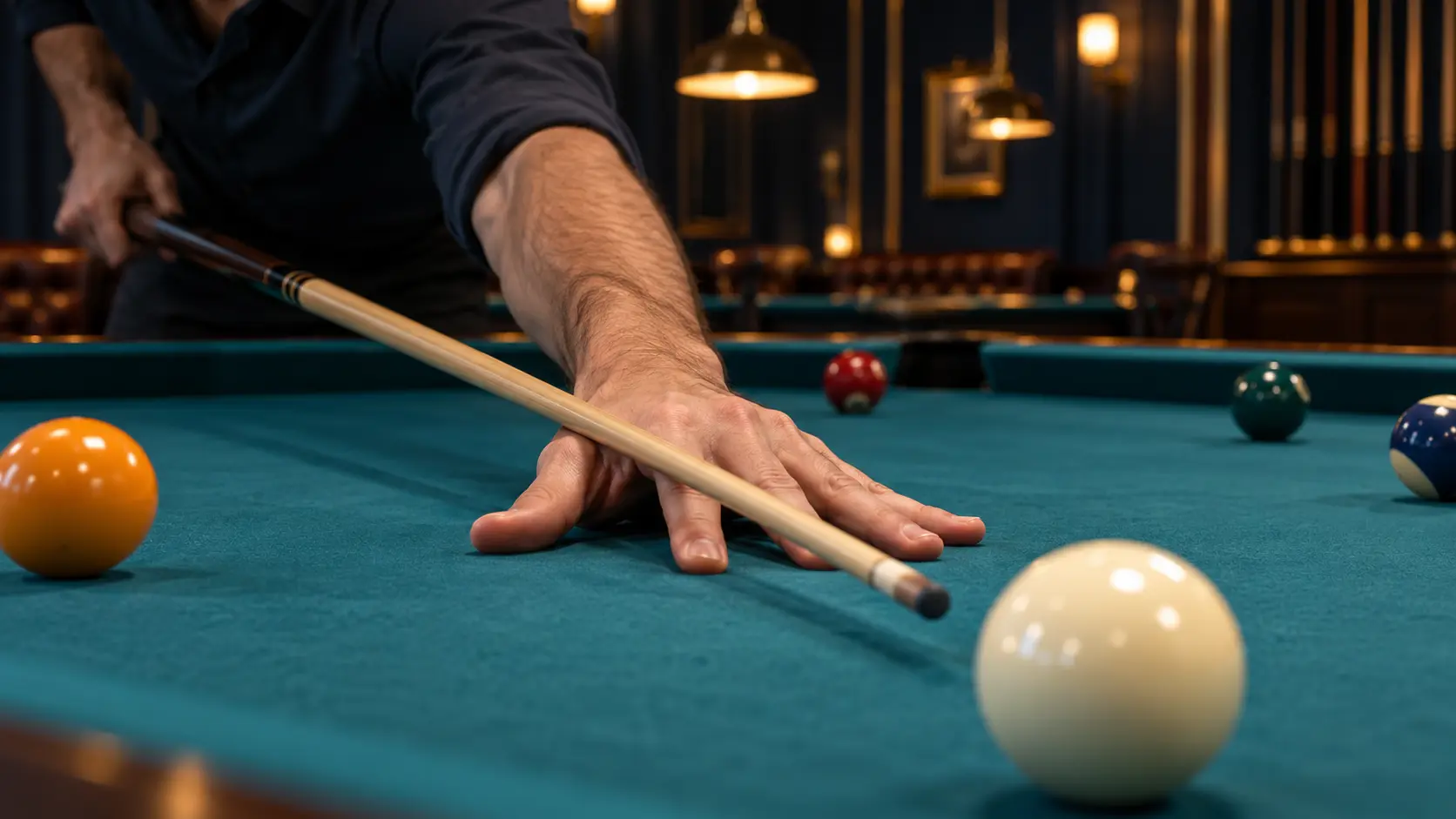
Support your body before placing the hand
Build the stance so the feet and legs carry most of your weight. Lower the head and torso into position, then let the bridge hand settle on the table instead of using it to catch a falling upper body.
If lifting the bridge hand would make you lose balance, rebuild the stance. Excess weight on the hand can make small aim adjustments awkward and can cause the bridge to move as the body shifts.
Make the base wide and useful
For an open bridge, spread the fingers comfortably and press the heel and fingertips into the cloth. Raise the thumb against the index finger to create a clean V-shaped channel at the height the shot requires.
A wider base usually resists sideways movement better than a narrow one. Do not stretch until the joints hurt; the hand should remain comfortable enough to repeat for a full session.
Use pressure that prevents sliding
Apply only enough downward contact that the bridge stays planted during warm-up strokes and delivery. Test this on clean cloth with a normal stroke before assuming more pressure is safer.
Very light contact can let the hand creep. Excess pressure can tense the forearm, distort the bridge channel or tempt you to steer. The useful amount is the minimum that stays still.
Keep the cue channel free
The shaft should glide through the bridge without pinching. Chalk dust, sweat or a channel that is too tight can add drag, which may feel like stroke resistance rather than a bridge problem.
Clean the shaft using its maker's instructions and adjust the thumb or index finger before adding body weight. A stable hand and a free shaft are separate requirements.
Watch the hand through the finish
Film from above or place a removable paper marker beside one fingertip. The hand should remain in the same place until the balls have separated, while the cue passes through its channel.
If a finger lifts, the palm rolls or the hand slides, identify whether the cause is balance, bridge length, pressure or an obstructed stroke. Change one variable at a time.
Run a bridge-pressure test
- Set a straight shot with a comfortable bridge length.
- Shoot five balls with light but planted hand contact.
- Mark any bridge movement or shaft drag.
- Repeat at normal and firm shot speeds.
- Adjust stance before adding more hand pressure.
- Keep the lightest pressure that remains quiet across all sets.