
Bridge fundamentals · 3 min read
Build a Stable Pool Bridge on the Rail
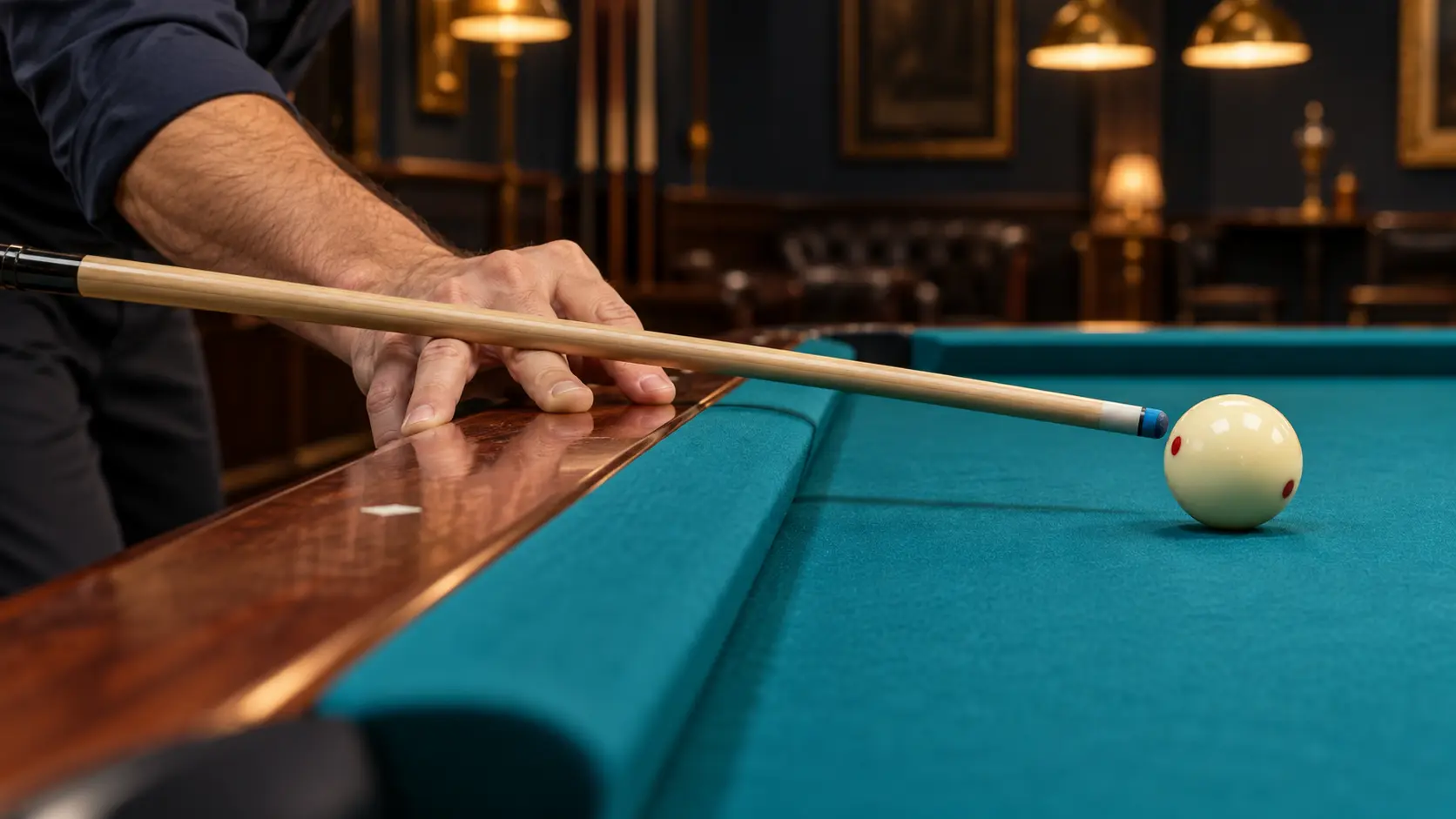
When the cue ball is close to a cushion, the cloth may not provide enough room for a normal bridge. The rail can become part of the base, but the hand must still create a straight, repeatable cue channel. Choose the simplest stable form that fits the distance, shorten the stroke if necessary and avoid forcing the wrist into a painful shape.
Let cue-ball distance choose the bridge
If the cue ball is several inches from the cushion, place the palm or heel against the rail edge and set the fingers on top to create a low channel. As the ball moves closer, more of the hand may need to sit on the rail.
When the ball is nearly frozen to the cushion, use a compact rail bridge and accept a shorter backswing. Do not reach for a full-length stroke when there is no stable base for it.
Anchor against two surfaces
Use the rail top for vertical support and the rail edge or cushion-side contact for resistance to sideways movement. Spread the available fingers so the base does not pivot around one point.
Check that the hand is clear of pocket hardware, sharp trim and moving balls. Move the cue ball only when the rules permit; otherwise adapt the bridge or use a mechanical bridge.
Create a clean cue channel
Raise the thumb or use the groove between fingers so the cue clears the rail and cushion. The shaft should slide without rubbing wood, cloth or a knuckle.
Align the channel with the shot before warm-up strokes. If the cue scrapes the rail, rebuild the hand rather than lifting the back of the cue more than the shot requires.
Shorten the delivery honestly
A rail bridge often reduces the available backswing and follow-through. Use a compact pendulum motion and enough speed for the shot instead of forcing power from a cramped position.
For a long or powerful shot, consider a different pattern, a mechanical bridge or a legal extension if the rules and equipment allow it. Stability is more valuable than maximum stroke length.
Practice common distances
Set the cue ball six inches, three inches and one ball-width from the cushion. Shoot straight stop shots at each distance and note which hand shape keeps the cue closest to the intended line.
Then add simple cuts without sidespin. Rail bridges already reduce margin; establish center-ball accuracy before asking the bridge to support more complex tip placement.
Use a rail-bridge progression
- Start with the cue ball several inches from the rail.
- Anchor the hand and verify cue clearance.
- Shoot five center-ball stop shots.
- Move the cue ball closer in two stages.
- Shorten the stroke as the base becomes compact.
- Choose a mechanical bridge when reach or stability fails.
Sources and further reading
References support the specific factual information above. The practical checklists are Ariakon editorial guidance.