
Banking and kicking · 4 min read
Practice a Two-Rail Escape Route With Checkpoints
A difficult escape becomes trainable when the route is split into observable checkpoints. This brand-neutral station fixes a cue-ball start, two cushion windows, a legal object-ball contact and a called pocket. The route is an original calibration exercise, not a reenactment of a famous shot and not a universal aiming system. Your table may require small adjustments for cloth, cushion response, speed and spin.
Map the station in diamond coordinates
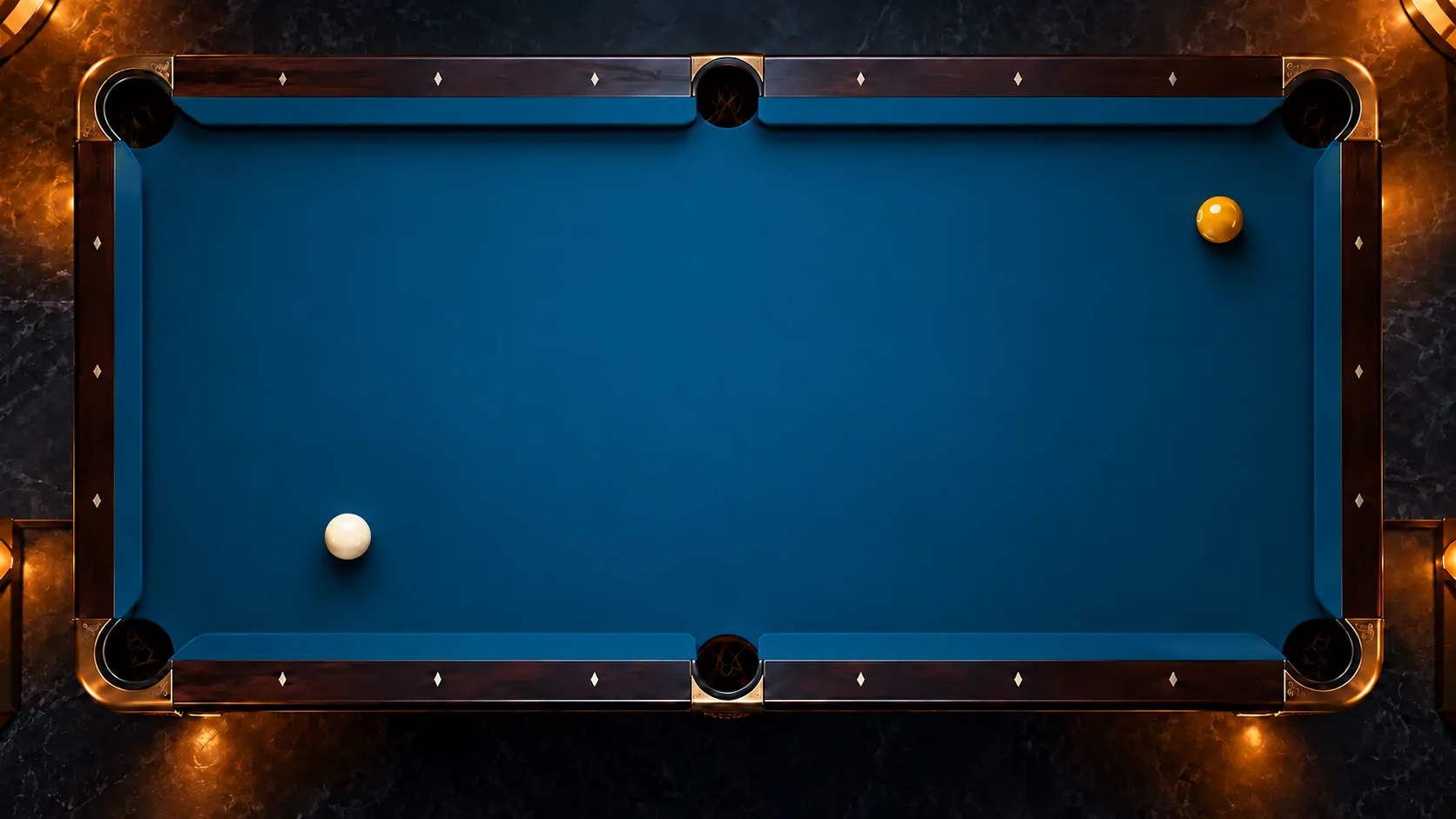
For this illustrative baseline only, use a 100-by-50-inch cushion-nose bed with equal 2.25-inch balls. In an eight-by-four diamond coordinate grid, one unit is 12.5 inches, ball radius r=0.09 and diameter D=0.18. The lower-left nose corner is (0,0); six pockets interrupt the boundary at the corners and (4,0),(4,4). Put cue-ball center C=(1,1), object-ball center O=(7.1,2.1), and call upper-right pocket P=(8,4). The intended object direction is n=(0.428086,0.903738), so the cue center at first contact is G=O−D n=(7.022944,1.937327).
In the no-spin equal-angle cushion idealization, cue-center limits are y=0.09 and y=3.91. Unfold the two parallel-rail rebounds: the virtual cue-center destination is M=(7.022944,9.577327). Line C-to-M yields first cue-center cushion contact R1=(3.043383,3.91) and second R2=(5.725763,0.09), then G. The corresponding cushion-nose window centers are (3.043383,4) and (5.725763,0). These are clear of the center side-pocket openings in this illustrative geometry. Measure the actual bed, ball size and pocket mouths before using the construction; regenerate the points if they differ. The model supplies a starting reference, not a promise of exact rebound or pocketing on real cushions.
Calibrate one-rail banks and kicks first if a single rebound is not yet predictable on the current table.
Verify the two cushion windows without a target ball
Remove the object ball and shoot eight route-only attempts. The cue ball must touch the upper long cushion inside a window one ball wide centered on (3.043383, 4), then the lower long cushion inside a matching window centered on (5.725763, 0). Record short or long at each cushion separately.
Begin with center-axis contact and one repeatable speed. Adjust the first cushion aim in quarter-ball-width steps until the first window is stable. Change speed only after the first contact is repeatable; adding spin too early hides which input moved the route.
The final ideal segment runs from R2 to the ghost-ball center G, not through the object-ball center. The object ball’s separate pocket line begins at O. If real-table calibration requires shifting a checkpoint, record the new setup and keep that version fixed for the scored comparison. Never force a one-ball window that overlaps a pocket mouth or requires unsafe spin or elevation.
Add the legal contact and called pocket
Replace the object ball at (7.1, 2.1). The cue ball must reach both cushions in order before contacting the object ball. Call the upper-right corner before each attempt. A route that misses the second cushion, contacts another ball first or scratches is not a successful escape even when the target ball later falls.
Current World Pool Association rules define legal contact and cushion requirements, but the exact first-ball and call-shot obligations depend on the game. Apply the rules of the discipline and event you are practicing.
Run twenty-four attempts in three stages
Reset every center exactly. Do not shoot correction balls between scored attempts. If the route-only block earns fewer than ten of sixteen cushion-window points, repeat it before adding the target ball.
| Stage | Attempts | Required result |
|---|---|---|
| Route only | 8 | Upper window, then lower window |
| Legal contact | 8 | Both windows, then object-ball contact |
| Called finish | 8 | Both windows, legal contact and called corner |
Score the route by components
Worked example: the first stage scores 13 of 16 available cushion points, with all three misses long at the second cushion. The contact stage adds six legal hits, but only four preserve the first window. The next session keeps the starting aim and reduces speed slightly; it does not add spin and speed at the same time.
| Point | Requirement |
|---|---|
| 1 | First cushion contact is inside the called upper window |
| 1 | Second cushion contact is inside the called lower window |
| 1 | Cue ball contacts the legal object ball after both cushions without a foul |
| 1 | Object ball is pocketed in the called upper-right corner |
| Maximum 72 | Twenty-four attempts; stage maxima 16, 24 and 32; unavailable points are excluded |
Diagnose one checkpoint, then transfer the skill
For transfer, move the cue-ball start by half a diamond in one direction and predict both new cushion windows before shooting six attempts. Score only the two windows and legal contact, maximum eighteen. This tests route reading without pretending the original coordinates transfer unchanged.
| Evidence | Next action |
|---|---|
| First cushion misses | Recheck start center, aim line and delivery before changing spin |
| First passes; second misses long | Reduce speed slightly or narrow the first-contact adjustment |
| Both cushions pass; object ball missed | Adjust only the second window in a small measured step |
| Contact passes; called pocket misses | Recheck the final contact side and object-ball pocket line |
| Scratch appears | Stop, mark the scratch route and choose a larger-margin escape |
Sources and further reading
References support the specific factual information above. The practical checklists are Ariakon editorial guidance.