
Aiming and alignment · 3 min read
Diagnose Why One Side of the Table Feels Harder
When shots to one side feel harder, adding a permanent aim correction is usually premature. The difference may begin in head placement, stance clearance, cue delivery, cut perception or the table itself. A mirrored test makes the symptom measurable and helps change one cause at a time.
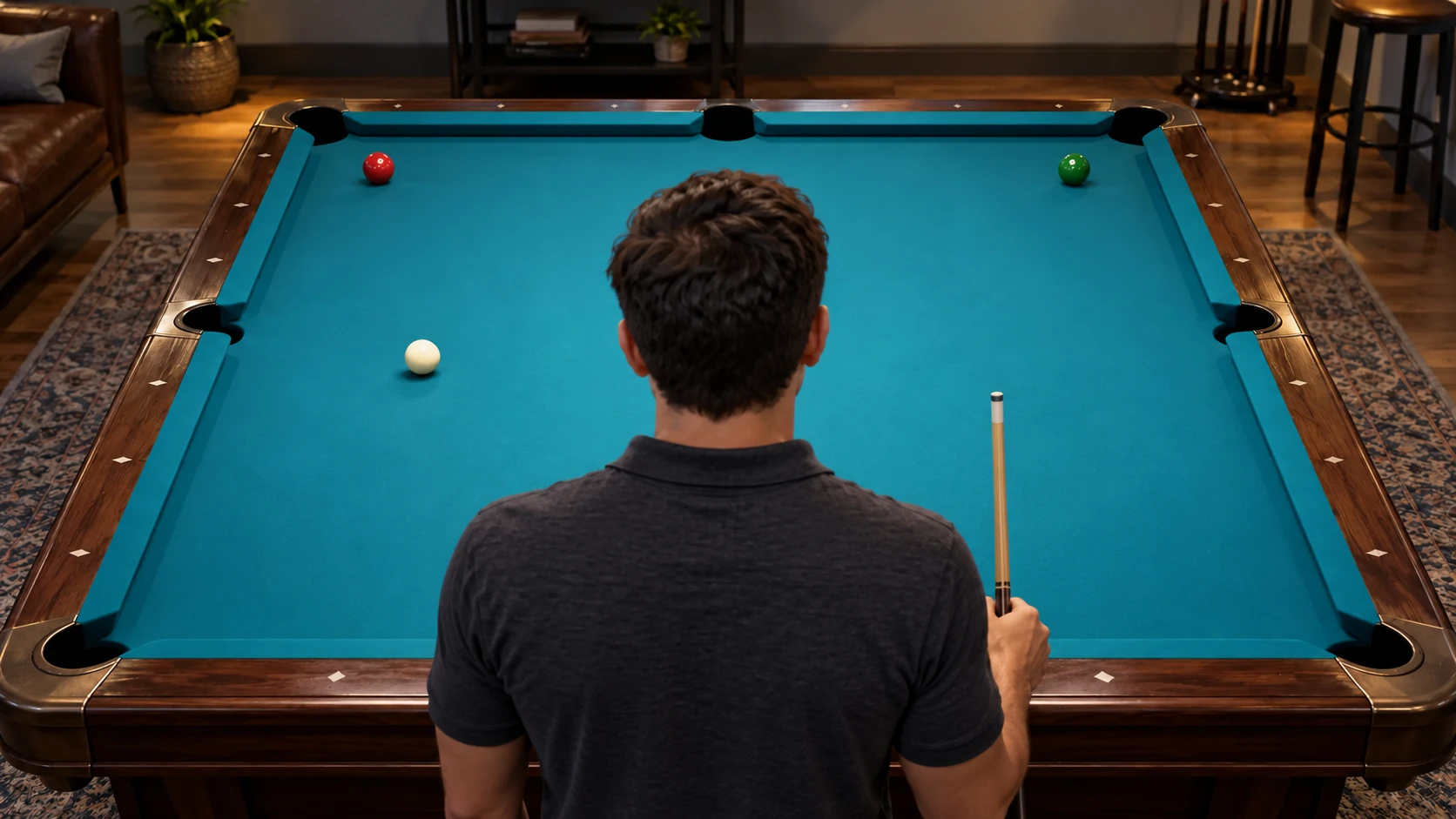
First prove that the difference repeats
Mark two straight-in shots of equal distance, mirrored across the table center line. Shoot ten on each side in alternating order with center-ball contact and a comfortable speed.
Record the object ball’s miss side, cue-ball finish and whether the cue felt crowded. Repeat on another day before treating a small scoring gap as a stable pattern.
Check the standing sight picture
Stand behind each shot before bending. The cue ball, object ball and pocket should form the intended line while the head is still upright. If one side looks straight only after the body twists, rebuild the approach from behind the line.
A player’s useful head position is individual. The test is whether the chosen position makes the cue and shot line appear consistently aligned, not whether both eyes are geometrically centered over the cue.
Compare stance access and balance
Note where the feet, hip, shoulder and cue hand fit on each side. A rail, wall or habitual lead-foot placement may crowd the cue on one layout and pull the head away from the line.
Use a stable stance that allows a free forearm swing. Do not force a mirror-image body pose if handedness makes that unstable; compare balance and cue clearance instead.
Use the cue ball as evidence
On a straight center-ball stop shot, unwanted cue-ball drift can reveal off-center contact or a cue that did not travel along the intended line. Mark the cue ball and object ball so the test can be repeated exactly.
If the cue ball repeatedly drifts the same way on both sides, inspect delivery. If the drift changes with the table side, also rotate the test to rule out cloth, level or ball-condition effects.
Change only one variable
Choose the clearest difference—such as the standing entry, head position or stance clearance—and change only that item for the next scored set. Keep the balls, speed and cue-ball contact fixed.
Do not adopt a side-specific aiming offset until a qualified instructor or a reliable camera test shows that the visual alignment itself requires one. A compensation can hide a stroke error and make later diagnosis harder.
Use the mirrored diagnosis card
- Mark equal straight-in shots on both sides.
- Alternate ten attempts per side.
- Record miss direction and cue-ball finish.
- Compare the upright sight picture and stance clearance.
- Rotate the setup to check the table.
- Retest one deliberate change across two sessions.