
Aiming and alignment · 3 min read
Using the Cue Shaft and Ferrule as an Aiming Reference
The apparent shaft or ferrule outline can be an observation without becoming an aiming rule. First choose your ordinary shot line; then test whether briefly noticing the existing outline helps or disrupts that routine. This page does not teach a named sighted-ferrule system, prescribe marks on equipment or turn a private author’s method into an Ariakon invention.
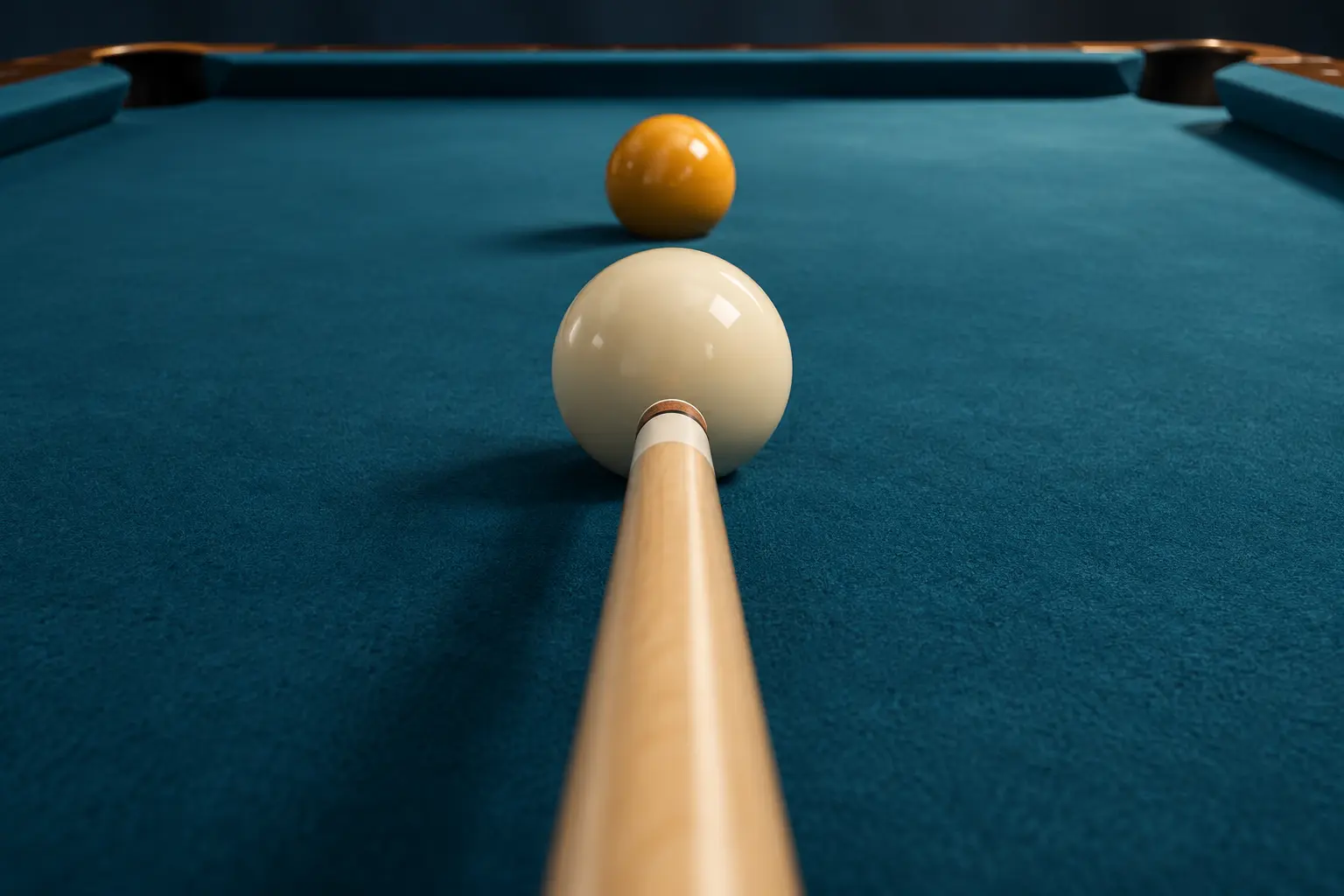
Freeze the chosen line and normal address
Use your ordinary comfortable sighting position, normal bridge and familiar cue. Keep the ferrule unmarked. Do not rotate the cue to an angle code, move your head sideways to chase a picture or align the cue-ball center directly at an object-ball contact point. Stop if the observation causes steering or discomfort.
The visible outline depends on equipment, perspective, bridge and viewing position. An observed picture does not provide a universal contact fraction. This worksheet compares routine behavior; it is not a replacement for exact shot geometry or an eye-alignment diagnosis.
Establish the shot alignment first rather than changing it to fit an outline.
Use three independently defined layouts
Use the 8×4 bed example and radius0.09 from the linked construction. Ghost center is (5.845651, 2.707391). Each cue center is1.4units behind it on the stated approach direction. The geometric model excludes throw and does not prescribe the cue ball’s later route. Scale to the actual bed and ball; omit unsafe reach rather than forcing the stance.
Place only the active ball pair and retain the same photographed setup. The illustration is not a setup diagram. Do not add adhesive markers, a line or a dot to the ferrule for this comparison.
| Layout | Cue-ball center | Fixed target |
|---|---|---|
| -30° approach rotation | (4.445849, 2.683843) | O=(6,2.8), pocket (8,4) |
| 0° approach rotation | (4.645161, 1.987097) | O=(6,2.8), pocket (8,4) |
| 30° approach rotation | (5.166143, 1.483353) | O=(6,2.8), pocket (8,4) |
Recreate the centers from the complete construction rather than estimating the three cut views.
Counterbalance two modes without inventing a system
A is the normal standing-line and sighting routine, with no deliberate ferrule observation. B uses the same chosen line and address, briefly noting the existing ferrule outline relative to the view before returning attention to the normal final target. B is a descriptive observation only: no aiming correction, rotation or head shift is prescribed.
Three layouts ×two modes ×four attempts =24attempts per session,48across both sessions. Each mode has12attempts per session and24across both. Keep four-shot blocks separate so order, adaptation and fatigue remain visible. Rest or stop as needed and record unused slots; the allocation is not a mandatory workload.
| Session | First layout blocks | Second layout blocks | Third layout blocks |
|---|---|---|---|
| 1 | A then B | B then A | A then B |
| 2, separate occasion | B then A | A then B | B then A |
Score the routine and the made ball separately
Pocketing earns0or1 per struck attempt. A separate process flag earns1 only when the standing decision, normal address and no-steering/no-picture-chasing condition were retained. Each mode has24possible pocketing points and24possible process flags across two complete sessions. Do not combine them into an aiming-quality score.
Hypothetical complete records: A makes16/24 with22/24process flags; B makes17/24 with18/24process flags. One extra make does not establish that B improved aiming, especially when it disrupted the routine more often. Keep it unresolved or discard the added observation if it creates a repeatable interference. These are invented accounting examples, not tests of a player or shaft.
Keep only a stable, non-disruptive observation
Compare the same layouts over more than one occasion and look for a repeated pattern, not a memorable pot. An equipment or bridge change creates a new comparison version. Do not claim universal transfer to rail shots, elevated cues or sidespin.
If a view is confusing, return to the simpler chosen line and normal final target, then ask a qualified instructor to observe the task. An unmarked ferrule outline is optional feedback, not a guarantee, proprietary method or reason to modify equipment.
Investigate cue delivery separately instead of assigning every miss to the sighting picture.
Audit the comparison record before drawing an improvement conclusion.
Sources and further reading
References support the specific factual information above. The practical checklists are Ariakon editorial guidance.