
Equipment guides · 4 min read
Choose Pool Table Cloth with a Requirements-and-Sample Test
Cloth selection should begin with the room and the job, not a fastest-or-best label. Construction, installed tension, table condition, cleanliness, humidity and ball condition all affect what a player observes. Use the GAME–TABLE–CARE–TRIAL card to shortlist compatible material and record a real-table comparison without turning one session into a universal ranking.
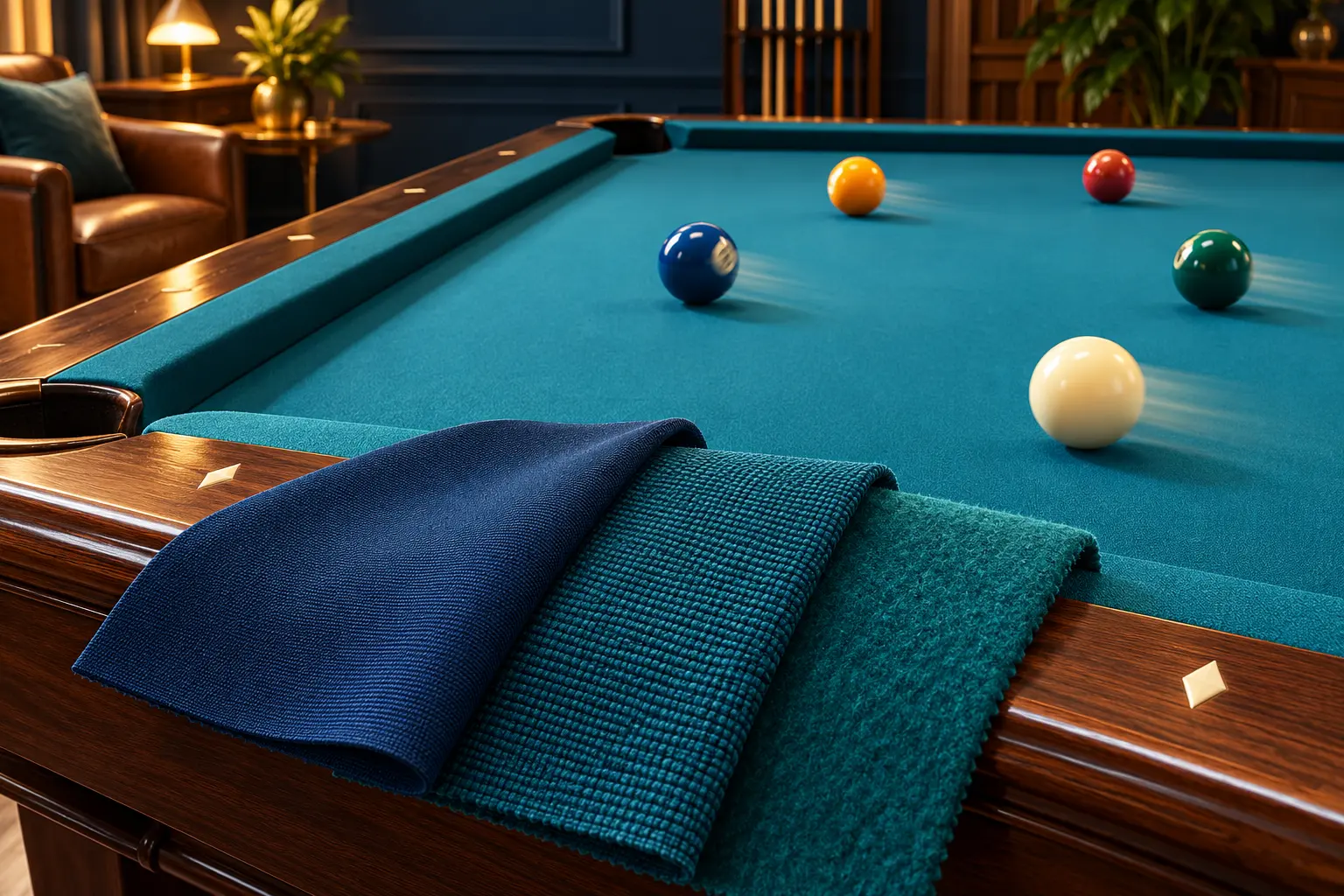
Write the requirement card before shopping
Measure the playing surface between cushion noses. Confirm that the order covers both bed and rails, and keep the exact material identity with the service record. A color name or a loose sample is not enough to establish cut, width, orientation or performance.
Competition specifications describe a nap-free, non-directional worsted surface for covered events and also define lighting and fastening expectations. They explicitly do not necessarily apply to commercial home tables, so use them as a comparison reference rather than a residential mandate.
| Field | Record | Pass condition |
|---|---|---|
| Primary game and ruleset | ___ | material intended for that use |
| Playing surface | ___ × ___ | bed and six rails available in correct cut |
| Use pattern | home / teaching / high-use | documented durability and care fit |
| Target venue | ___ | trial can approximate its pace if needed |
| Room light | day / evening readings | balls and sight lines remain clear |
| Cleaning capacity | tools and frequency | current care instructions are practical |
| Installer requirement | ___ | approved orientation and fastening available |
Separate construction facts from sales adjectives
| Claim | Ask for | Useful record | Not established |
|---|---|---|---|
| Fast | defined comparison or intended use | trial table and condition | control for every room |
| Tournament | named ruleset or event specification | current document and date | best for a home table |
| Durable | construction and care terms | use case and exclusions | maintenance-free surface |
| Worsted | fiber, weave and nap description | exact product specification | one shared speed |
| Color accurate | physical sample | room-light photos | screen-to-cloth match |
Run a controlled six-route table TRIAL
A swatch shows color and hand feel but not installed rollout. When a maintained trial table with the candidate cloth is available, use one clean cue ball and mark a release line one diamond from the head cushion. Roll it by hand toward the foot cushion along the left, center and right lanes, then repeat the three lanes in the opposite direction.
Use the gentlest repeatable release that lets the ball travel at least half the table. Record travel in diamonds to the nearest quarter and any visible drift. Reverse-direction pairs help expose slope or ball bias, but the six routes do not isolate cloth from table level, cushion condition, ball condition or installation.
| Lane | Direction A distance | Direction B distance | Drift or noise | Table condition note |
|---|---|---|---|---|
| Left | ___ | ___ | ___ | ___ |
| Center | ___ | ___ | ___ | ___ |
| Right | ___ | ___ | ___ | ___ |
Check visibility in the real room
Score 2 for clear and comfortable, 1 for usable with a concern and 0 for a visual stop. Use the actual ball colors and both daytime and evening light. Eight views × three fields × two points gives a maximum 48 per lighting condition and 96 if both day and evening are scored. Retain separate condition totals. A high total supports the shortlist; any zero requires a lighting or color change before ordering.
Do not use a phone screen as the final color sample. Photographing a physical swatch in the room is useful for comparison, but the installed full bed may still look different.
| View | Ball edges clear 0–2 | Glare 0–2 | Shadow even 0–2 | Notes |
|---|---|---|---|---|
| Head left / right | ___ | ___ | ___ | ___ |
| Foot left / right | ___ | ___ | ___ | ___ |
| Side-pocket left / right | ___ | ___ | ___ | ___ |
| Standing / low stance | ___ | ___ | ___ | ___ |
Make a worked selection without a best-cloth claim
Example: Candidate A has complete specifications, fits the installer method and scores 44/48 for visibility. Candidate B has a pleasant hand feel but no confirmed rail cut and scores 32/48 because the darkest balls disappear from two low views. Hold B until the cut and lighting gaps are resolved; A remains the evidence-backed shortlist item.
This result belongs to the stated room, table and observations. After selection, use the separate replacement guide for disassembly, installer scope and final acceptance.
Plan and accept the cloth replacement after the material requirement is complete.
Check table size and room clearance when table placement is still changing.
Sources and further reading
References support the specific factual information above. The practical checklists are Ariakon editorial guidance.