
Equipment guides · 3 min read
Choose a Pool Cue Tip for Feel, Care and Consistency
A cue tip should fit the shaft, hold a usable shape, accept chalk and give you contact you can repeat. Soft, medium and hard labels are useful starting points, but they are not universal measurements across every maker. Choose from documented construction and the maintenance you are willing to perform, not a promise that one tip automatically creates more spin.
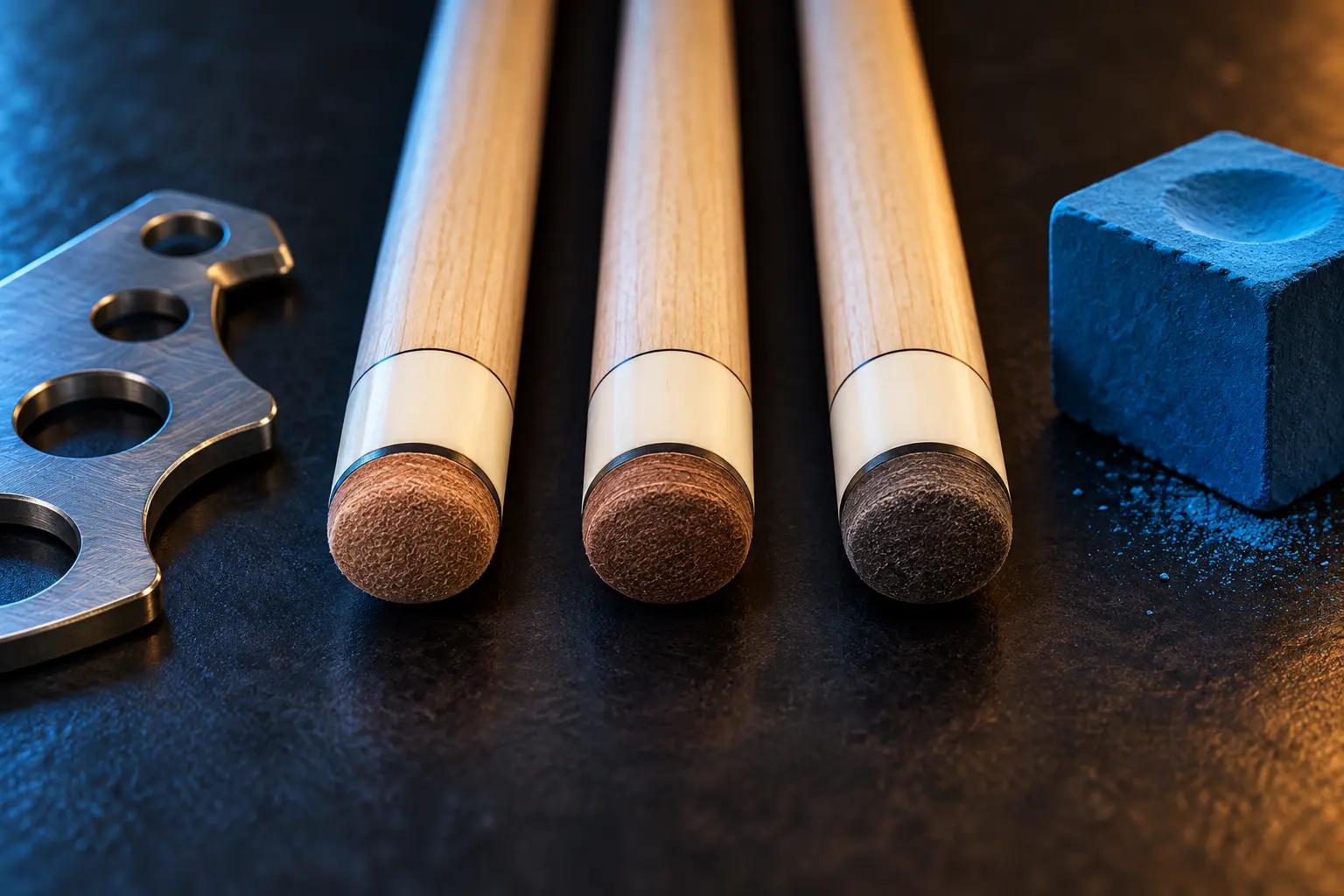
Start with the cue and its purpose
Confirm the shaft’s tip diameter and ferrule construction before buying. A replacement should be installed to the actual shaft diameter and finished without cutting or sanding into the ferrule.
A playing cue, break cue and jump cue face different impact and feel priorities. Follow the cue or shaft maker’s compatibility guidance when it specifies a tip type, minimum diameter or authorized service requirement.
Compare construction
Solid leather tips use one piece of material. Layered tips bond multiple thin layers. Milk-dud style tips are compressed and treated solid tips. Construction can influence feel, consistency between samples, shaping behavior and price, but the label alone does not prove superiority.
Buy from a source that identifies the maker, model, nominal diameter and hardness. Avoid treating color or an unverified professional association as a performance specification.
Treat hardness as a feel and maintenance choice
Softer tips may feel quieter and can require more attention to mushrooming or shape. Harder tips may feel firmer and can retain shape differently. Medium tips are a common compromise, not an objectively correct answer.
A soft/medium/hard category does not quantify delivered spin. Compare the actual installed specimen, permitted contact requests and maintenance record; do not infer a spin advantage from feel alone.
Use a receiving checklist
- Confirm the ordered diameter, model and hardness marking.
- Inspect for separation, contamination, deep cracks or obvious asymmetry.
- Use an experienced installer or the shaft maker’s service when required.
- Shape gradually to a consistent curve without thinning the tip excessively.
- Chalk evenly and inspect the edge after the first sessions.
- Stop using a loose, severely damaged or dangerously thin tip.
Evaluate it over several sessions
Use the same cue ball, chalk and familiar drills while adapting to a new tip. Record miscues, shape changes and whether speed control feels predictable. One dramatic draw shot is not a useful comparison.
Give normal installation and break-in changes time, but do not ignore lifting layers or a bond failure. Ask the installer or maker for help rather than applying household glue to a failed playing surface.
Make the practical choice
Choose a reputable tip you can replace consistently and maintain without constant reshaping. If your current tip holds chalk, stays secure and supports your normal contact, changing brands may not solve an alignment or stroke problem.
Keep the removed model name and installation date in your cue case. That simple record makes the next replacement easier and gives you better evidence than trying to remember how a tip felt months later.
Sources and further reading
References support the specific factual information above. The practical checklists are Ariakon editorial guidance.