
Coaching · 2 min read
Choose a Pool Coach Who Can Diagnose and Teach
The best player in the room is not automatically the best teacher for you. A useful coach observes before prescribing, explains priorities clearly and leaves you with a practice plan you can repeat. Credentials can narrow the search, but the lesson process should earn your confidence.
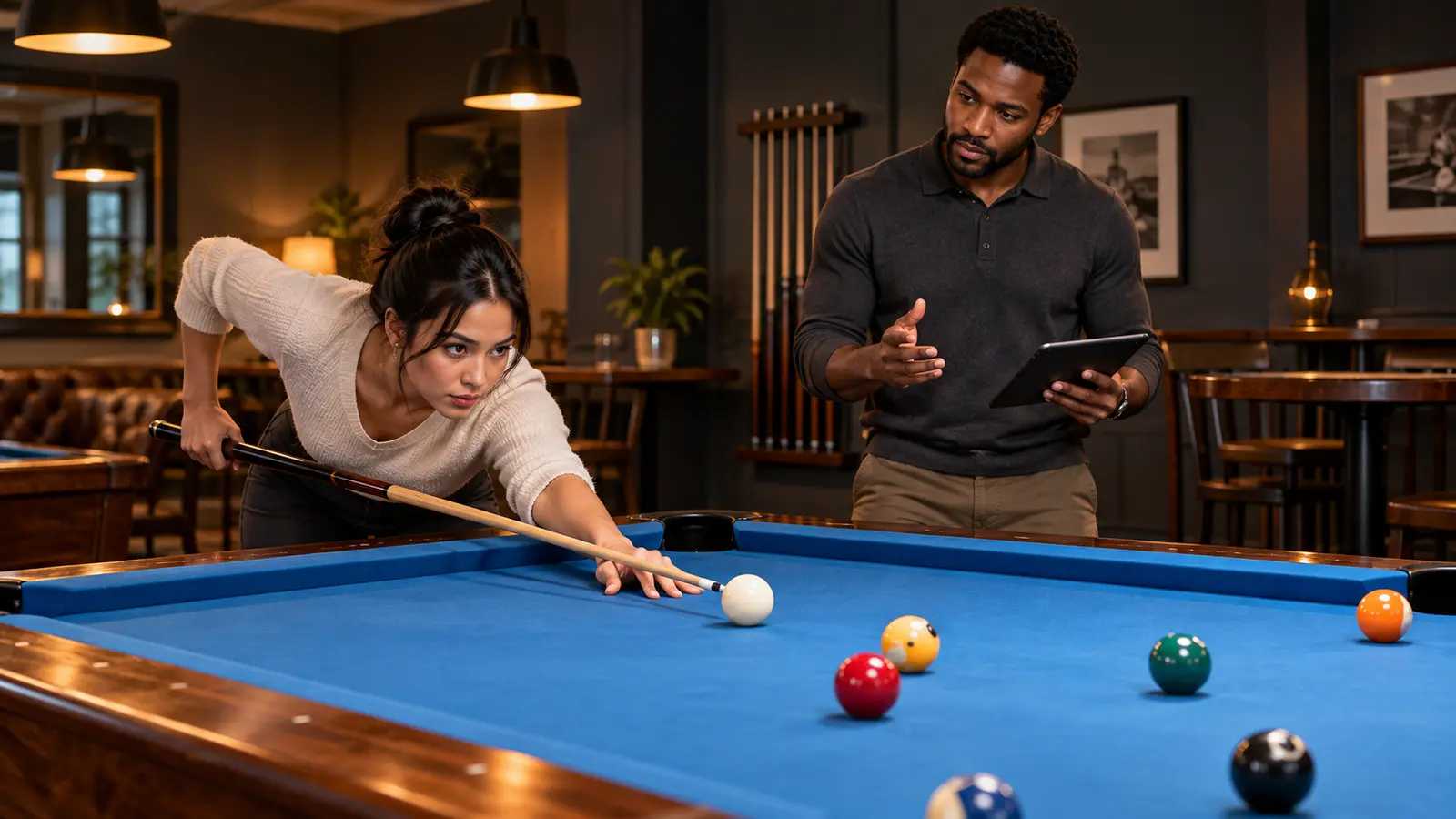
Define the result you want
Tell a prospective coach whether you need fundamentals, pattern play, break work, competition preparation or help diagnosing inconsistency. A specific goal helps both sides judge fit.
Share your current level, dominant hand, equipment access and practice time. Do not promise a rating jump by a deadline; ask what observable skills can improve first.
Use credentials as a starting filter
The Professional Billiard Instructors Association publishes an instructor directory and describes multiple certification levels. Confirm the current credential and its scope directly with the issuing organization.
A listing confirms participation in that program, not automatic compatibility. Verify the current directory entry, then ask about the coach's experience with players at your level and goal.
Ask how the first lesson works
The PBIA instructor manual recommends observing the student, taking notes, prioritizing issues and building a plan. Ask whether the coach will watch you play or run drills before making major mechanical changes.
A useful answer should include assessment, feedback, practice and follow-up. Be cautious with anyone who guarantees a result, prescribes a total rebuild immediately or cannot explain how progress will be measured.
Look for clear, limited feedback
Good instruction separates urgent corrections from optional refinements. After a lesson, you should know the one or two priorities, what correct execution looks like and how to practice them safely.
Ask the coach to restate the assignment in plain language. If every miss receives a different explanation, the plan may be too broad to test.
Evaluate the lesson, not the personality
A friendly lesson can still lack a usable plan, while a quiet technical coach may communicate exactly what you need. Judge whether the feedback was specific, the demonstrations were relevant and your questions were answered respectfully.
Take one trial lesson before committing to a package when possible. Confirm price, duration, cancellation terms, recording permission and what materials are included directly with the instructor.
Use a five-question interview
- How will you assess my current game before changing it?
- Which players and goals do you teach most often?
- What should I be able to practice alone after lesson one?
- How do you measure progress over several lessons?
- What are the full lesson, travel, table-time and cancellation terms?
Sources and further reading
References support the specific factual information above. The practical checklists are Ariakon editorial guidance.