
Pattern play · 3 min read
Choose the Key Ball Before You Start the Run
The key ball is the ball that gives you a reliable route to the last important ball in a pattern. Players often notice it only after they have removed it too early. Planning backward protects the angle and reduces the amount of cue-ball movement required at the end of the run.
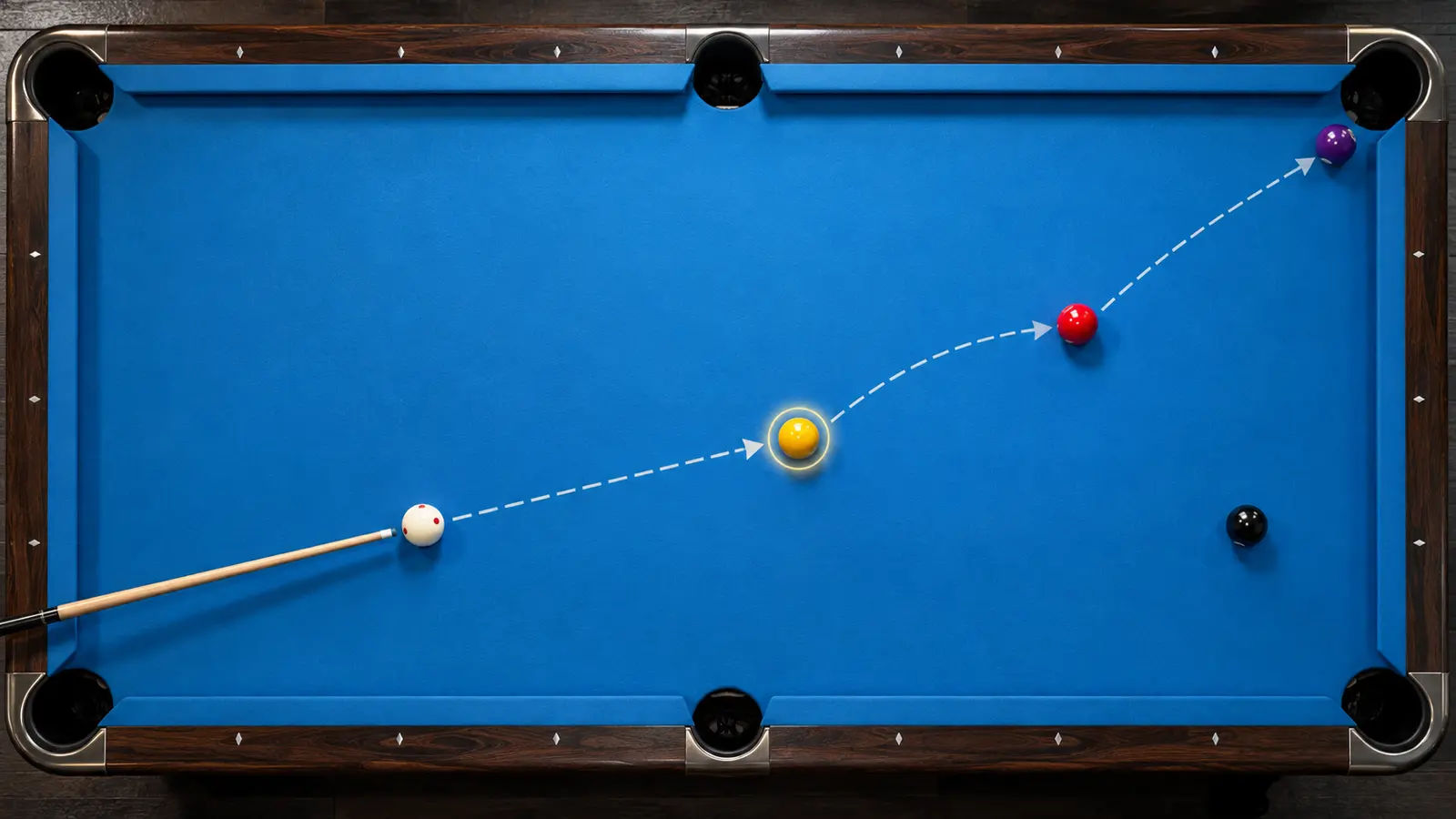
Start with the final ball
Identify the game ball, break ball or final scoring ball and choose its pocket. Mark a broad cue-ball zone that leaves a comfortable shot. The key ball is the ball that can send the cue ball into that zone naturally.
Do not choose the nearest ball automatically. A slightly farther key ball with a natural angle may be better than a close ball that requires exact draw or heavy sidespin.
Protect the correct side
A key ball is useful because of its angle. If you fall straight or on the wrong side, the route can disappear. Trace the cue ball's natural path from each side of the key ball before committing to the earlier pattern.
Choose a position zone that preserves several workable angles. A long narrow target along the correct side is usually more forgiving than a small circle at one perfect point.
Choose the ball before the key ball
Once the key ball is selected, find the easiest ball that delivers the cue ball to its useful side. This ball is often called the key-to-the-key ball. Continue backward only far enough to solve the current cluster or traffic problem.
If no ball reaches the key ball comfortably, reconsider the original choice. A pattern is not improved by insisting on a key ball that requires a heroic setup.
Do not spend the key ball as a bailout
During the run, another shot may go wrong and make the key ball look like the easiest recovery. Before taking it, identify the replacement route to the final ball. Removing it without a substitute can turn one awkward shot into an impossible ending.
Sometimes using it early is still correct, especially when the alternative risks a foul or miss. Make that trade consciously and rebuild the last three balls immediately.
Use simple cue-ball routes late
The final sequence should usually require less cue-ball travel, not more. Favor stop, stun and natural roll when they preserve the correct side. Heavy spin and multiple cushions enlarge the number of variables near the finish.
Make the ending a planned skill: identify the final ball, protect a usable key-ball angle and record whether the intended route actually remains available.
Practice backward patterns
- Place a final ball near a pocket and choose a broad setup zone.
- Add one key ball that reaches the zone with natural roll or stun.
- Add a third ball that reaches the useful side of the key ball.
- Run the three balls five times, scoring the route rather than only the pockets.
- Add one earlier ball only after the ending succeeds at least three times.
- If the pattern fails repeatedly, change the key ball instead of forcing more spin.