
Equipment care · 4 min read
Build a Shared Pool Equipment Cleaning Kit
A shared kit is an operating system for issuing and returning the right supplies, not a universal cleaner. Its useful task is preventing a ball cloth, shaft cloth, disinfectant or used pad from crossing into another surface. Material-specific procedures remain attached to the actual equipment; this station controls who can retrieve, use, return and restock them.
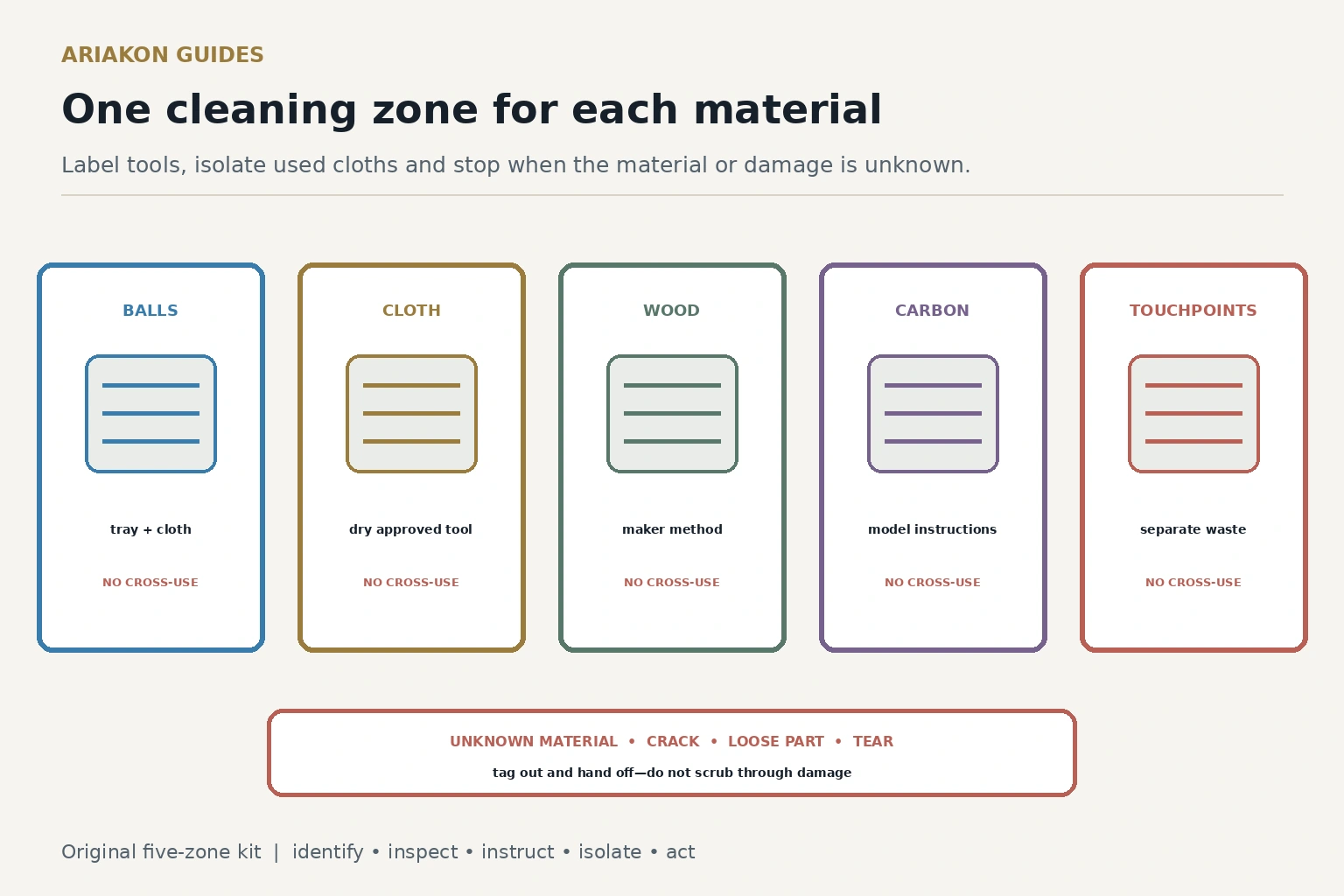
Create five labeled zones plus separate return storage
Use text labels as well as color, so the kit is understandable without color recognition. Add separate clean storage, used-item return storage and waste handling appropriate to the products. Keep chemicals in their original labeled containers; any permitted secondary container needs its identity and required labeling. Store products securely away from children and animals and from playing surfaces. A general disinfectant label is not a compatibility authorization for every cue finish.
| Zone | Dedicated contents | Boundary |
|---|---|---|
| Balls | Ball tray, identified ball-only cloths and any specifically permitted care product | No table-cloth or shaft use |
| Table cloth | Approved dry maintenance tool and the exact cloth-care card | No general surface spray or borrowed vacuum setting |
| Wood shaft | Dedicated cloth and exact finish/model instructions | No unknown composite wipe or abrasive |
| Carbon/composite shaft | Dedicated cloth and exact model instructions | No wood burnisher, polishing pad or unverified solution |
| Common touchpoints | Identified surface product, label-required protection and waste supplies | No direct application to cloth, tip, wrap or joint |
Attach an eight-field issue card to every active method
An incomplete care method stays inactive. If the card lacks permission for a specialized surface, do not fill the gap with a household recipe. For Ariakon carbon equipment, the current FAQ advises a clean soft cloth after play, avoiding abrasives, heat and modifications, and contacting support before an unfamiliar product. That limited advice does not authorize disinfectant on a tip, wrap or joint.
| Field | Required entry |
|---|---|
| Equipment | Exact item or model and identified material/finish |
| Task | Routine soil removal or a separately justified disinfection task |
| Authority | Current equipment-care instructions and product label |
| Supplies | Zone, specific tool/cloth/product and permitted quantity |
| Method | Exact application, contact/drying time and restrictions as documented |
| User | Assigned room role responsible for the task |
| Return | Used-cloth handling, waste route and clean-tool storage |
| Exception | Unknown material, damage, shortage or conflicting instructions |
Keep paired shaft kits separate for the deeper wood-versus-composite care procedure.
Diagnose shaft residue before treating an unknown mark as ordinary dirt.
Separate cleaning from any required disinfection
CDC community-facility guidance distinguishes routine cleaning from disinfection and advises appropriate surface products, label compliance, safe storage and no chemical mixing. Where disinfection is warranted, its product label governs the required contact time and protective measures. This does not establish chemical compatibility with specialized billiards materials.
Keep body-fluid contamination or unexplained damage outside routine kit work. Isolate the affected item or area and follow the facility’s applicable procedure with qualified help. Do not spray assembled cues or mist the room to replace an actual surface method. Provide safety information to the responsible room role and do not let a fast closing checklist substitute for hazard assessment.
Set the broader room hygiene routine for hands, air and shared-room prevention beyond this supply station.
Audit four confirmations in each of the five zones
Four confirmations per zone × five zones =20. A completed station record requires 20/20, but a failing zone need not close unrelated safe work. Mark that zone INACTIVE and prevent its supplies being issued until resolved. A high aggregate count cannot authorize one unknown cleaner. Restock from the documented method, not whichever bottle happens to be available.
| Confirmation | Evidence |
|---|---|
| Identity | Zone and every active product/tool labeled for its permitted material |
| Instruction | Current eight-field method and product safety information present |
| Separation | Clean, used and waste streams cannot be confused |
| Readiness | Needed supplies present, sound and within their applicable use limits |
Work a closing-shift exception without concealing damage
Hypothetical room: balls, cloth, wood and touchpoints each pass 4/4. The composite zone has labeled tools, correct separation and adequate stock but no current model-care card:3/4. Total 19/20 is incomplete. Mark that zone inactive; do not borrow the wood product. Record the missing instruction and its responsible role, then retrieve verified guidance before reactivation.
A separate house cue has a loose tip. Its care card identifies a service hold regardless of the station score. Tag it out, preserve photos and move it to protected service storage. At the next shift, review the inactive-zone and equipment-hold records before opening supplies. Kit readiness and equipment safety are different decisions.
Use material-specific table troubleshooting for a spill or surface problem rather than improvising from kit stock.
Sources and further reading
References support the specific factual information above. The practical checklists are Ariakon editorial guidance.