
Room and equipment care · 4 min read
Practical Hygiene for Shared Pool Equipment and Rooms
A dated list of pandemic rules is not a useful permanent guide for a pool room. Current prevention guidance is broader: stay home when sick, support cleaner air, practice hand and respiratory hygiene and clean frequently touched surfaces. Pool equipment adds one important constraint. A product that is appropriate for a countertop may damage cloth, wood finish, leather, cue wraps or ball material, so health guidance and manufacturer care instructions must be applied together.
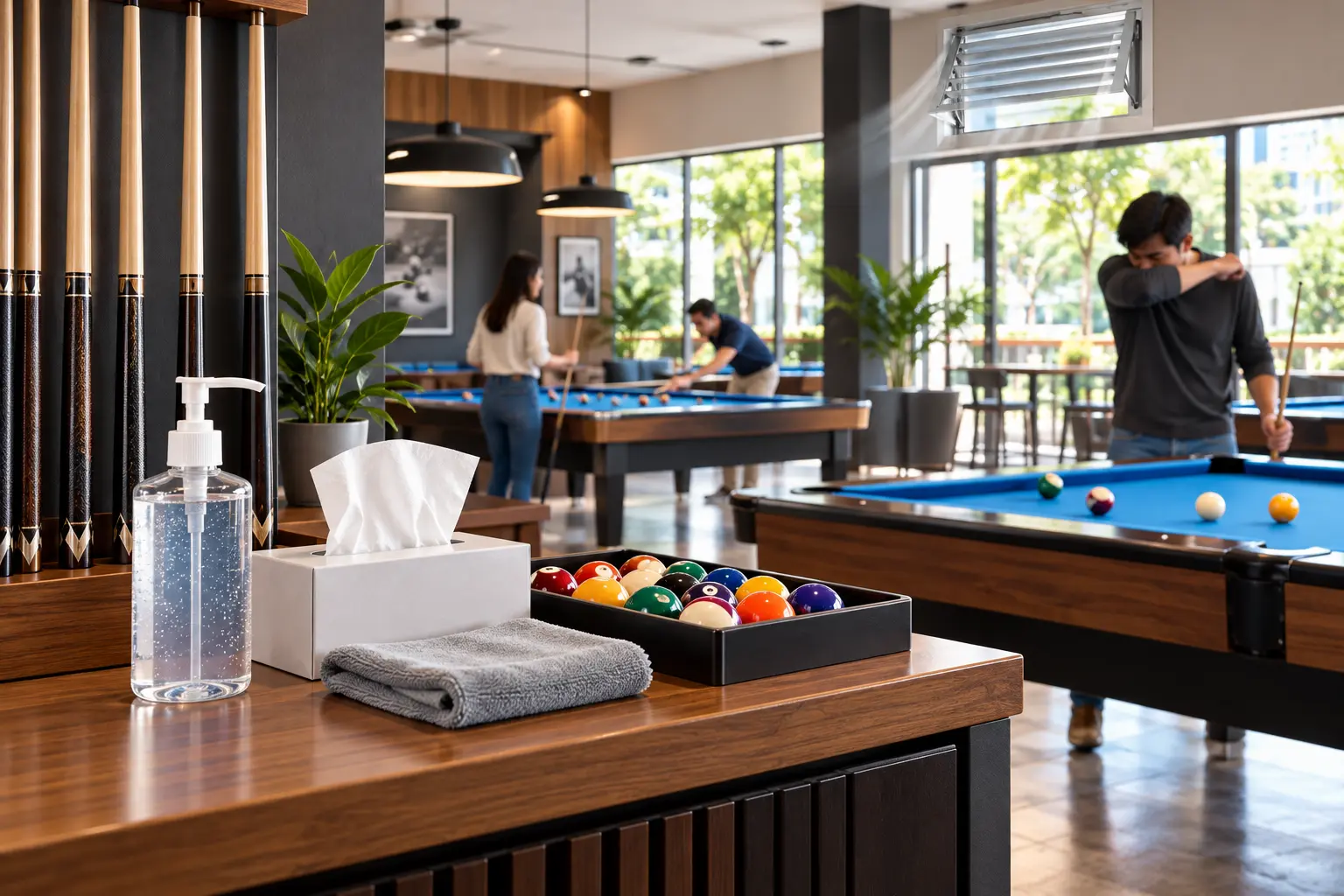
Use layered everyday prevention
The United States Centers for Disease Control and Prevention identifies immunization, hygiene and cleaner air as core respiratory illness prevention strategies. When someone is sick, staying home and away from others remains important. A shared recreation room should make those ordinary actions easy rather than relying on one dramatic cleaning ritual.
Post simple expectations, provide soap and a way to dry hands in restrooms, keep tissues and waste containers available and make hand sanitizer accessible where soap and water are not. CDC guidance specifies sanitizer with at least sixty percent alcohol when handwashing is unavailable.
Prioritize hands and cough etiquette
Players touch rails, racks, bridges, scoring controls and door handles repeatedly. Washing or sanitizing hands before and after a session reduces transfer without applying harsh chemicals to every piece of equipment. Avoid touching your eyes, nose and mouth during play when practical.
Cover coughs and sneezes with a tissue or elbow, dispose of tissues and clean your hands afterward. If you have respiratory symptoms, follow current public health guidance and the room's policy rather than treating a pool match as an exception.
Keep the indoor air moving
Respiratory viruses can spread through indoor air, especially in crowded spaces with poor airflow. Use the building's ventilation as designed, keep supply and return vents unobstructed and maintain filters according to system instructions. CDC guidance also describes bringing in outdoor air where practical and using appropriately sized portable high efficiency particulate air cleaners.
Air quality changes belong to the facility owner or qualified building professional. Do not block vents, prop open unsafe exits or improvise electrical installations. For a busy event, reduce crowding and schedule breaks if the room cannot maintain comfortable airflow.
Clean high touch surfaces with suitable products
CDC says regular cleaning with soap or detergent is enough in most situations and that disinfection is particularly relevant when someone has been sick. Clean visibly dirty surfaces first. Follow the product label, including contact time and protective equipment, and never mix cleaning chemicals.
Match the cleaner to the surface. Hard counters and door hardware may tolerate products that should never touch table cloth or a cue finish. For electronic scoreboards, use the device maker's instructions. Test uncertain products on an inconspicuous area or obtain the manufacturer's approved care method.
Protect pool specific equipment
- Use ball cleaner approved by the ball manufacturer and keep residue off the cloth.
- Wipe house cue shafts and butts only with materials approved for their finish and wrap.
- Do not spray cleaner over an assembled table or directly onto cloth.
- Provide separate clean and used loaner items when practical during busy sessions.
- Wash reusable towels and replace visibly contaminated disposable supplies.
- Keep food, drinks and cleaning bottles away from playing surfaces.
Use a simple room routine
Before opening, check restrooms, soap, drying supplies, sanitizer, tissues, waste containers and ventilation controls. During use, clean shared high touch surfaces at a frequency that matches traffic and visible soil. After a session, return equipment to its designated area and document anything that needs repair or specialized cleaning.
If a person who was ill used the space, follow current facility guidance for cleaning and disinfection. Do not claim that a room is germ free. The objective is to reduce risk through repeatable practices while preserving the equipment.
Review current guidance when conditions change
Public health recommendations can change as evidence and circulating illnesses change. Link room procedures to current CDC and local public health sources and record the date of each review. A static sign from an earlier emergency should not override current guidance.
This guide is general facility education, not medical advice. People with health risks or questions about vaccination, testing, treatment or return to activity should use current public health guidance and consult a healthcare professional when appropriate.
Sources and further reading
References support the specific factual information above. The practical checklists are Ariakon editorial guidance.