
Pool rules and formats · 3 min read
Understand Rotation Pool Before Choosing a Game
Rotation is a family of pool games, not one complete rule sheet. The common strategic pressure comes from addressing the lowest-numbered ball first, but the rack, called-shot requirements, winning ball and treatment of early combinations depend on the named discipline and governing rules.
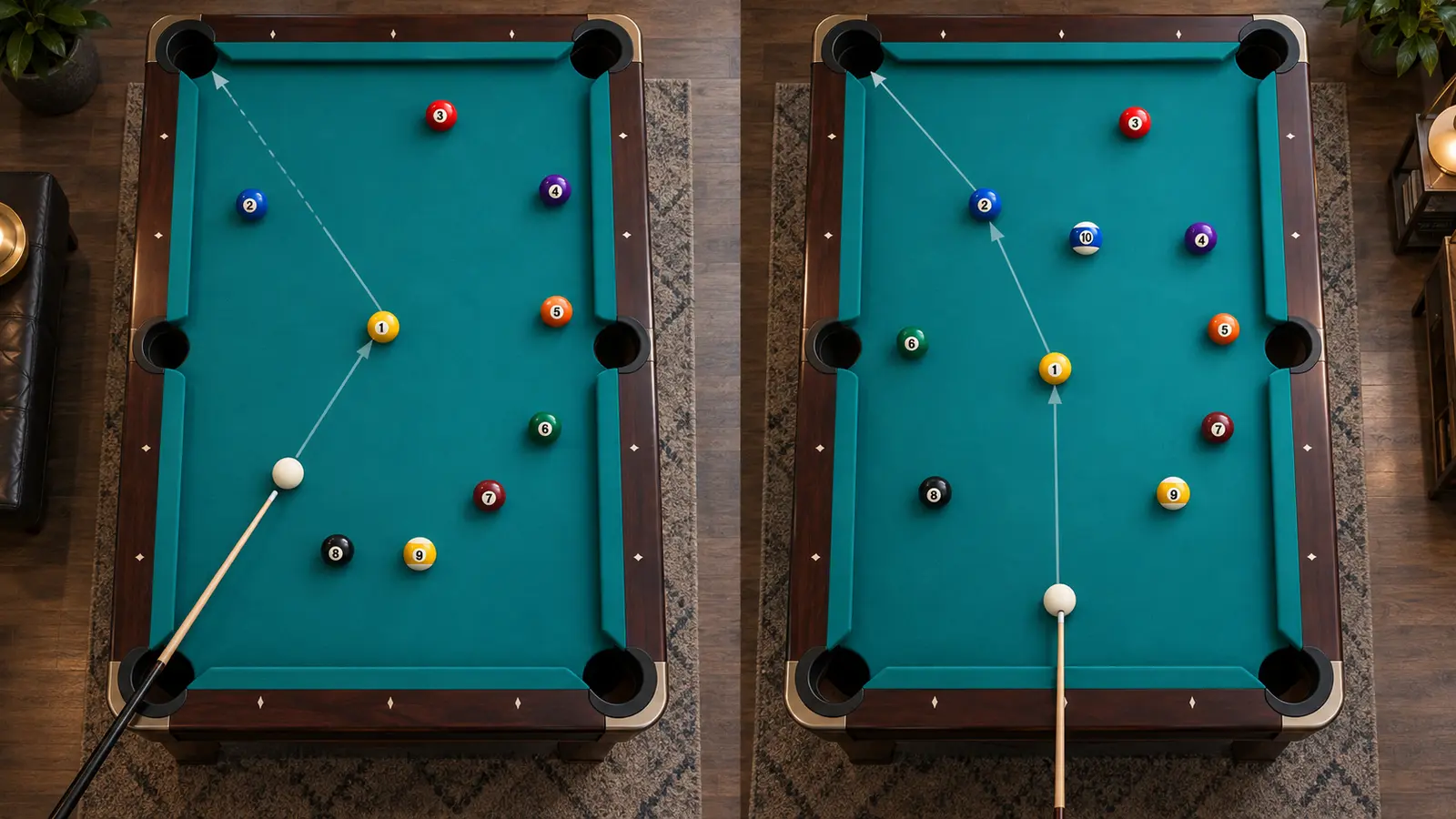
Start with the shared idea
In common rotation disciplines, the cue ball must first contact the lowest-numbered object ball remaining on the table. That contact requirement shapes both offense and safety play.
It does not mean the lowest ball is always the only ball that can be pocketed. Which ball scores or wins, and whether it must be called, comes from the specific game rules.
Nine-ball rewards legal sequence pressure
World-standard nine-ball uses balls one through nine and requires the cue ball to contact the lowest-numbered ball first. A legally pocketed nine ball wins the rack, subject to the full rules for the break, fouls, push out and spotting.
Because combinations and caroms can move the nine early, players must weigh an aggressive chance against the position they leave if it fails.
Ten-ball adds different obligations
World-standard ten-ball uses balls one through ten and is a call-shot game. The lowest ball still governs first contact, while the called ball and pocket govern the intended scoring shot.
That distinction changes early-ten-ball situations and reduces the value of accidental pockets. Do not assume a nine-ball habit automatically transfers.
Under the current WPA text, the winning called 10-ball must be the last object ball on the table. A 10 pocketed earlier is spotted before the next shot. That rule differs from nine-ball’s ordinary legal early 9 and is a reason to read the named discipline rather than treating every rotation game as nine-ball.
Plan at least two balls ahead
Before shooting the current lowest ball, identify the next legal ball and a generous cue-ball zone for reaching it. Then check whether the route crosses scratch lanes or sends traffic toward the winning ball.
If the next position is too demanding, a controlled safety can be the higher-value rotation decision even when the current ball is makeable.
Use the sequence in safety play
A legal safety must still satisfy first-contact and rail or pocket requirements in the applicable rules. Try to separate the cue ball and lowest ball while leaving a difficult legal path for the opponent.
Track which numbered ball becomes lowest after contact or a pocket. A safe-looking layout is less useful if the next legal ball gives away an easy kick or combination.
Confirm the actual format
- Name the discipline: nine-ball, ten-ball or another rotation game.
- Identify the governing organization and document date.
- Check break, rack and alternate-break procedures.
- Check call-shot, combination and early winning-ball rules.
- Ask about local time, concession and scoring modifications.
- Resolve uncertainty with the organizer before the lag or break.
Sources and further reading
References support the specific factual information above. The practical checklists are Ariakon editorial guidance.