
Stroke technique · 3 min read
Diagnose and Reduce Wrist Twist in Your Pool Stroke
A relaxed wrist can move naturally during a pool stroke. The problem is an active sideways twist that redirects the cue before contact. Diagnose that motion from the cue's path and the ball result, not from how unusual the hand looks in a frozen frame.
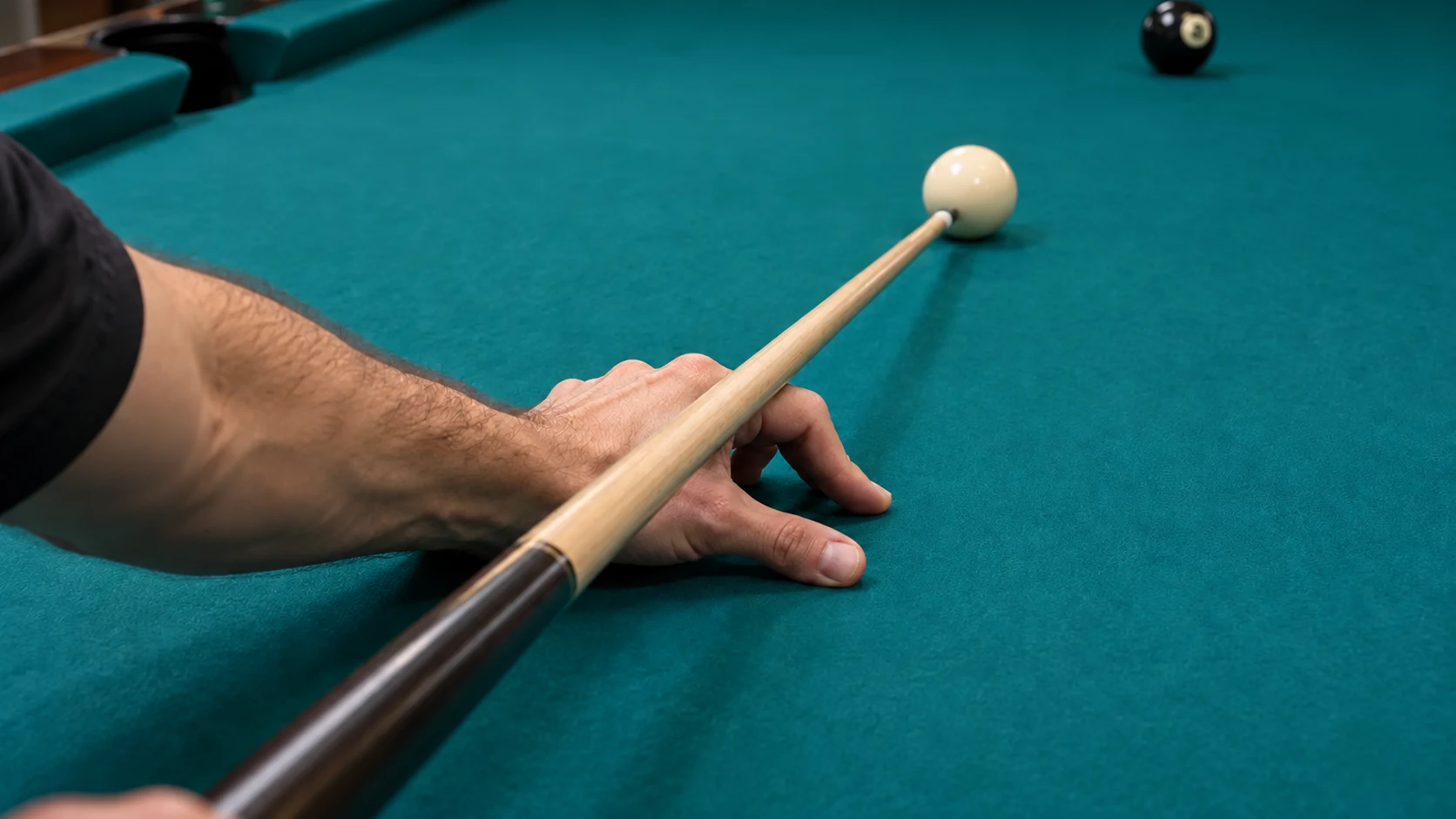
Separate hinge from twist
A small forward-and-back wrist hinge can occur with a relaxed stroke. A twist rotates or steers the hand sideways and can send the cue across the intended line. Do not try to lock every joint rigidly; excess tension can create a different delivery error.
The useful question is whether the tip returns through the intended contact point with repeatable speed. Judge the cue path, not a preferred hand pose.
Prove the pattern on video
Record several straight shots from directly behind the shot line and, if safe, from the side. Keep the camera outside the playing area and at cue height when possible.
Review the warm-up strokes, final backswing, delivery and finish. A repeated cue move to the same side is stronger evidence than one miss. Compare the path with the actual cue-ball start direction.
Remove common causes one at a time
Start with grip pressure. Hold the cue securely enough that it does not slip, but avoid squeezing during the forward stroke. Then check that the forearm has room to swing without hitting the torso or forcing the elbow around the body.
Also check bridge stability, stance clearance and whether you are consciously trying to add sidespin at the last moment. Change one factor per scored set so you know what helped.
Build a straight delivery
Use a close straight-in shot at modest speed. Make several slow warm-up strokes, pause without strain and deliver through center ball. Let the cue finish naturally instead of forcing a long follow-through.
A safe gate made from two soft, stable objects can provide feedback, but leave generous clearance at first and never use a setup that can damage the cue, cloth or balls. Narrow the gate only after the cue passes cleanly.
Reintroduce speed and spin carefully
When the center-ball path is repeatable, add speed in small steps while preserving the same grip pressure and finish. Then test intentional sidespin as a separate skill, using a fixed tip offset rather than a last-second swipe.
If pain, numbness or an injury affects the motion, stop and seek qualified medical guidance. For a persistent technical error, a reputable instructor can compare your delivery with ball results in person.
Use the wrist-twist test
- Film five straight shots from behind the line.
- Mark make, miss direction and cue-ball start direction.
- Repeat with slightly lighter grip pressure.
- Check body clearance and bridge stability.
- Change only one cause during each set.
- Keep the version that improves both cue path and result.