
Cue-sport basics · 3 min read
Learn Snooker Basics Without Playing It Like Pool
Pool experience helps with cue delivery, but snooker changes the scale, targets, scoring and tactical rhythm. Learn the legal sequence and table demands first so familiar habits become a foundation instead of a source of confusion.
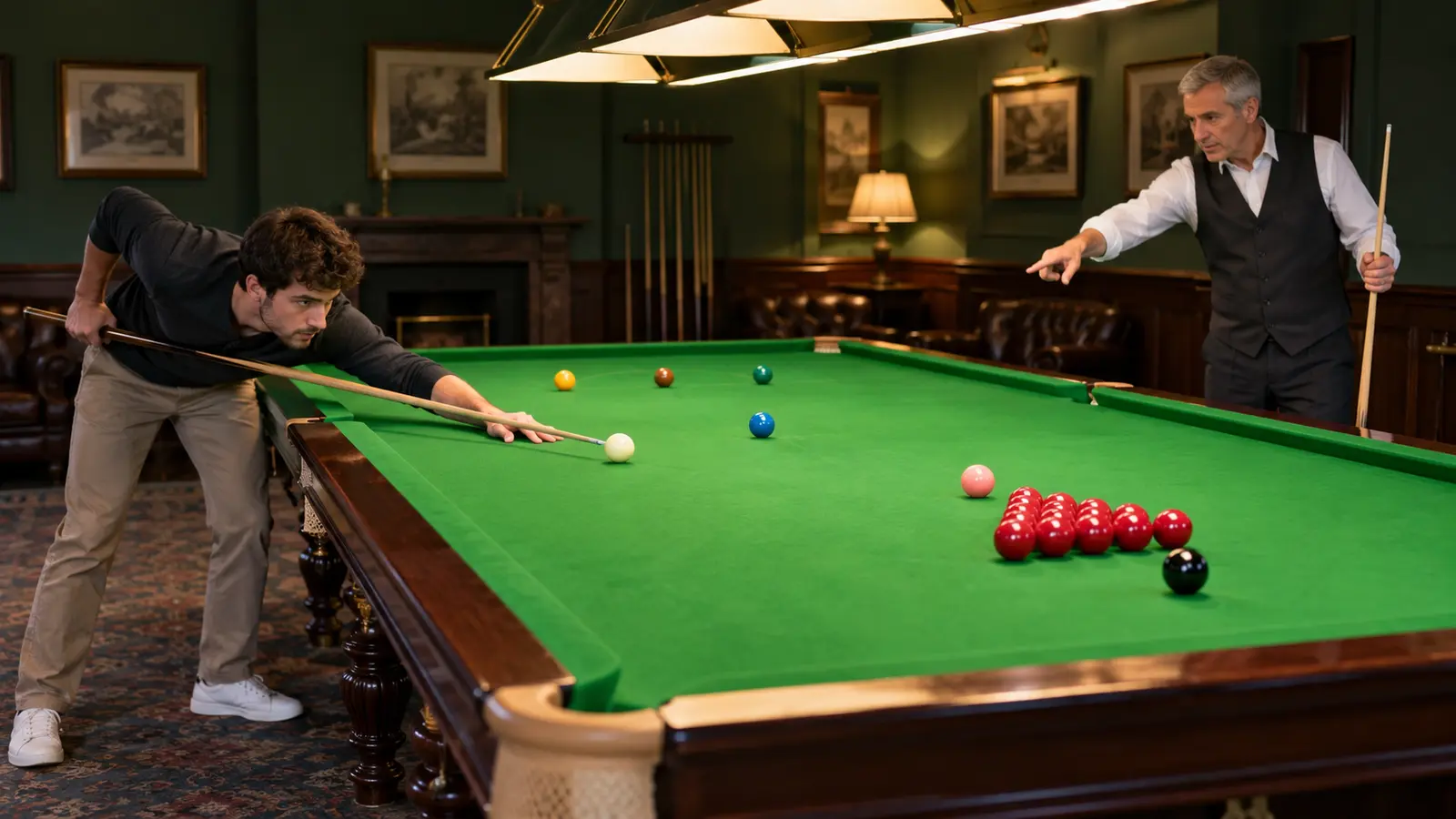
Orient to the table and balls
A full-size snooker table is much larger than a common pool table and uses smaller balls, narrower rounded pockets, fifteen reds, six colors and the cue ball. Local tables may differ, so identify the actual equipment before comparing results.
The marked color spots and the baulk area organize the opening position and later respotting. Ask the venue to show the spots rather than moving colors by memory.
Learn the scoring sequence
While reds remain, a player normally attempts a red worth one point, then nominates and attempts a color. A legally potted color is respotted and the player returns to a red.
After the final red and its following color, the colors are played in ascending value: yellow, green, brown, blue, pink and black. The official rules determine unusual ball-on, free-ball and foul situations.
Change the target standard
Long pots and tight pockets make center-pocket speed and clean cueing more important than forcing pool-style position from every shot. Begin close enough to see the intended contact and pocket line clearly.
A color pot is useful only when the cue ball finishes with a legal next red. Plan the return route before striking rather than celebrating a difficult color and discovering no red is available.
Treat safety as normal play
Snooker contains long exchanges where the useful result is leaving distance, a cushion obstruction or a difficult legal contact. A safety is not an admission that a pot is impossible; it is a scoring and position decision.
Learn to send the cue ball to a large zone and leave it near a cushion before attempting fine snookers. Control of pace and legal contact matters more than hiding the cue ball by luck.
Respect rule and etiquette differences
Fouls award points to the opponent, and the referee may need to nominate, respot or replace balls under the official procedure. Do not apply pool ball-in-hand assumptions to a snooker situation.
Remain clear of the player's sight line, wait for balls to stop and let the referee or agreed rules source resolve a dispute. A casual shortened game should still define any modified rules before the break.
Use a first-session progression
- Practice straight cueing with the cue ball and one red.
- Add one easy color and rehearse red-color alternation.
- Learn the six color spots and values.
- Play simple cue-ball-to-zone safeties at controlled speed.
- Score a short supervised sequence accurately.
- Read the current official rules before competitive play.
Sources and further reading
References support the specific factual information above. The practical checklists are Ariakon editorial guidance.