
Stroke timing · 3 min read
Use a Slow Backswing Without Freezing Your Stroke
A slower backswing can make the transition into the forward stroke easier to organize, but slow does not mean tense or artificially long. The useful change is a controlled pullback and an unhurried change of direction that lets the eyes settle, the forearm reverse smoothly and the cue accelerate forward without a sudden grab.
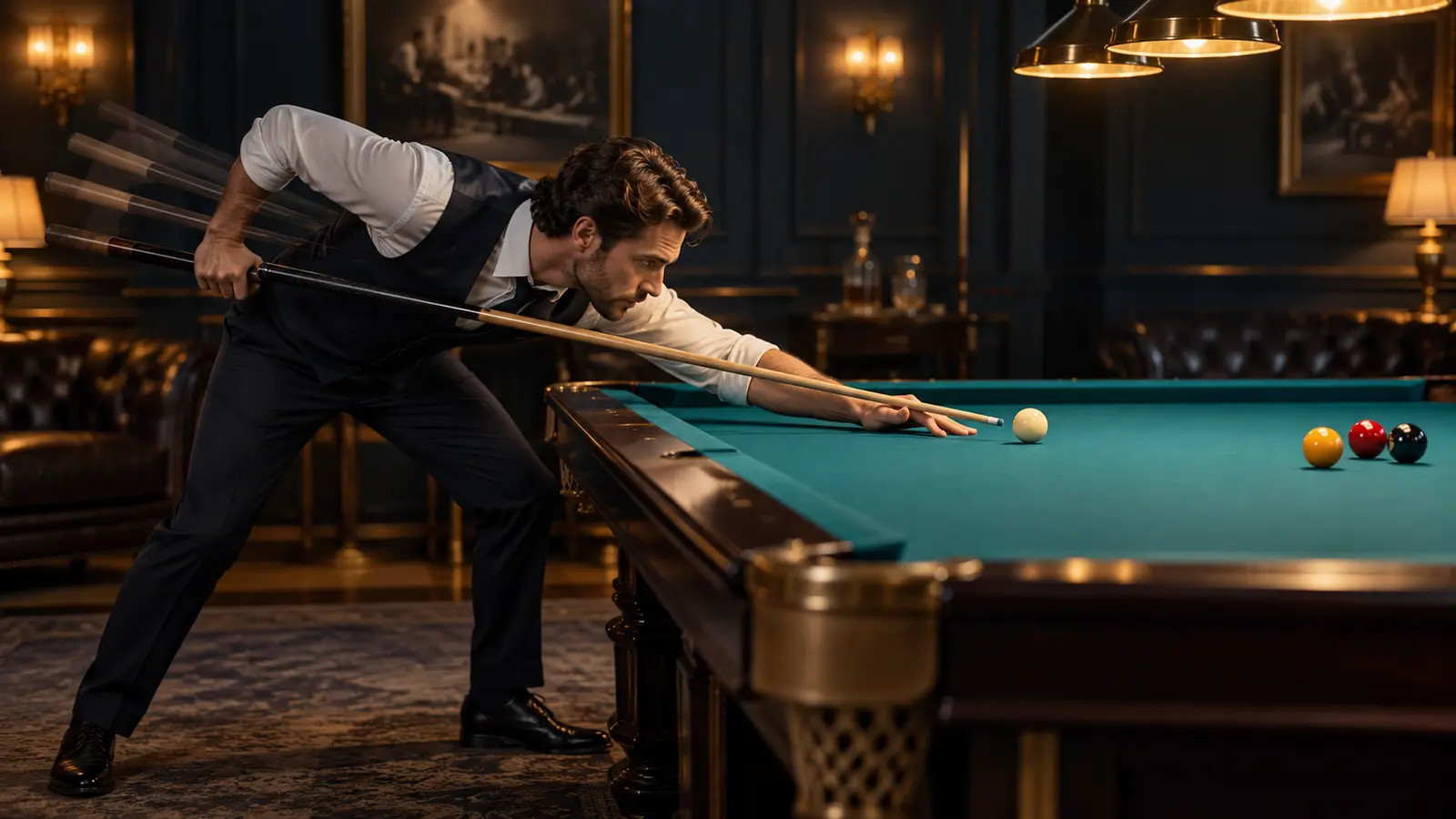
Slow the transition, not every movement
Use comfortable warm-up strokes, settle at the cue ball and pull the cue back at a speed you can feel. The most important moment is the reversal: avoid bouncing abruptly from backswing to forward swing.
A brief natural pause can separate aiming from delivery. It should feel like the completion of the backswing, not a forced pose held until the arm becomes rigid.
Match backswing length to shot speed
A soft shot usually needs a shorter backswing, while a firm shot may need more distance for smooth acceleration. Do not create power by jerking the cue from a short, tight position.
Keep the final forward motion committed. Slowing the pullback is useful only if the delivery continues through the cue ball instead of decelerating before contact.
Keep the head and bridge quiet
Watch the object-ball target while the cue completes its final pullback according to your chosen eye pattern. Let the bridge hand remain planted and the head remain still until the balls have separated.
If the cue tip drifts during the slow pullback, check whether the shoulder, wrist or body is adding motion. Moving more slowly can reveal the problem; it does not automatically solve it.
Find a repeatable count
Use a simple rhythm such as settle, back, finish. The words are cues, not a metronome that must make every shot take the same number of seconds.
Practice the count on routine shots first. Under pressure, return attention to completing the backswing rather than trying to consciously control every inch of the forward stroke.
Compare results instead of feelings
Film ten straight shots with your normal timing and ten with the controlled pullback. Compare cue-ball finish, tip placement and whether the cue changes direction smoothly.
Keep the slower rhythm only if it improves repeatability without adding tension. If performance gets worse, use a smaller timing change or work with a qualified instructor rather than forcing a fashionable pause.
Use a twenty-shot timing test
For any straight stop-shot score in this guide, center the finish window on the cue-ball center at object-ball contact: one ball diameter behind the object-ball center on the incoming line. The cue-ball starting position is not the stop destination. Keep the window size fixed before the block.
- Five soft stop shots with a short backswing.
- Five normal stop shots with a natural pause.
- Five firm stop shots with a longer smooth pullback.
- Five cut shots using the same transition cue.
- Record misses and cue-ball finish direction.
- Repeat on another day before changing the permanent routine.