
Team play · 2 min read
Prevent Pool Team Conflict Before It Changes the Match
Most team conflict grows from unclear roles at a pressured moment: several people coach at once, a rules question becomes an accusation, or feedback arrives while a player is still processing the rack. A short agreement before the match keeps the team useful when the room gets tense.
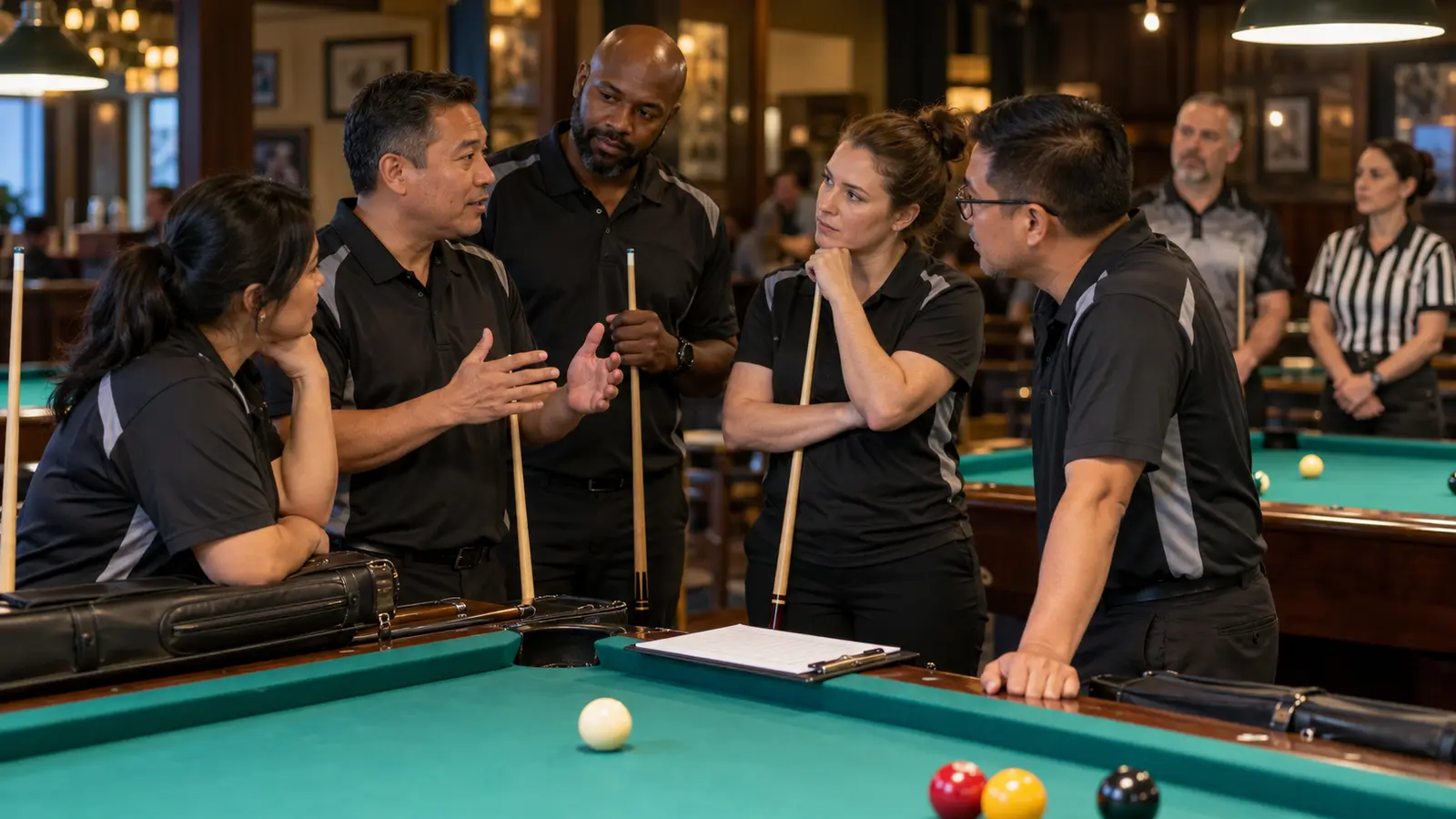
Name the match roles
Identify the captain, scorekeeper and any person permitted to coach under the active league rules. Everyone else supports without creating a second chain of command.
Confirm who will speak to the opponent or official. One calm contact prevents five partial versions of the same dispute.
Agree on coaching boundaries
Review when timeouts or coaching are allowed, who may initiate them and when the player must act alone. The exact procedure varies by league, so use the current local manual rather than team folklore.
During permitted coaching, ask what the player sees before prescribing a shot. Offer one plan and its main risk, then return ownership of execution to the player.
Separate rulings from character
Describe the observable event: which ball was contacted, what was called or when play stopped. Avoid claims about intent, honesty or competence.
Pause the table in its current state and use the designated official or league procedure. A rules question handled through the agreed path is not a personal challenge.
Delay technical feedback
Between racks, ask whether the player wants a note now or after the match. Immediate correction can overload attention and sound like blame even when the technical point is correct.
Save detailed stroke and pattern review for practice. Match feedback should be brief, actionable and connected to the next decision.
Use a reset phrase
Choose a neutral team phrase such as one voice or next decision. It should signal that discussion is looping, not declare a winner.
If emotions stay high, the captain can create physical space, move the conversation away from the table and involve league staff. Sportsmanship matters more than proving a point in the moment.
Hold a ten-minute team agreement
- Assign captain, scorekeeper and permitted coaches.
- Locate the current league rules before the match.
- Choose one path for questions and protests.
- Set a no-technical-debrief rule during an active rack.
- Pick a neutral reset phrase every teammate may use.
- Review one process improvement afterward without naming a scapegoat.
Sources and further reading
References support the specific factual information above. The practical checklists are Ariakon editorial guidance.