
Table safety and etiquette · 2 min read
Prevent Common Pool Table Mishaps and Reset Safely
A cue ball on the floor, bumped object ball or slipping bridge hand can happen at any level. The useful response is not embarrassment or a fast cover-up. Build the table area to prevent predictable accidents, stop when something changes and let the active rules decide the restart.
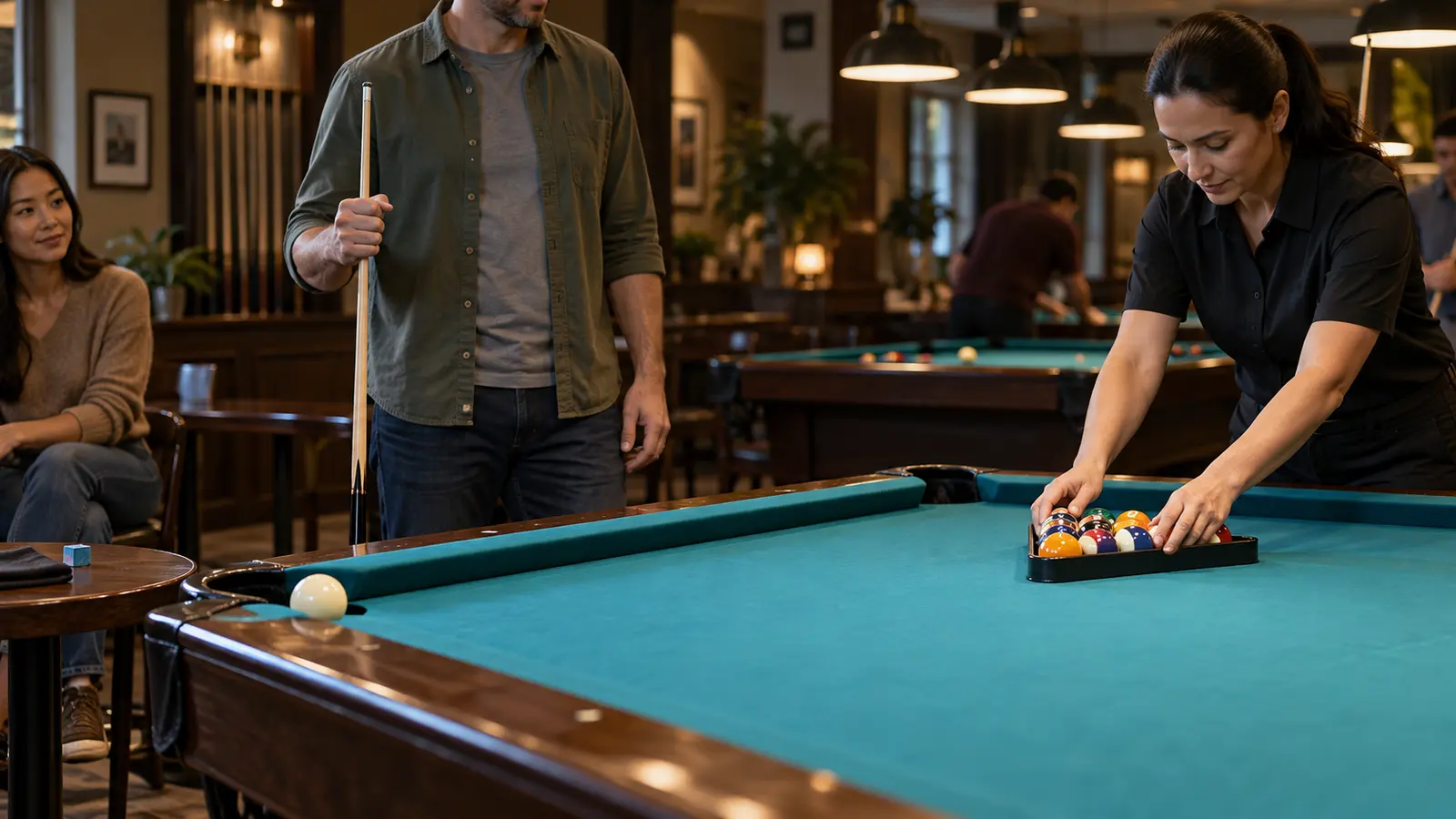
Clear the stroke and walking lanes
Move drinks, cases and loose accessories away from the rails and player path. Keep chalk in a consistent permitted place rather than on the cloth or balanced at a pocket edge.
Before a long reach, check the cue butt, overhead light, wall and people behind you. A full practice stroke needs space at both ends of the cue.
Build a stable reach
Set the feet before leaning over the table and keep a supported bridge. If the shot requires a stretch that shifts the body during delivery, use the mechanical bridge or choose another legal aid allowed by the event.
Do not sit on rails or use the cue as a support pole. Protecting balance also protects the table, cloth and nearby players.
Prevent premature movement
Finish warm-up strokes with a distinct pause or final-set cue so the decision to shoot is deliberate. If a nearby sound or movement interrupts the routine, stand up instead of freezing halfway through delivery.
Keep sleeves, jewelry, hair and the bridge hand clear of nearby balls. Survey tight traffic from above before lowering into the stance.
Stop after a changed table
If a ball, marker or piece of equipment moves unexpectedly, stop play and avoid moving anything else. Call the opponent or official and describe only what happened.
Do not replace a ball from memory unless the governing rules authorize that procedure. WPA rules distinguish standard fouls, balls driven off the table, touched balls and outside interference; local rules may handle them differently.
Make the reset unemotional
Accept the ruling, restore only what the rules direct and resume from the declared position. Rushing because the accident feels silly can create a second foul or an unsafe pickup.
After the match, change the environment or routine that caused it: relocate the case, use a bridge, slow the final set or ask spectators for clearance.
Use a six-point table check
- Floor and walkway are dry and clear.
- Cue butt and bridge hand have unobstructed space.
- Chalk, drinks and cases are secured away from play.
- Feet and reach stay stable through the finish.
- Any unexpected movement stops the inning for a ruling.
- The prevention lesson is recorded after play, not argued during it.
Sources and further reading
References support the specific factual information above. The practical checklists are Ariakon editorial guidance.