
Game practice · 4 min read
Practice a Straight Pool Run With a Break Ball and an Insurance Ball
A straight-pool end pattern succeeds only when it connects two phases: clearing the remaining loose balls and opening the next rack with a playable continuation. This drill assigns a break ball, a key ball and a backup option before the first shot. The backup is insurance during the pattern; after the fourteen-ball rerack, the useful insurance is whichever newly opened ball offers a clear next shot.
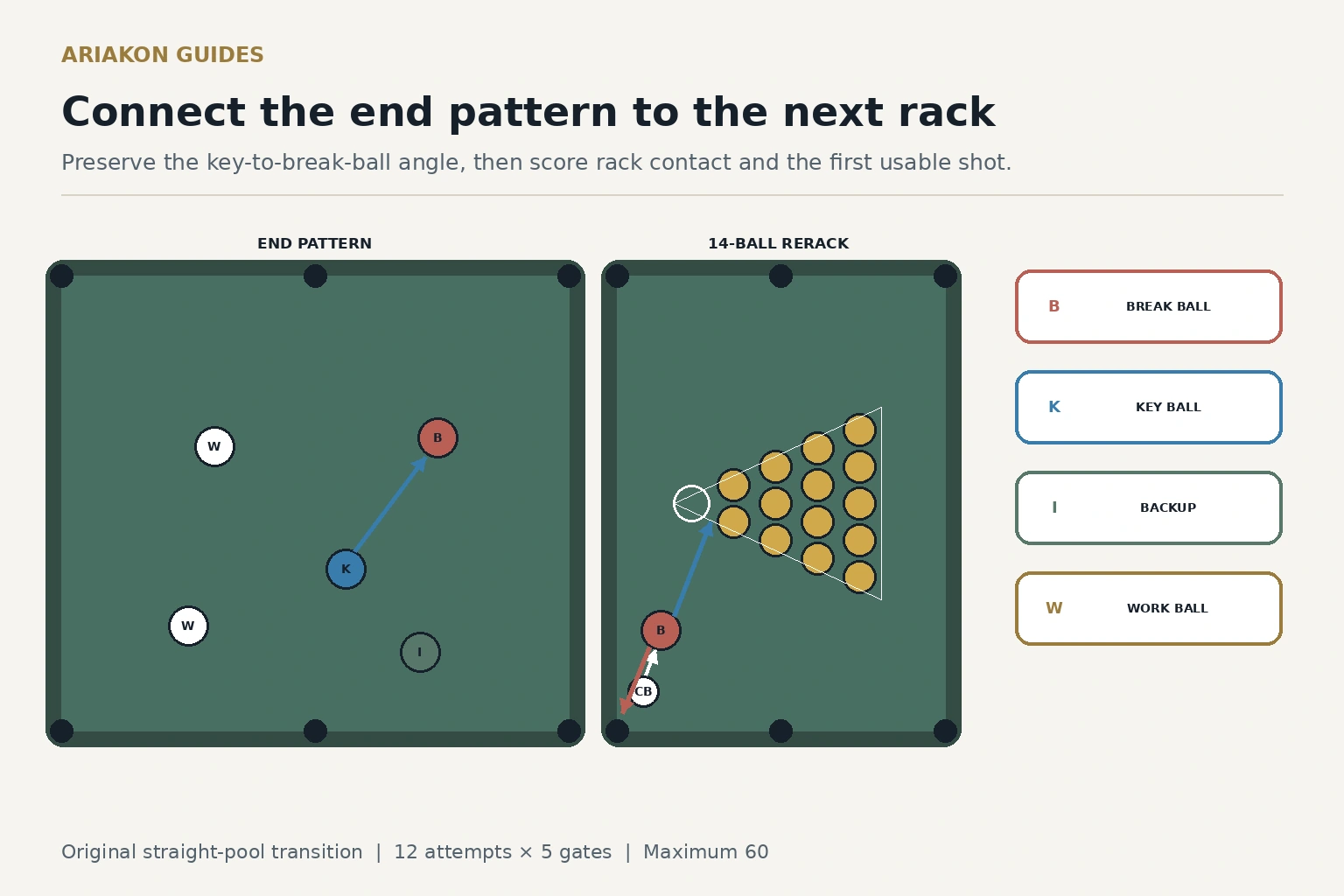
Name five roles before touching the layout
Use a training template, not a random rack. Put a break ball about one ball outside the rack area with a natural cut toward a lower corner and a cue-ball route into the side of the rack. Place a key ball that can leave that angle. Add two work balls and one backup ball with clear pockets. Mark every center so the layout resets exactly.
The backup ball is not a second ball left on the table when fourteen balls are reracked. It is an alternate route while the small pattern is being cleared. Under current straight-pool rules, fourteen pocketed balls are reracked while the fifteenth object ball and cue ball ordinarily remain in position, subject to the specific interference and spotting exceptions in the rules. In this reduced drill, the chosen break ball represents that fifteenth ball.
| Role | Job | Failure signal |
|---|---|---|
| Break ball | Pocket legally and send cue ball into the rack | No usable cut or dangerous scratch line |
| Key ball | Deliver the planned break-ball angle | Cue ball crosses the angle or finishes too straight |
| Backup | Replace one failed route before the key ball | Pocketed early without a reason |
| Work balls | Create the path to the key ball | Force cue-ball traffic through the rack area |
Review straight-pool scoring and the rerack before using the reduced pattern.
Recognize secondary break shots when the primary break ball disappears.
Run the pattern in three deliberate stages
Stage one is planning: point to the intended order and name the backup before shooting. Stage two is the four-ball clearance: pocket the two work balls, backup and key ball while keeping the cue ball away from the rack footprint. Stage three is the transition: place a full fourteen-ball rack on its spot, play the marked break ball and identify a clear next shot from the opened balls.
Do not rearrange the rack after seeing the break result. A ball counts as useful insurance only when it has a legal pocket path and the cue ball has practical access. A ball that merely moved away from the rack is not automatically a continuation.
Score twelve complete attempts
Shoot four attempts with the original order, four with the two work balls exchanged, and four after moving the backup one ball width. The break-ball and key-ball centers stay fixed. This changes pattern decisions without turning the exercise into twelve unrelated layouts.
| Point | Observable requirement |
|---|---|
| 1 | Order and backup called before the first stroke |
| 1 | Work balls cleared without disturbing the break ball |
| 1 | Key ball leaves the called side and angle |
| 1 | Break ball pocketed and cue ball contacts the rack |
| 1 | A legal next shot is named before moving any ball |
| Maximum 60 | Twelve attempts; reset all marked centers |
Diagnose the first broken role
| Observed failure | Next practice action |
|---|---|
| Key-ball angle lost | Repeat only the ball before the key ball six times |
| Break ball pocketed but rack missed | Recheck cut angle and contact side before adding speed |
| Rack opens but cue ball is trapped | Change rack contact or speed; keep the same pocketing line |
| No next shot | Record which rack area remained closed; do not call a blocked ball insurance |
| Backup needed repeatedly | Redesign the work-ball order instead of relying on rescue position |
Worked example and full-rack transfer
A player scores 43 of 60. Ten break balls are pocketed, but only five attempts produce a clearly available next shot. The evidence says the end pattern is adequate and the rack contact is the weak link. The next block is six break-ball shots from the same key-ball finish, with rack-contact side and first open ball recorded; replaying the easy work balls would hide the problem.
For transfer, play three normal straight-pool racks. When five balls remain, pause once to label break, key, backup and work balls on a paper diagram. Resume without moving anything. Score the same five gates through the next rerack. The labels guide decisions, but legal shot calls, scoring and ball spotting always follow the current event rules.
Sources and further reading
References support the specific factual information above. The practical checklists are Ariakon editorial guidance.