
Pool games · 3 min read
How to Play and Practice Straight Pool
Straight pool, also called 14.1 continuous, rewards pocketing, position, pattern play and safety in one game. Any object ball may be selected, but shots are called and each legally pocketed ball scores one point. The defining challenge is preserving a fifteenth ball as a break ball while the other fourteen are reracked so the run can continue.
Start with the official scoring structure
Under the current WPA rules, players agree on a target score. Each object ball pocketed on a legal called shot counts one point. The player continues until missing, fouling or playing a legal safety that ends the inning.
The opening break has special requirements and penalties, so use the complete event rules rather than an informal description when competing. For solo practice, you can begin with a controlled break ball layout after learning the standard rack transition.
Understand the fourteen ball rerack
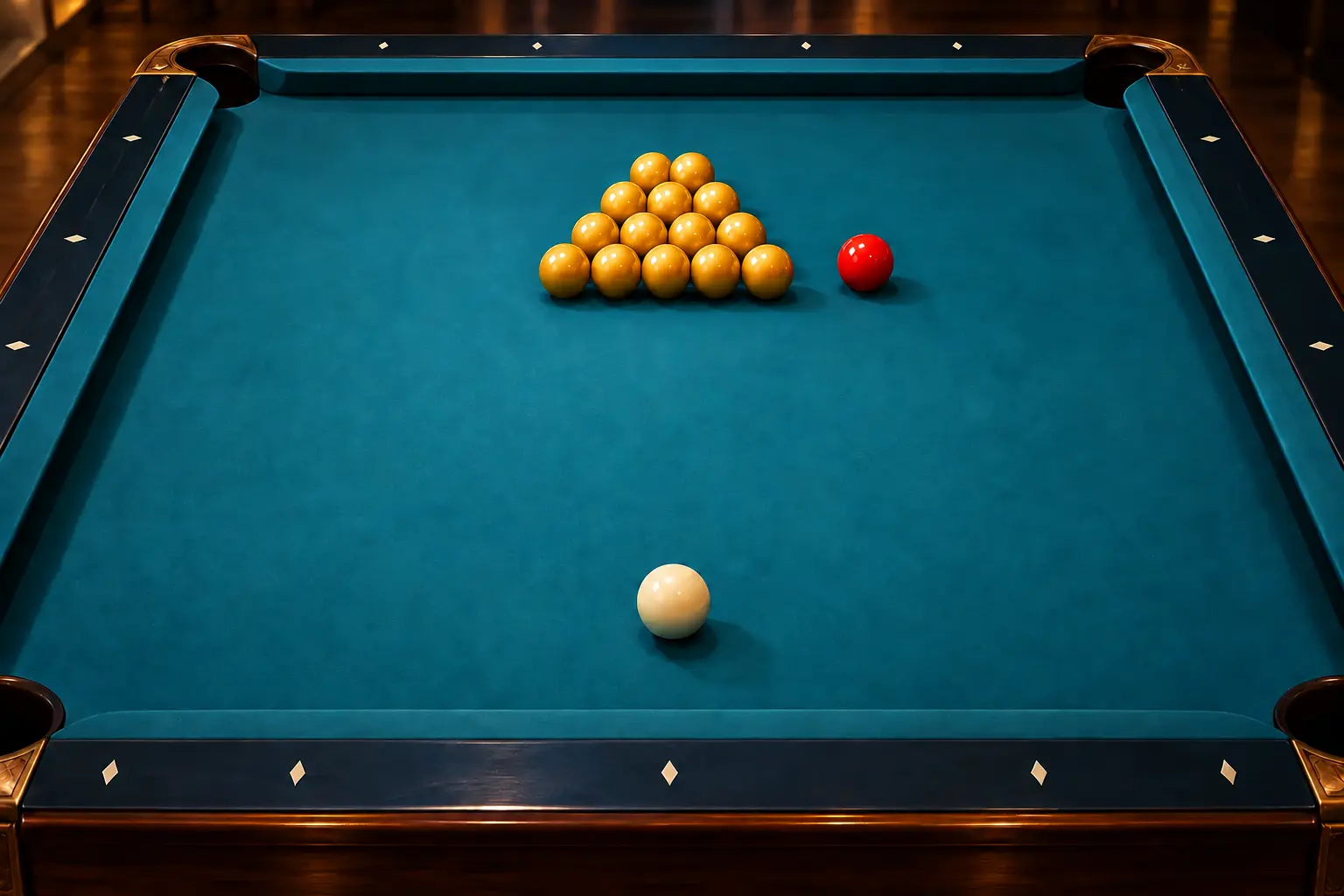
After fourteen balls have been pocketed, those balls are reracked with the apex position open. Count the diagram as four rows of 2, 3, 4 and 5 balls: fourteen in the rack, one separate break ball and one cue ball. The cue ball and the remaining object ball usually stay where they finished unless a rule requires a specific placement because either ball interferes with the rack area.
The loose object ball becomes the planned break ball. The player pockets it and sends the cue ball into the rack with enough control to open the next group while preserving another shot. That transition turns a single rack into a continuous run.
Work backward from the next break shot
Identify one or more possible break balls before the table becomes sparse. Then find a key ball that gives an easy angle on the preferred break ball. Preserve those roles while clearing balls that block cue ball routes or crowd the rack area.
Do not pocket every easy ball first. An easy ball can be valuable as insurance after opening a cluster or as a route between table areas. Straight pool pattern play is a process of keeping options while steadily simplifying the layout.
Control the rack opening
- Choose a break ball that offers a natural angle into the side of the rack.
- Plan where the cue ball should enter the cluster and where it might exit.
- Use enough speed to create shots without scattering every ball unnecessarily.
- Keep an insurance ball available when the cue ball route is uncertain.
- Reassess break ball candidates after every cluster is disturbed.
- Avoid driving the cue ball into a pocket line merely to open more balls.
Treat safety play as part of the game
When a continuation is low percentage, a legal safety can protect the score and force a difficult response. Straight pool safeties often use the rack, rails and controlled cue ball placement rather than a desperate pocket attempt.
Track fouls according to the official rules because consecutive fouls and serious fouls affect scoring. In practice, record why the run ended so a missed shot, poor pattern and failed break ball position do not become one vague result.
Build a useful solo practice session
Begin with an open fifteen ball layout and count every legally called ball. When fourteen are gone, rerack and attempt the planned continuation. Set a personal target based on recent results rather than a famous high run.
Write down the high run, number of successful rack transitions and the most common ending. Improving the transition count is often more informative than pocketing another group of easy open balls.
Sources and further reading
References support the specific factual information above. The practical checklists are Ariakon editorial guidance.